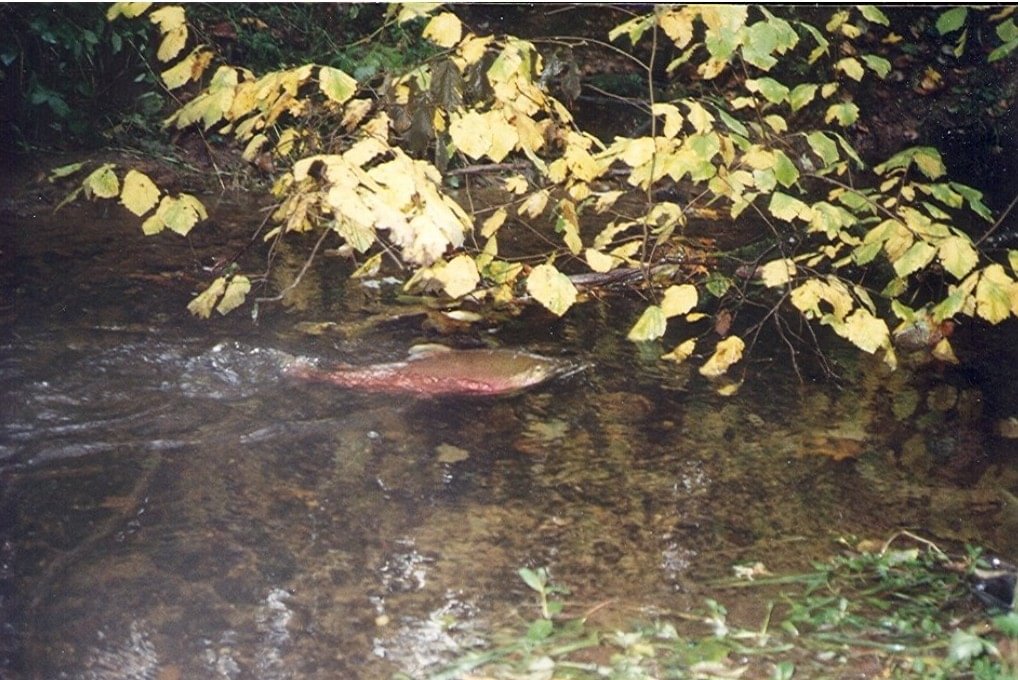
Fox Creek’s fish have had a rough time.
Salmon once ran here in good numbers, laying their “redds” of eggs throughout the stream. When Charles E. Fox and company broke ground on Rainier in 1851, the first industry was a fish house at the mouth of Fox Creek. Workers packed barrels with salted salmon and steelhead to be shipped east.
In the early 1900s, the stream’s flow was disrupted by logging flumes. Tree loss and water diversion can have a detrimental impact on spawning, but Coho Salmon continued to bed their eggs in Fox Creek’s gravel.
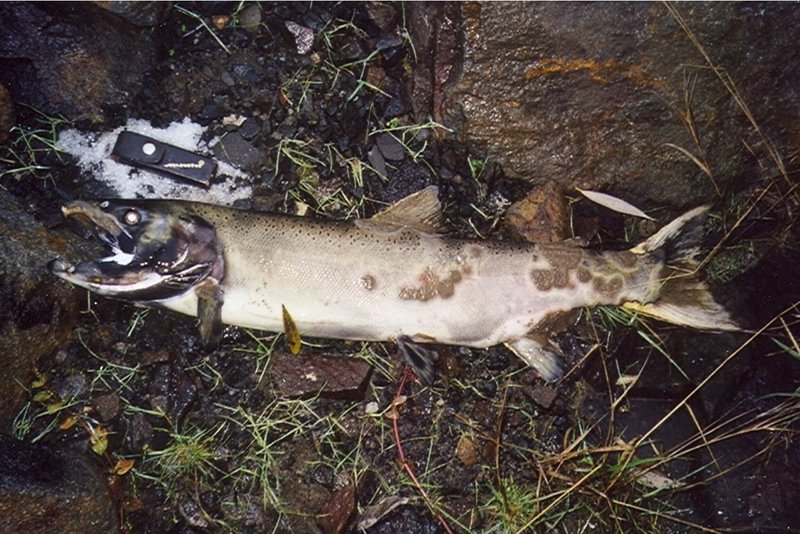
More difficulty struck when the school district funneled 300 feet of the creek into a culvert. This culvert was a serious obstacle to salmon making their way upstream. Another unintended impact of the move was that Fox Creek’s max flow capacity was now restricted by the culvert’s size, causing high water to flood the school in the 1970s.
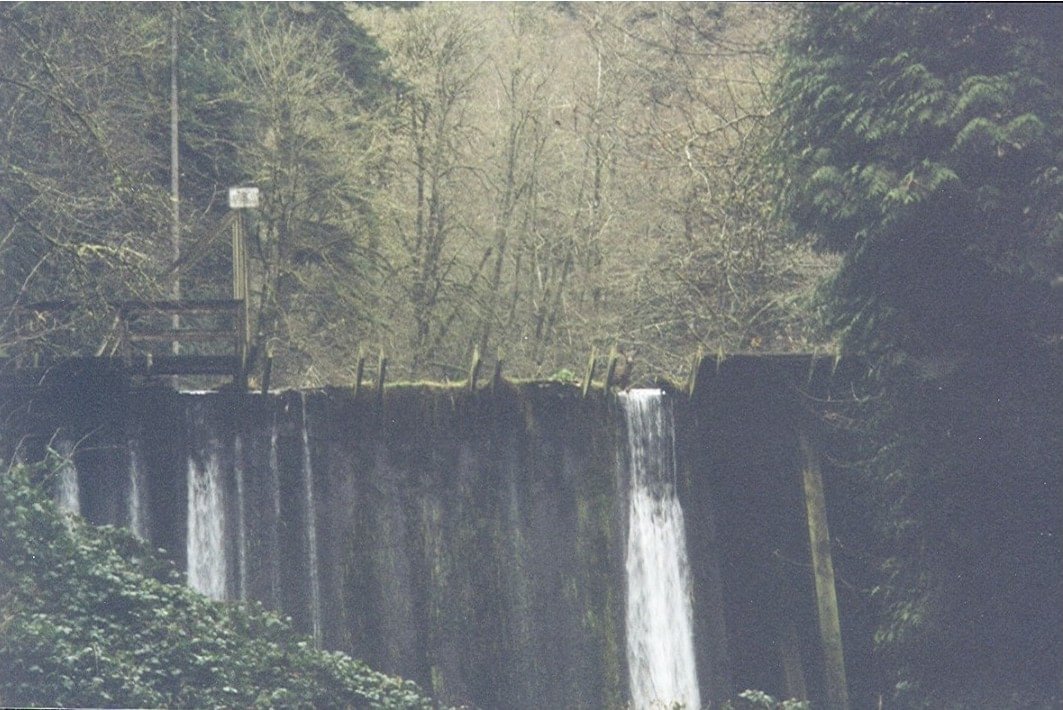
Rainier has also installed a reservoir dam that blocked the upstream reach of the salmon and limited water flow whenever the reservoir was below capacity. This caused the stream below to dry out at times in summer, but couldn’t stop flooding once it filled in winter/spring.
In 1976, another 475′ of Fox Creek passing through downtown was converted to culvert. In 1986, a final 550 feet of concrete passages swallowed up the stream from the railroad to its mouth. Flooding from insufficient culvert capacity swamped the school and surrounding area again in 1995 and 1996, this time damaging the gymnasium.
By that point, you might assume that the creek was biologically dead. Long underground culverts block plant growth and eliminate flow complexity, providing little habitat for aquatic organisms. Salmon struggle to make it up trenches of more than 200 feet in length, as they need to rest after each push, and a long uphill tube contains no rest pools or even slow spots. It would take a Herculean effort for any salmonoid to fight through 1500′ of culvert in three long stretches.
Thankfully, someone had begun to take an interest.
Darrel Whipple: “I was always inspired by environmental causes, you could say. At that time I was teaching 4th grade at Rainier Elementary School. In 1990, there was a 20th Anniversary of Earth Day, including activities of the Parent-Teacher Organization. I was part of that, enlisting teachers and students and parents to clean up the creek and kid trails upstream of the school site.
“We had a big Earth Day project to haul out a lot of junk and tires, old appliances, water heaters, stuff that took crews of volunteers to wrestle out of the creek. That was a gigantic effort by citizens and school folks that inspired us to continue Earth Day projects each year, improving the site for the use of students and community members. We built nature trails and helped maintain the site for use as an educational feature.
“In 1991, after we’d had two Earth Days sponsored by the PTO, a number of us decided that it would be effective to make an organization dedicated to restoring and enhancing the stream. That is how Friends of Fox Creek was born.”
Jon: “Now, if I understand correctly, even back then, when it was full of trash and culverts, there were still salmonoids making their way up the creek?“
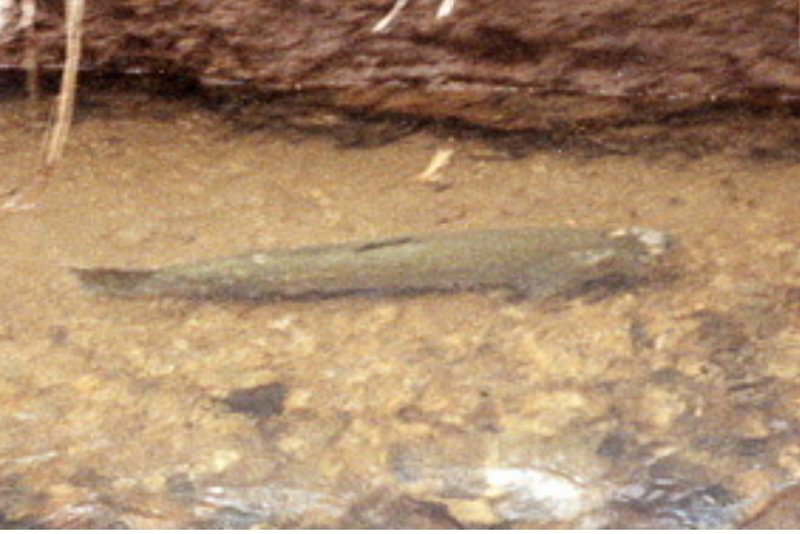
Darrel: “Yeah, that was incredible. In the ’70s, one of the teachers from a portable classroom near the creek had seen a salmon. Some people didn’t believe him, because it seemed unlikely that any fish could make it up through 300 feet of culvert. But that was before the downstream city block was culverted, and the city park was built up and culverted to the river. Incredibly, in the ’90s we still got reports of salmon making it through all of this! That made kind of an impression on me that these fish are determined to find the places where they had been raised in the creek regardless of obstacles that were placed in their way.
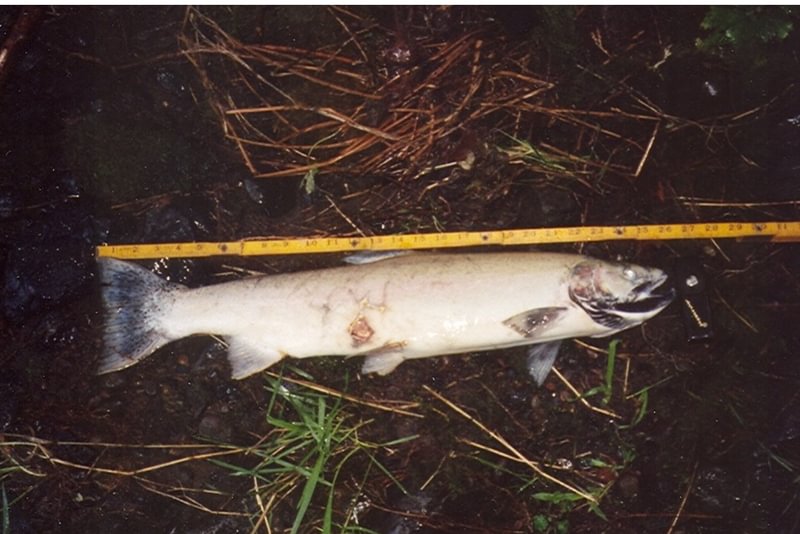
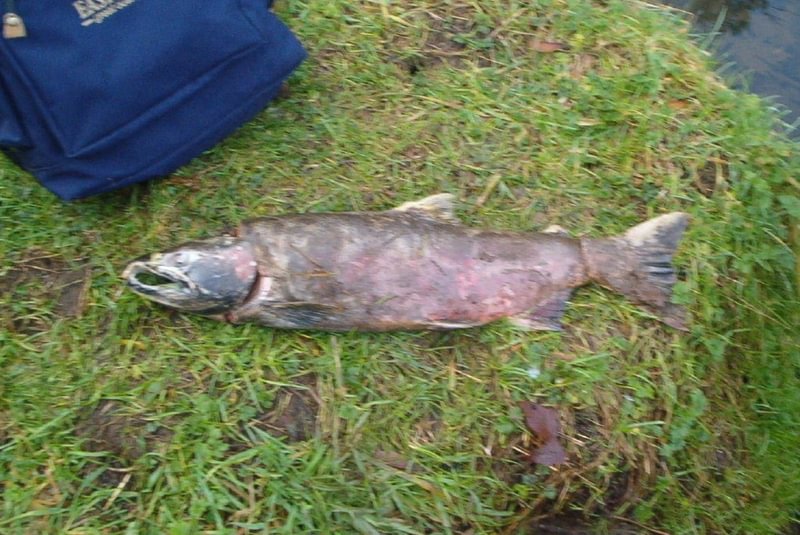
“So we endeavored to train our volunteers in how to do the spawning survey for Coho Salmon and Chinook Salmon and Steelhead. And sure enough, we were finding evidence of “redds”, salmon nests, as well as spawning adults and carcasses in the creek all the way up to a few hundred feet from the city’s water supply dam at 1.5 miles in. So that’s sorta what we strived to do, and at the same time we were advocating the daylighting of the stream and applying for grants to facilitate that.
“Gradually, we were able to elicit a promise from the Corps of Engineers to remove the culvert they had put in after the eruption of Mt. St. Helens to deposit spoils from their dredging of the Cowlitz and the Columbia. Eventually the Corps came through, and with a matching payment by the City in the form of easement land, the Corps was able to daylight the lower 550 feet of stream in 2001.
“When the school district had to deal with the holes that were appearing in the playing field, as the old culverts there rusted away or crumbled, we implored the schoolboard not just to replace or repair the culverts, but to daylight that 300 feet of stream and dedicate it to use by the teachers and students from all the schools in the district. So that eventually led to restoring that portion of the creek through town.”
Jon: “So the middle section between them is still enclosed?“
Darrel: “Yes. From Highway 30 diagonally through the city block, it’s about 475 feet. The city at the present time is making decisions about how to reconfigure that stretch of creek in order to prevent the flooding that has plagued the neighborhood and, at the same time, to meet the state’s requirements for protecting fish. So, that’s in the works.
“The city got a grant for a feasibility study, and the study came back and said you have A, B, and C options. Do you want to open it up, do you want to put a new culvert in, or do you want to do some sort of hybrid culvert and open stretch? And I think the city has favored, but maybe not finally decided, covering a couple hundred feet and opening up the remainder. And that pretty much brings you up to date on restoration of the creek.”
Fox Creek’s salmon and steelhead continue to endure struggles. It will take time for those remaining culverts to be daylighted. The lack of flow below the dam remains an issue, as parts of the stream continue to go dry in summer. In 2016, a sinkhole developed in the downtown culvert area and threatened to flood the block, forcing the city to install an emergency replacement culvert that restricts salmon passage. They are required to fix that culvert so that fish can use it again, but it has not yet happened.
State surveys show a few salmon somehow continuing to struggle up the creek and make their nests.
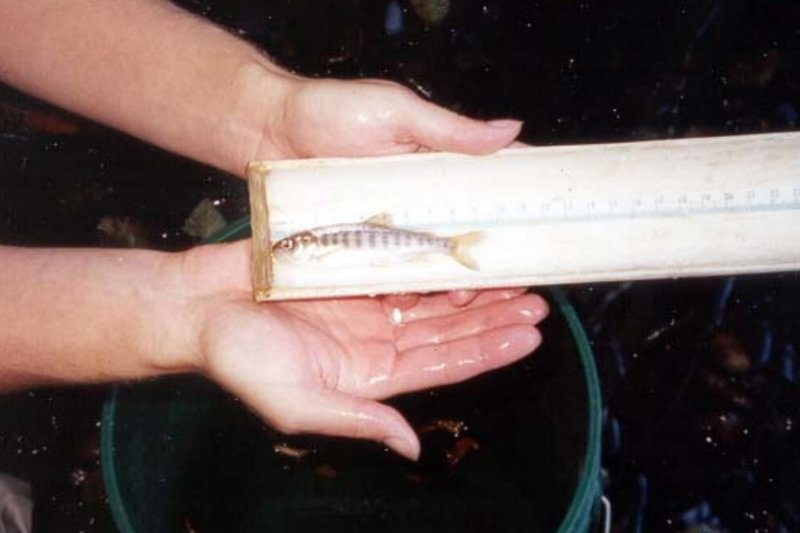
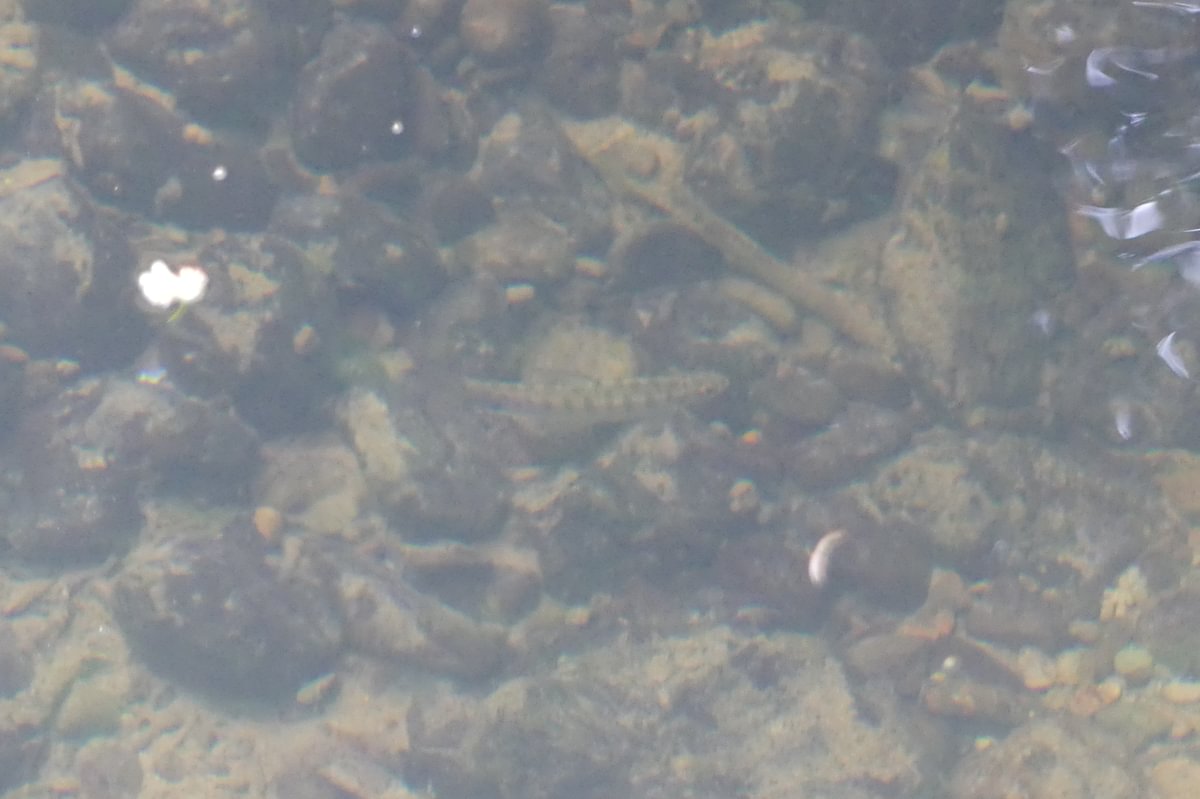
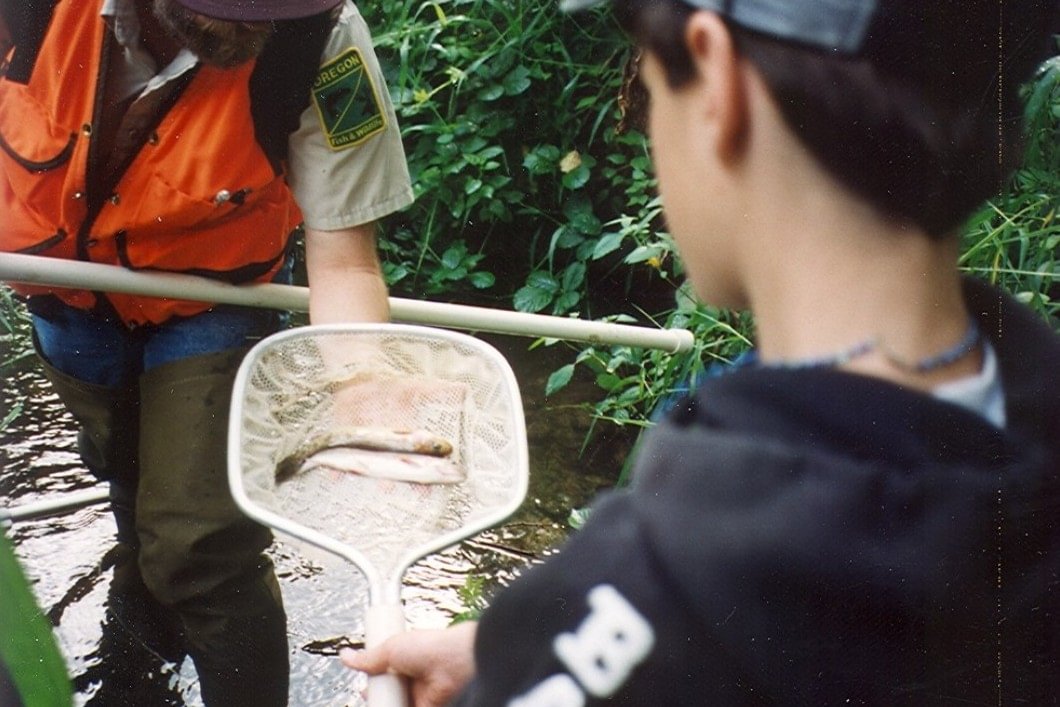
Their resiliency is incredible. We can do more to help them out.
Friends of Fox Creek hasn’t just gotten culverts removed. They continue to maintain the nature trail they built for local children and the community, which winds a figure-8 through some of the most pleasant forest in Rainier. Bigleaf Maple, Red Alder, Hazelnut, Oregon Ash, Willow, Pacific Yew, Vine Maple, Western Red Cedar, Grand Fir, Western Hemlock, and Douglas Fir up to 120 years old populate the small plot with its steep hillsides and attractive graveled riffles.
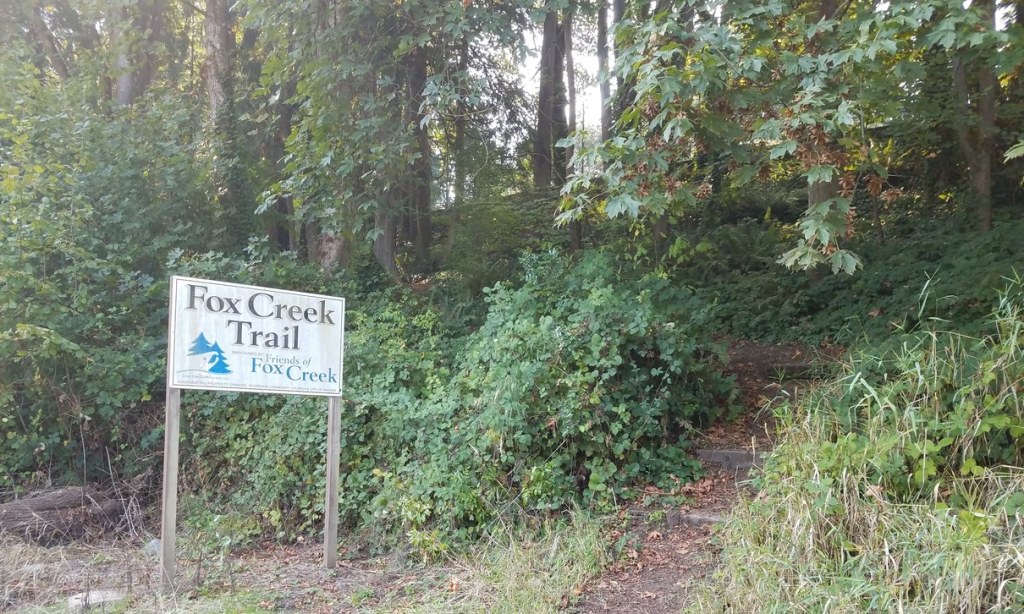
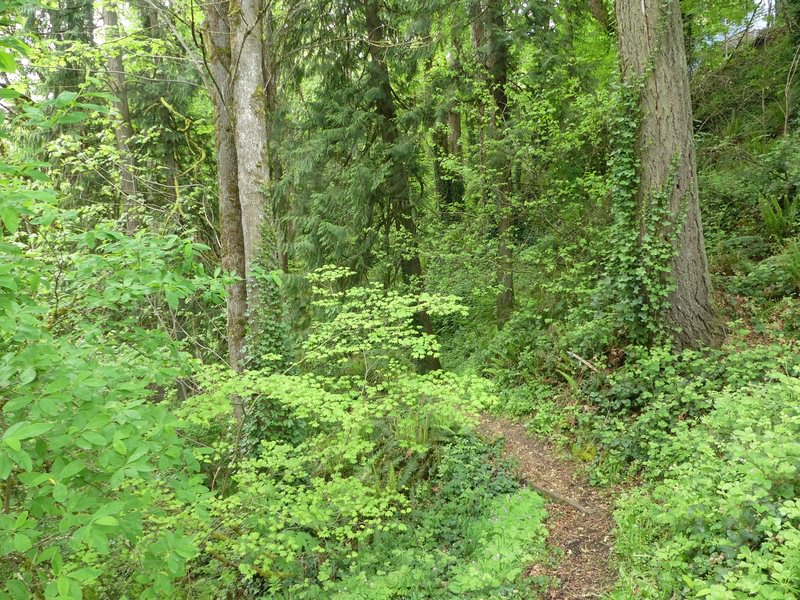
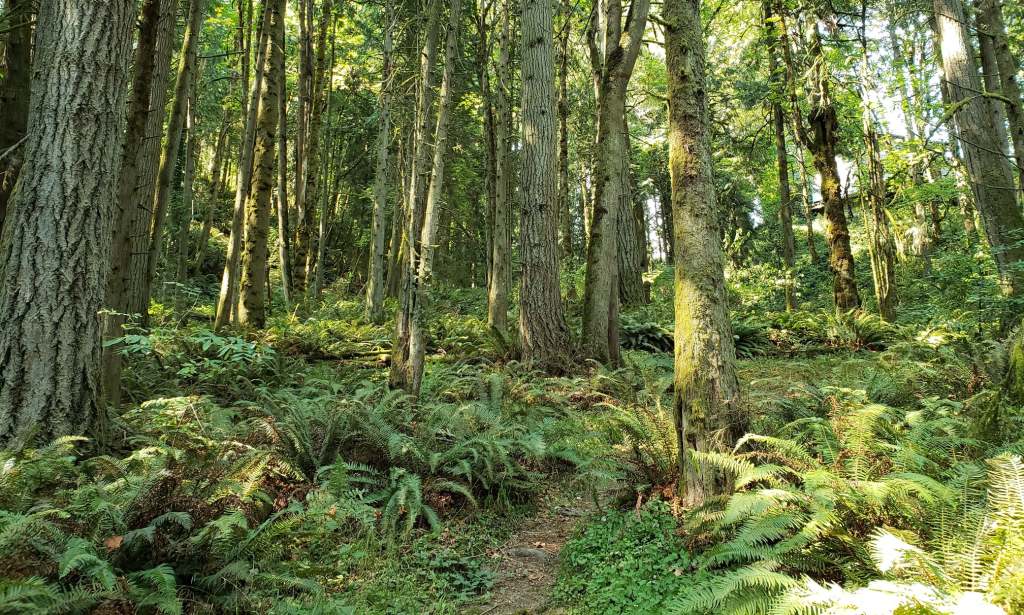
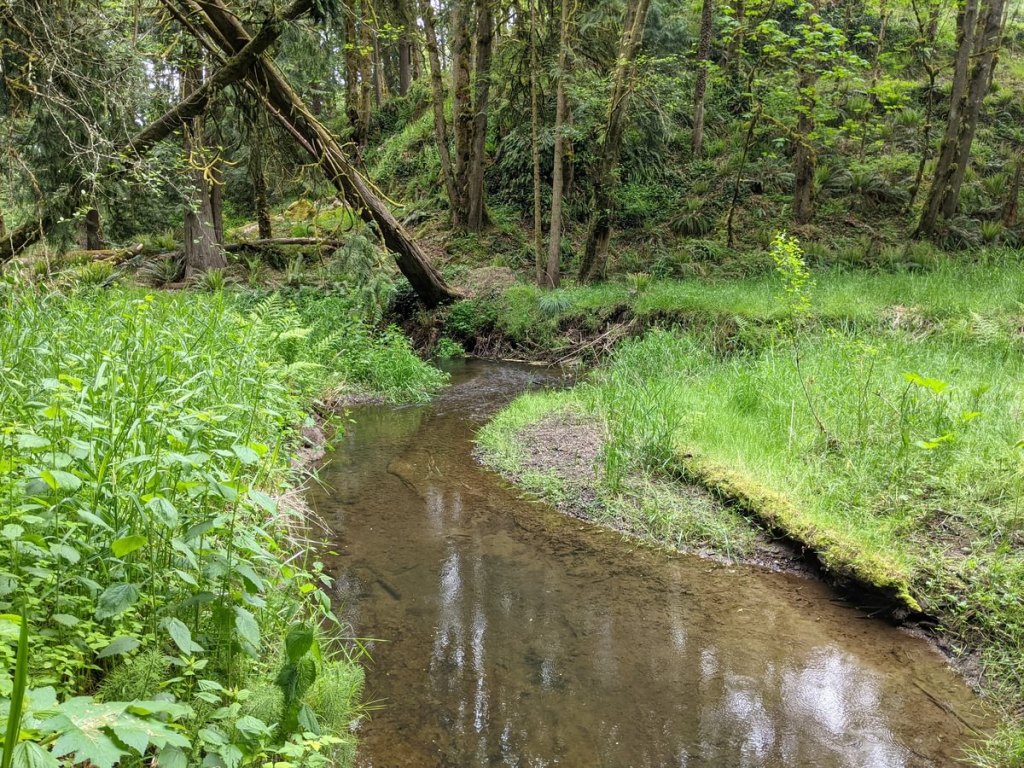
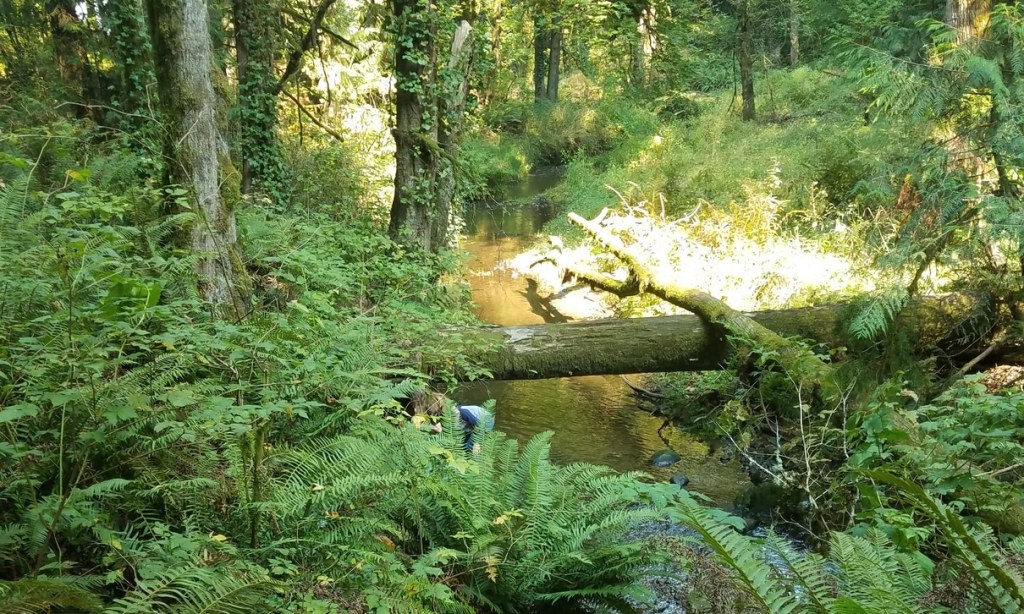
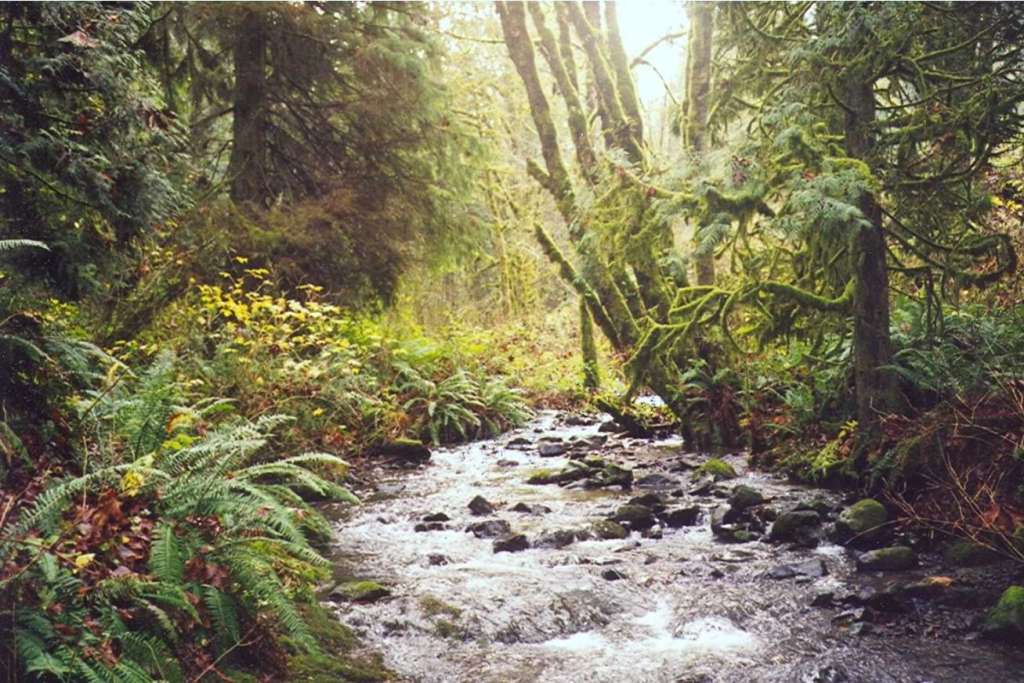
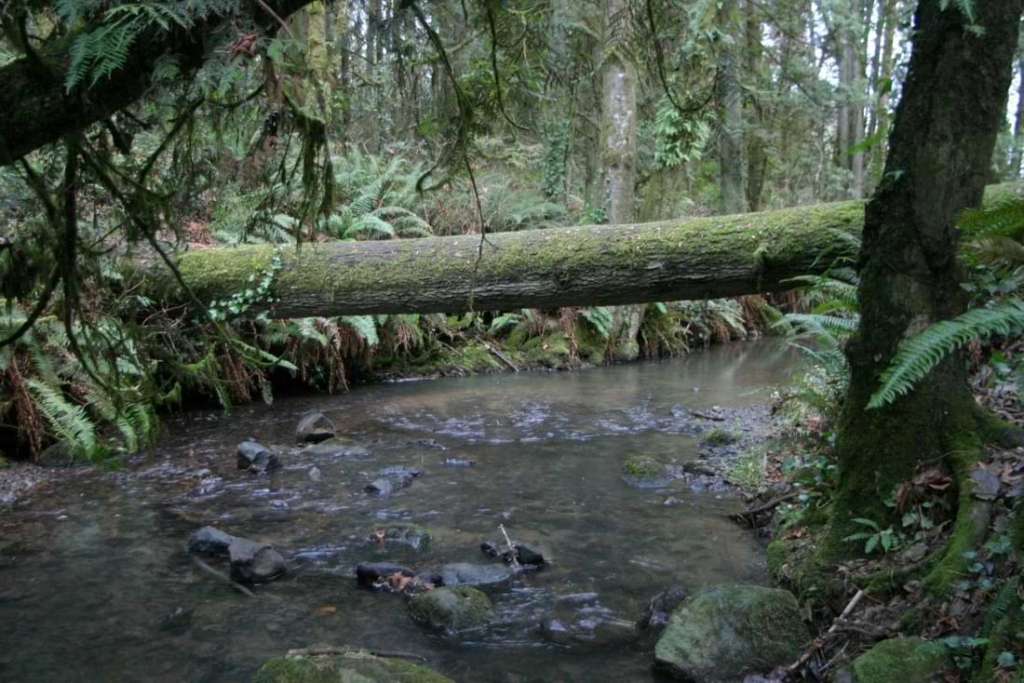
Every year FFC holds work parties to remove invasive plants like English Ivy and Himalayan Blackberry so that the native wildflowers can thrive. With the help of other groups, they’ve planted native trees and vegetation along the daylighted sections to stabilize the banks and provide wildlife habitat.
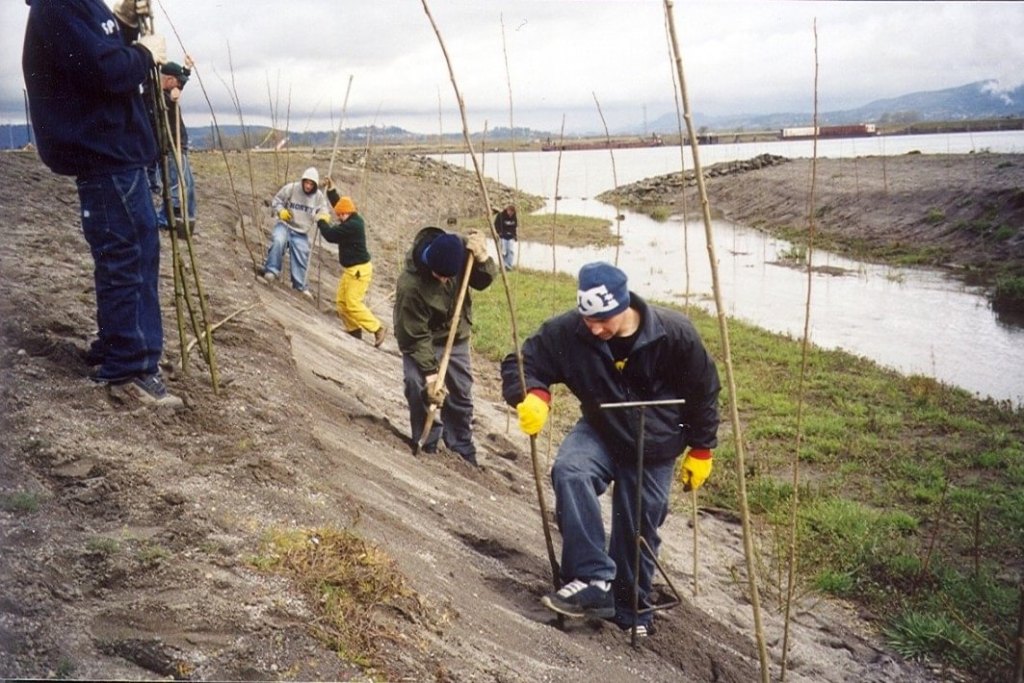
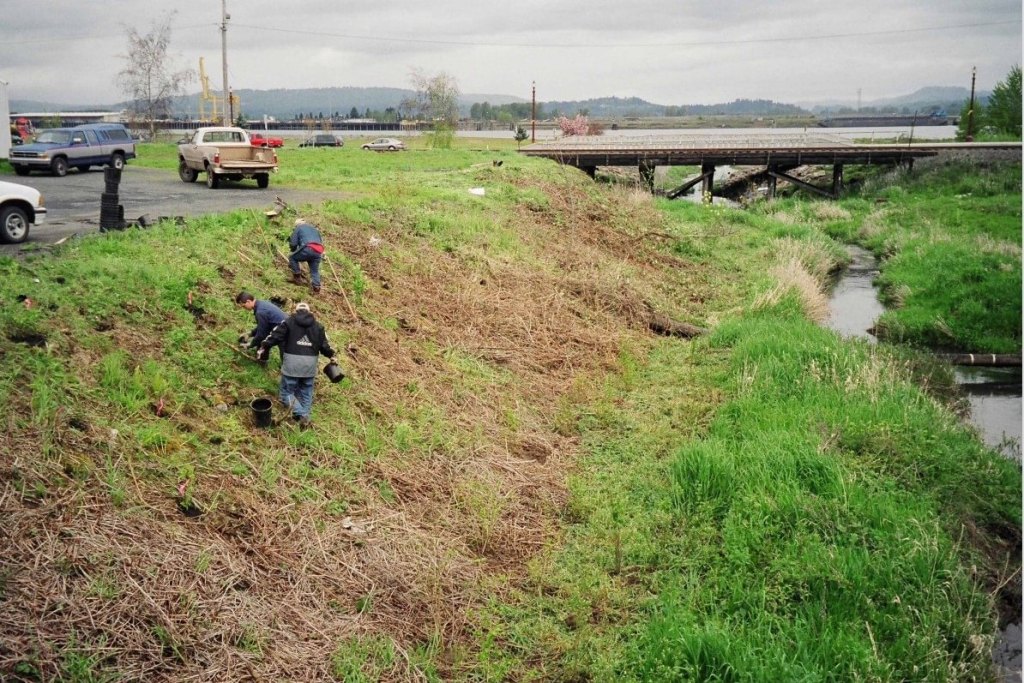
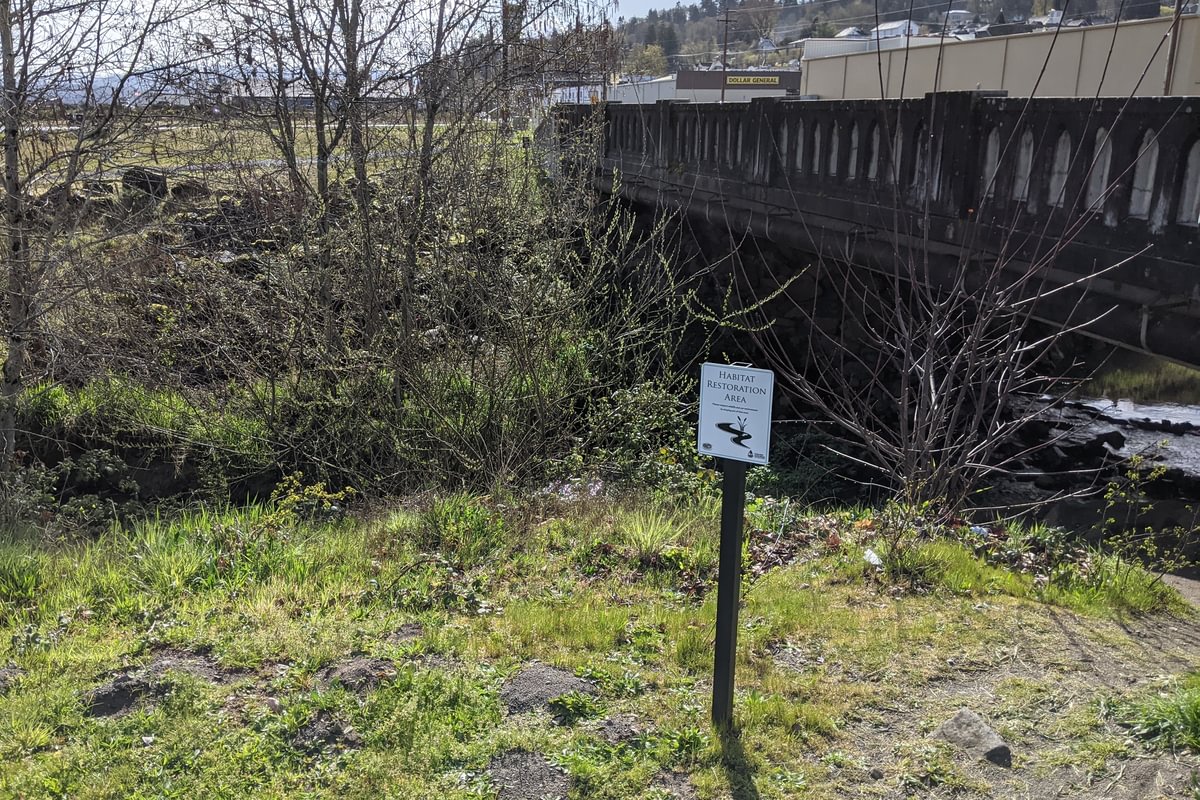
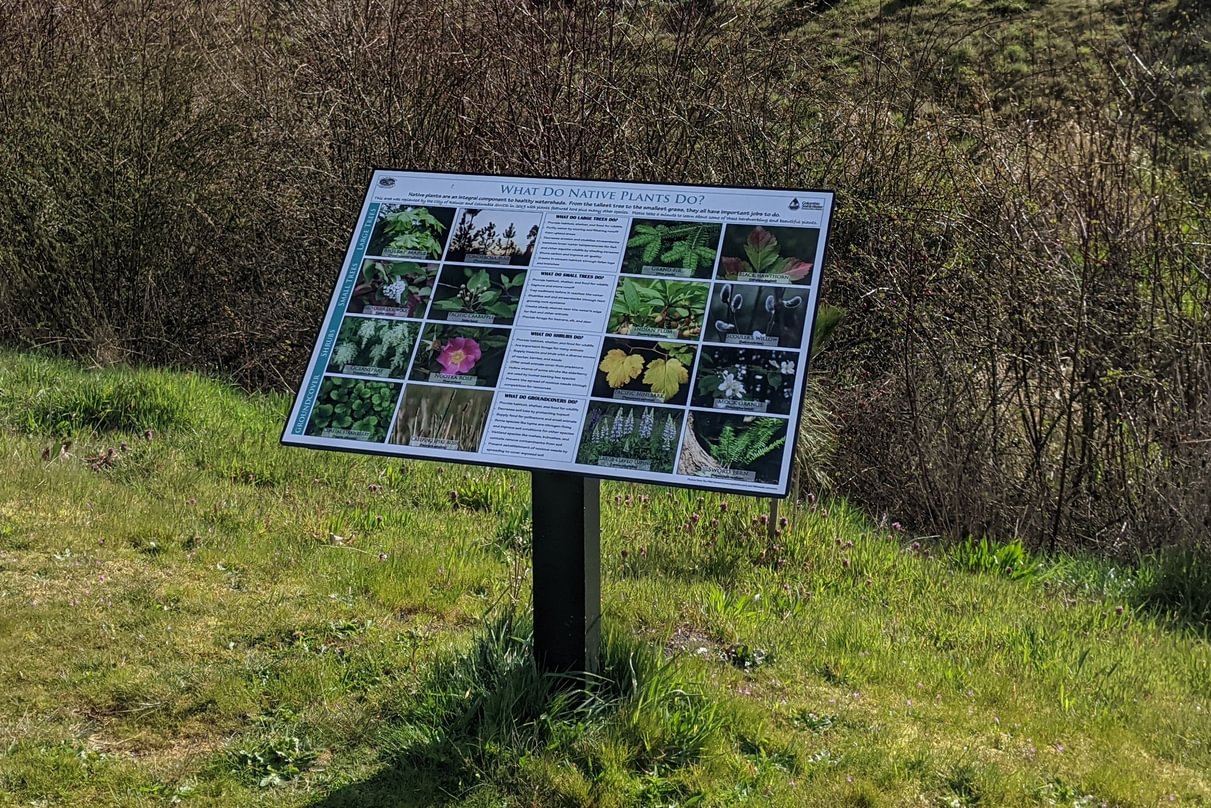
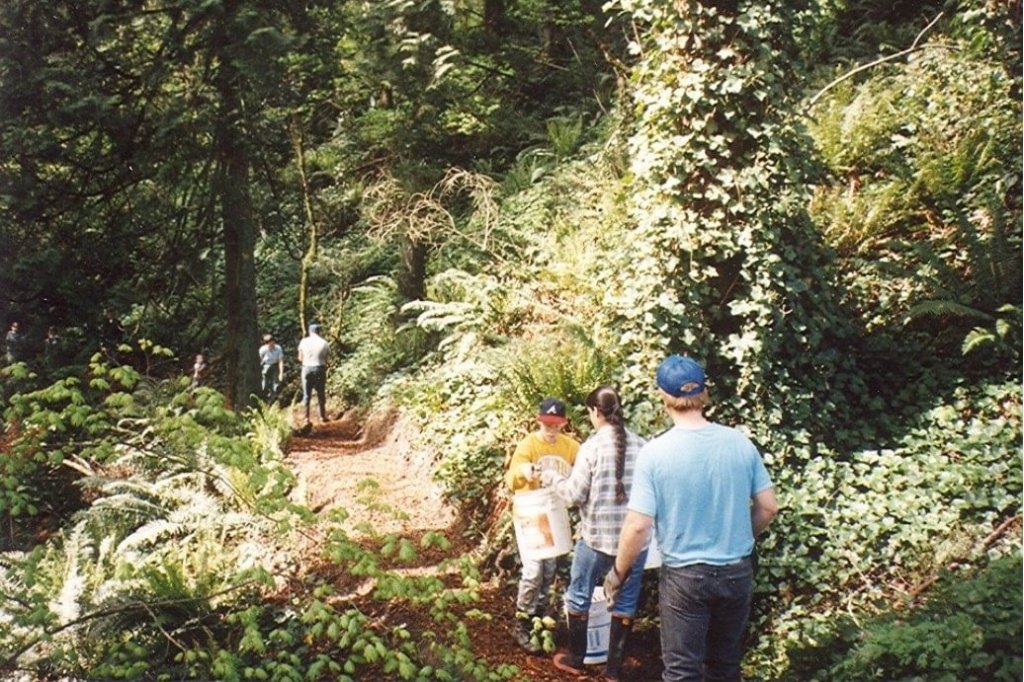
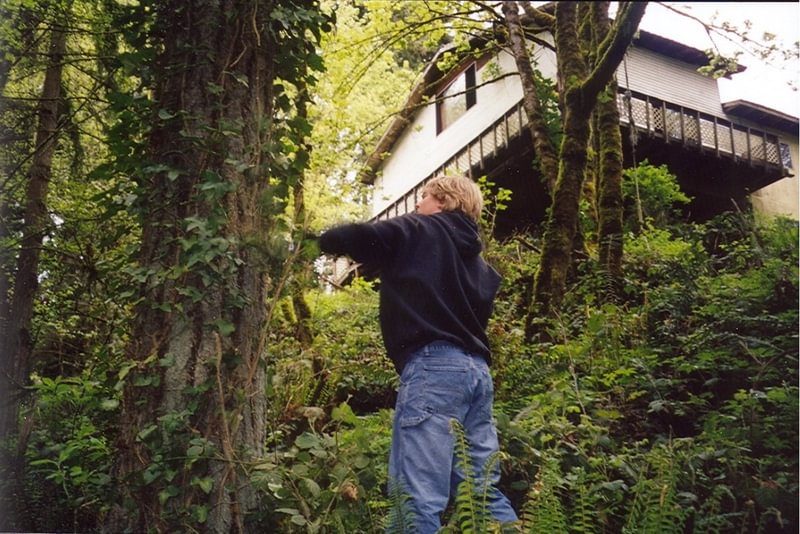
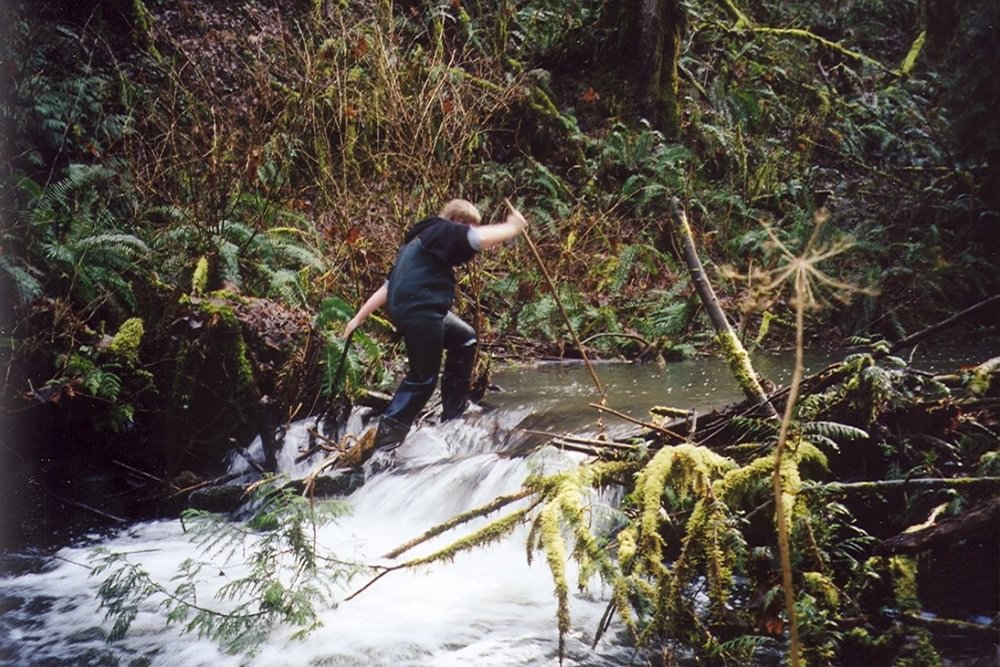
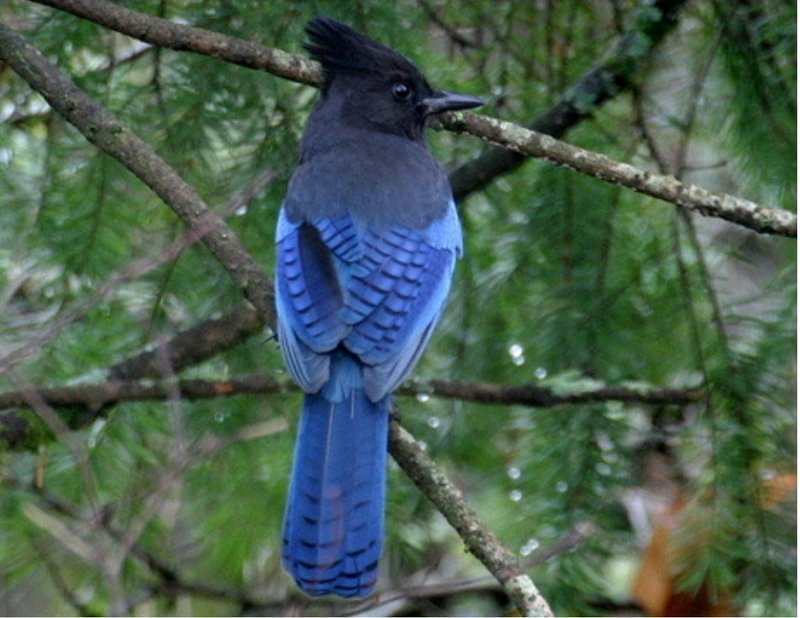
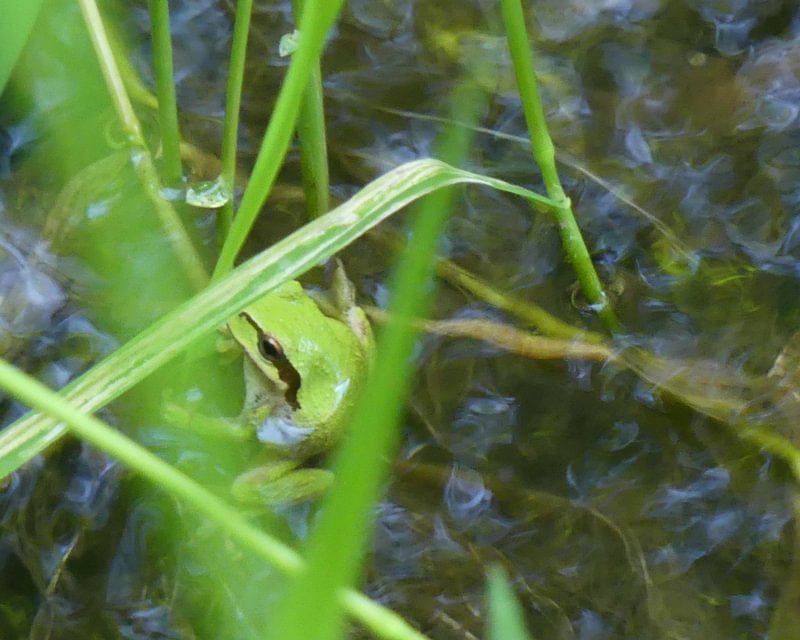
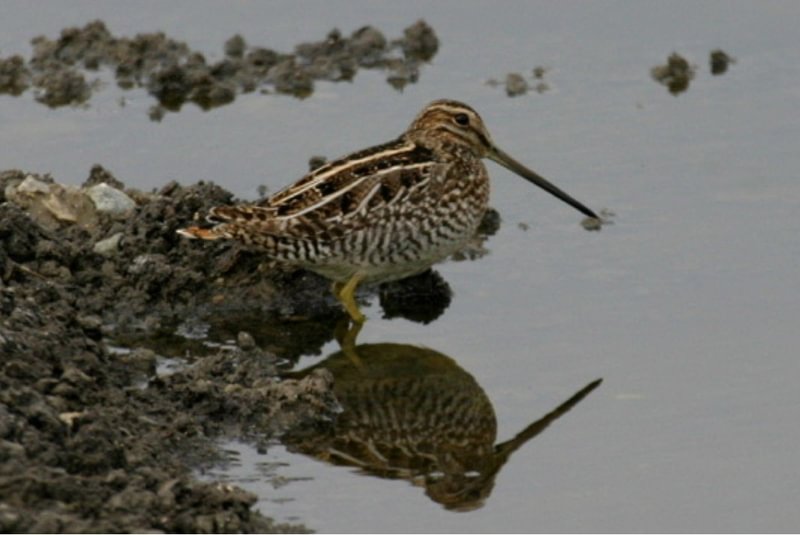
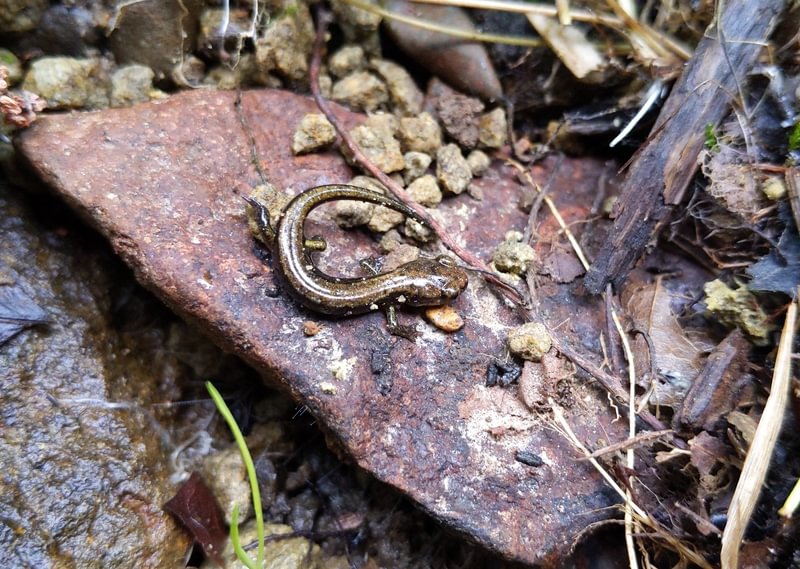
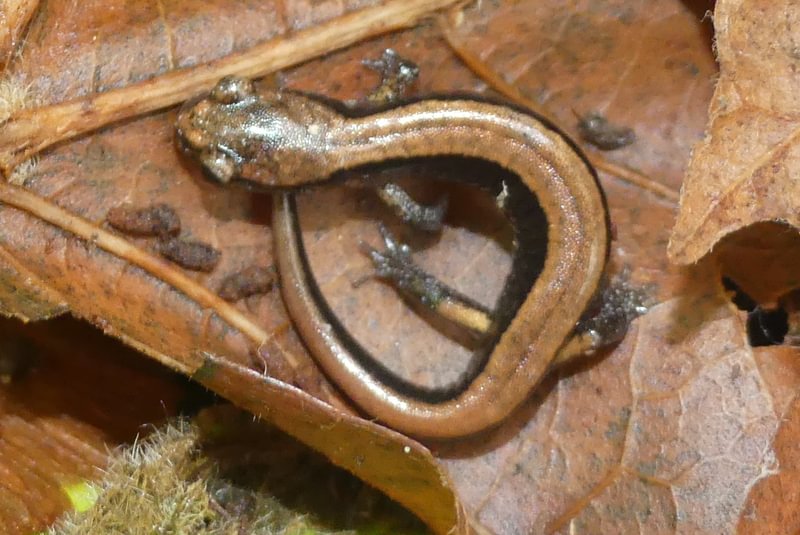
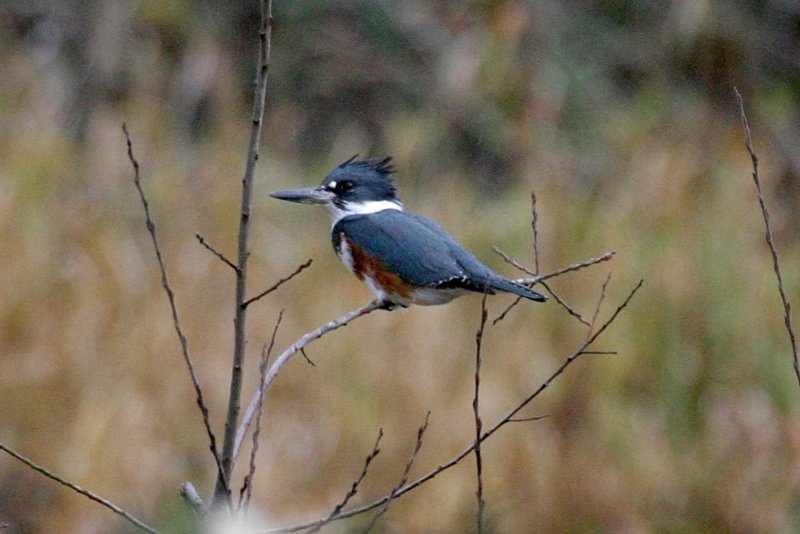
The group has conducted bird counts and amphibian egg surveys, tested water quality, and counted the fish coming upstream. Winter Wren, Steller’s Jays, and several species of woodpecker visit the forest, while Belted Kingfishers, Great Blue Herons, Beaver, and at least six species of amphibian utilize the crick. Incredibly, Darrel once found the skull of a red fox in the stream, indicating that a previously unknown population of this locally rare canid persists within the city’s forests.*

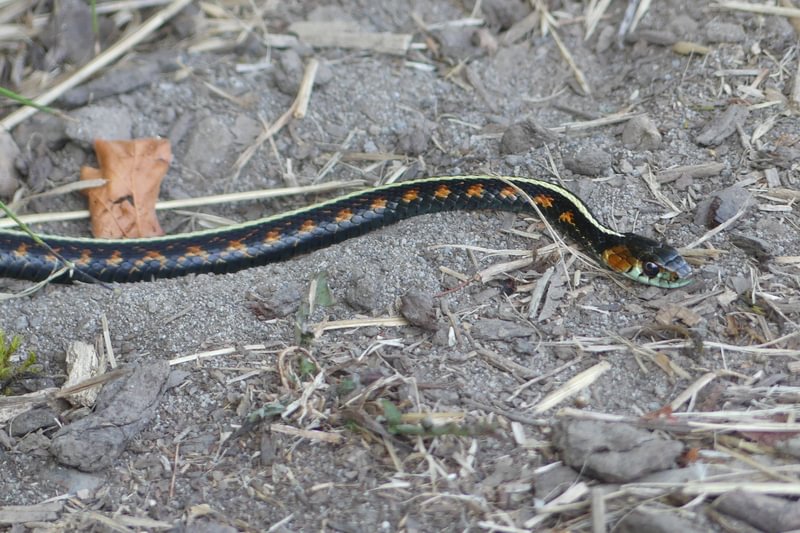
Looking at where Fox Creek was in 1990 and how far it has come today, it appears to be on the way to a success story. But much more needs to be done for the salmon and steelhead runs to last. Darrel has hope for the future but has concerns about who will carry the work forward in the coming years.
Now is a critical transition where new members could learn from the OGs and their 30 years of experience and build upon their work. Do you want to be a part of bringing a real salmon run and community forest back to Rainier? Scroll down to the end of the post to join their efforts.
We give a hearty thanks to Darrel Whipple and Ian Bledsoe for their time and pictures. Thanks also to Les Watters and Dave Parsons of the Columbia County Museum Association for background info on the pre-restoration history of the creek.
* The name “Fox Creek” has nothing to do with this secretive fox community. Instead, it is named after Charles Fox, who helped survey and map the region in 1850-51 before naming it “Rainier”. He plotted out plans for the town and built many of its early buildings, but disappeared early from town records as he and his family took off in 1863 to settle in other parts of Oregon.
Fox Creek Trail at a glance
What: restored creek, nature trail, birdwatching
Where: From Highway 30 in Rainier, turn south/west on 3rd Street West, take the first right onto C Street, then turn left mid-block into Riverside Community Church parking lot.
You can also view the restored mouth of Fox Creek at the Rainier City Park. In downtown Rainier, turn north/east off of Highway 30 onto Veterans Way, which will lead you directly to the park on A Street. The creek is on the east/south end of the park.
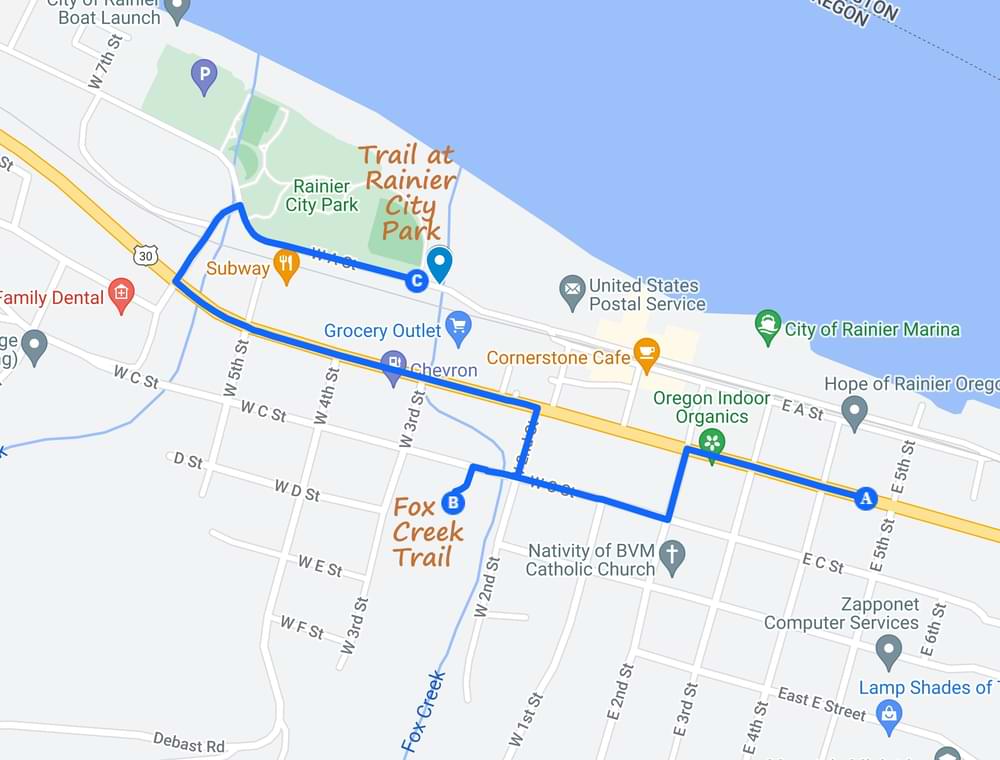
Hiking: 1/3 of a mile loop in a figure eight. An interactive map of the trail can be found on the Friends of Fox Creek website. There is also a walking trail which circles around Rainier City Park, a small part of which parallels the creek.
Camping: none
Notable Wildlife: Coho Salmon, Steelhead, songbirds, woodpeckers, beaver, red fox, woodland salamanders
Property status: City of Rainier
If you’re interested in learning more about Friends of Fox Creek, please respond to our contact form and we’ll forward your email to them.


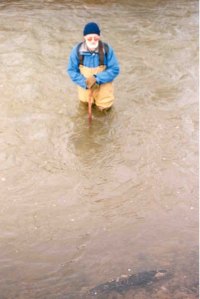
(photo courtesy of Darrel Whipple)
 Wild Columbia County