Our paper is finally published! This was a labor of love, the product of years of research, over a thousand hours of surveying, and months of writing and editing. We deeply thank the hundreds of contributors who provided us with data, the scores of landowners who let us survey on their property, and the dozens of friends who went on outings with us.
The final tally includes documented proof of 27 species of reptiles and amphibians in Columbia County, including 6 species that had never before been published! Over the next four weeks, we’ll go over all the paper’s findings.
First, here are the species we saw:
Frogs
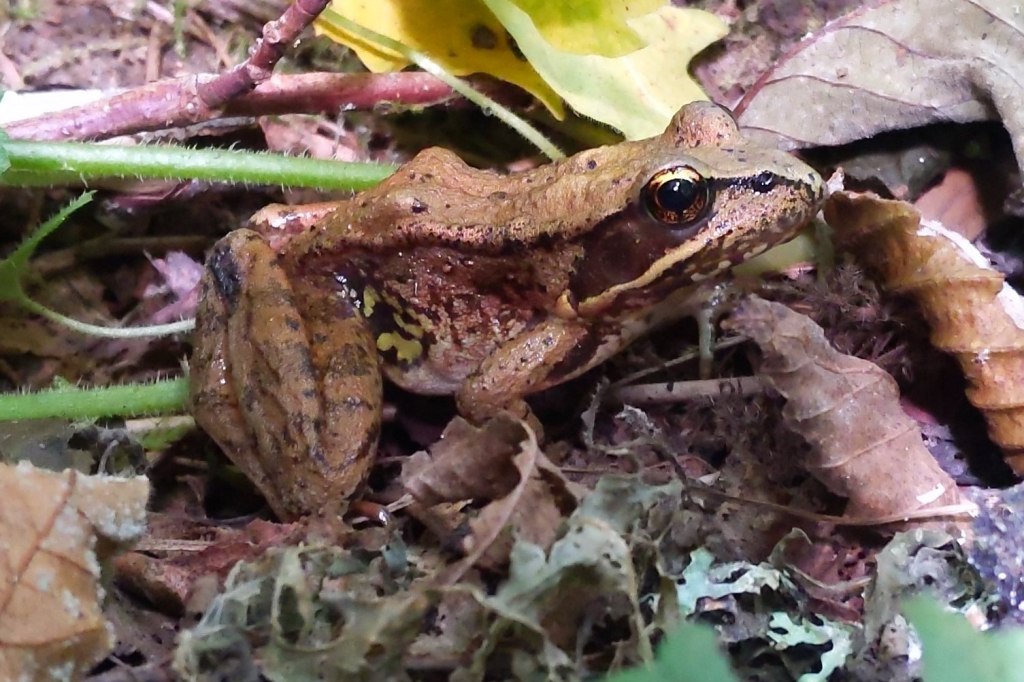
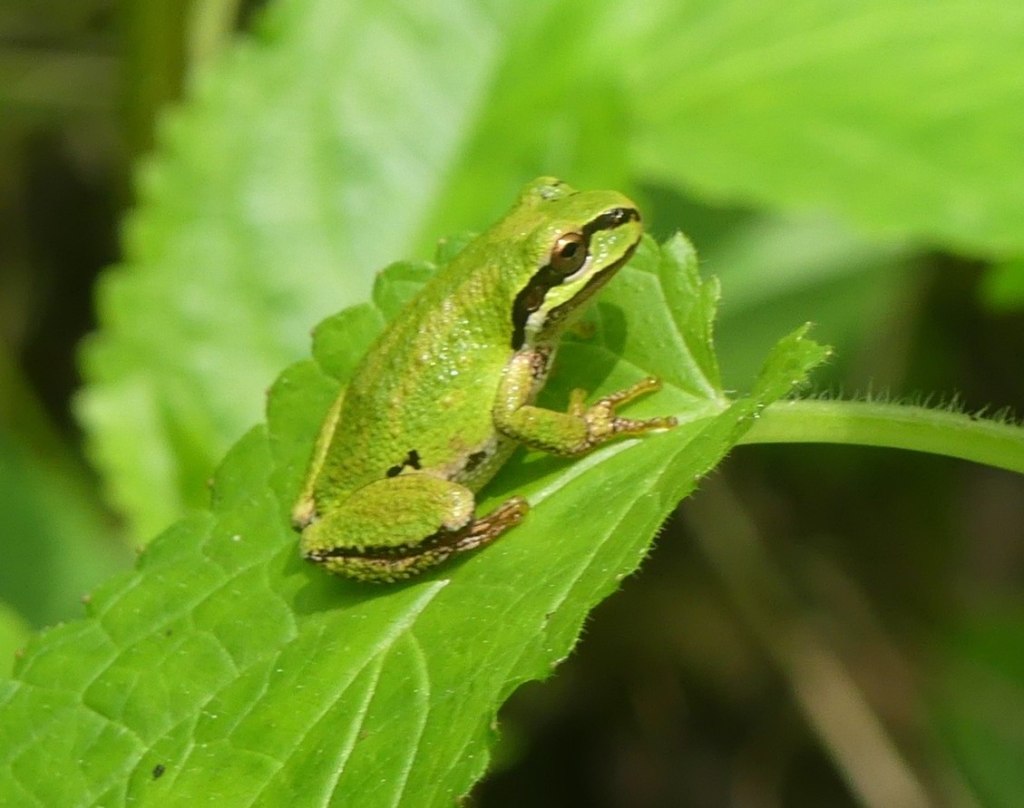
If you’ve ever seen frogs in our county, then you’ve probably seen Northern Red-legged Frogs (433 records accumulated) and Pacific Chorus Frogs (576 records accumulated). These were two of the most commonly seen amphibians, though Northern Red-legged Frogs are actually considered an Oregon Sensitive Species and a Conservation Strategy Species due to their specific habitat requirements and the dramatic population drops of similar species across the west.
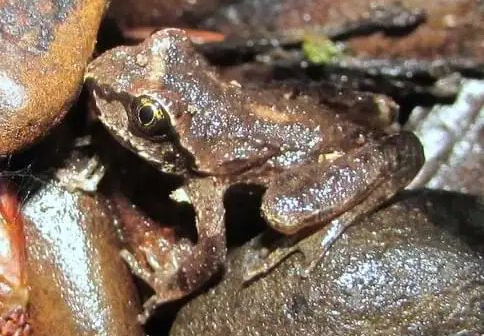
Coastal Tailed Frogs are far, far rarer – in fact, we are the first herpetologists to officially report Coastal Tailed Frogs from the county (though Chris Rombough had seen them before we did). They are another Oregon Sensitive Species and Conservation Strategy Species. You can identify Tailed Frogs by their vertical pupils, the light line between the eyes, the “tail” on males (actually a sex organ), and the fact that they only live in clean, clear, fast-moving streams. We recorded 6 individuals.
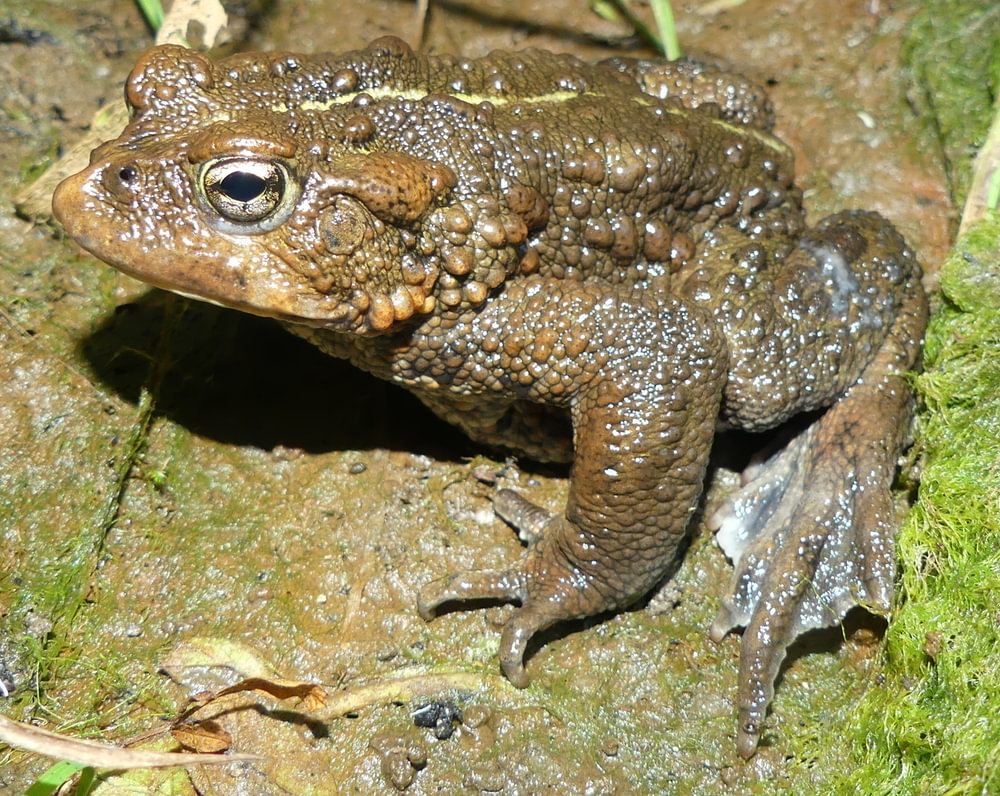
We were excited to find Western Toads still breeding in the county (thanks to a landowner who cares deeply about them). Western Toads were once common in northwest Oregon, but have disappeared from most of the region in recent decades. As a result, they are also a Oregon Sensitive Species and a Conservation Strategy Species, and may eventually end up on the Endangered list. We had 13 records, nearly all of which were within a very limited area.
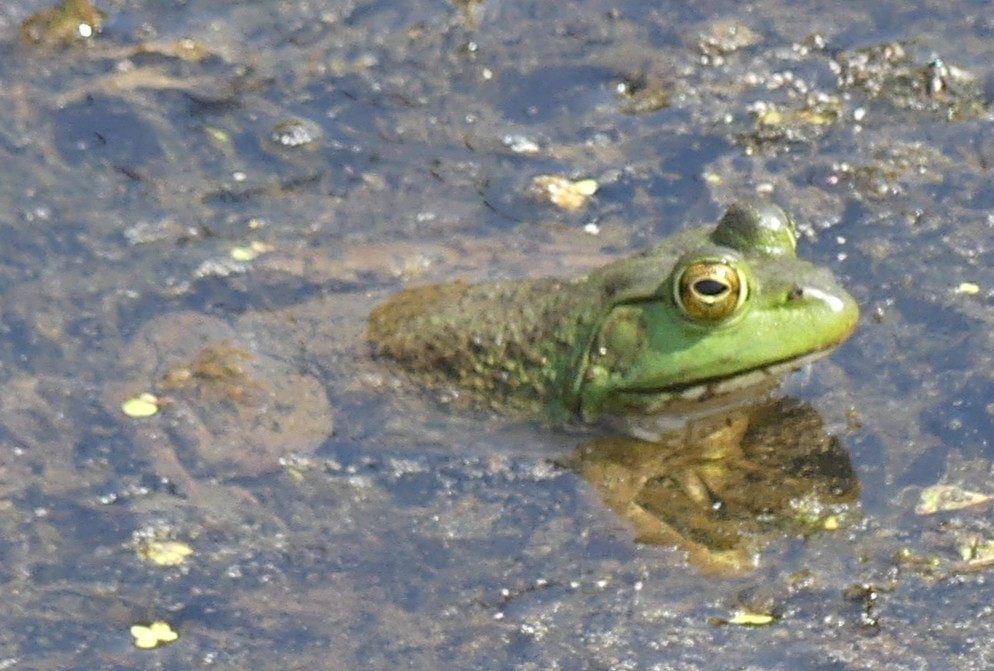
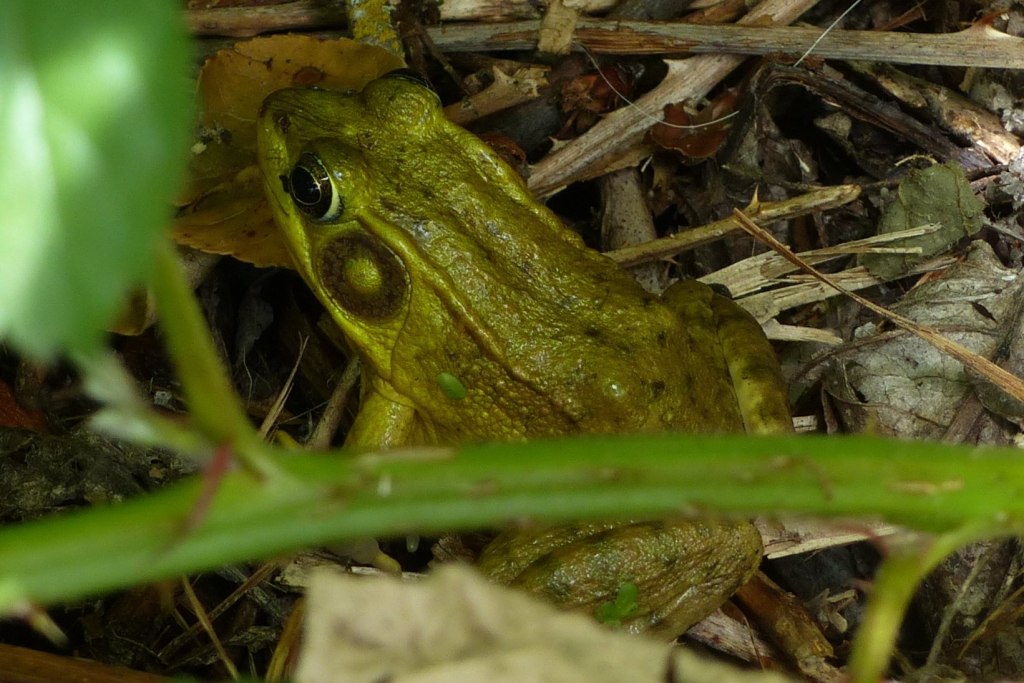
American Bullfrogs are the common introduced auran – originally from the eastern USA, they are all over the West now. We tallied 135 records across most low-lying areas of the county.
It turns out our county has an introduced population of Green Frogs as well! In fact, we are the first researchers ever to discover Green Frogs in Oregon. You can distinguish them from Bullfrogs by the dorsolateral ridge (the ridge right behind the eye and above the ear) that goes straight down the back rather than curling around the ear as in a Bullfrog. We recorded 5 of them.
Salamanders
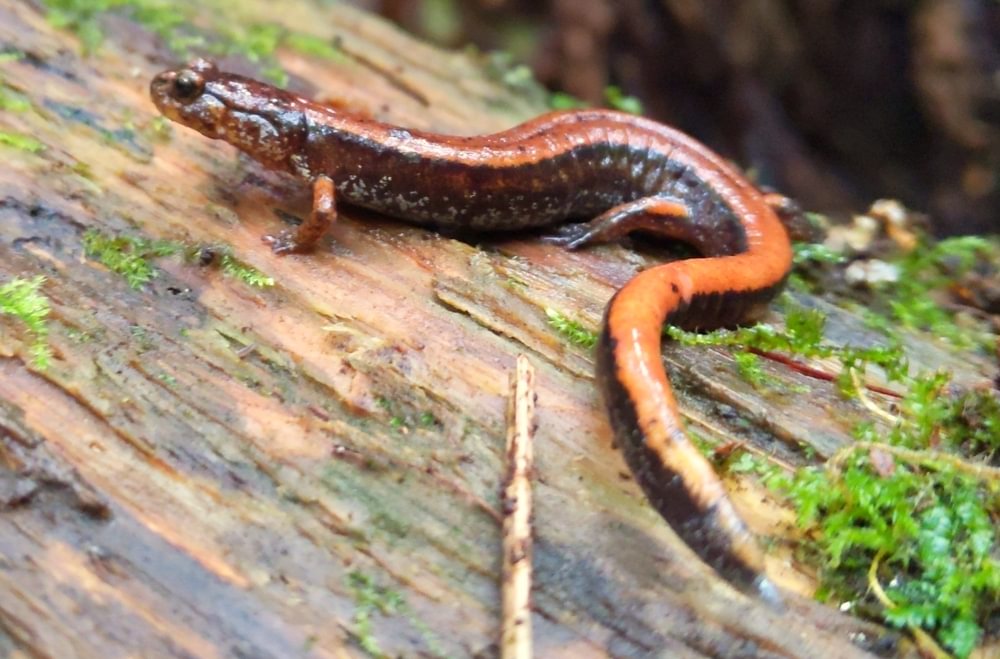
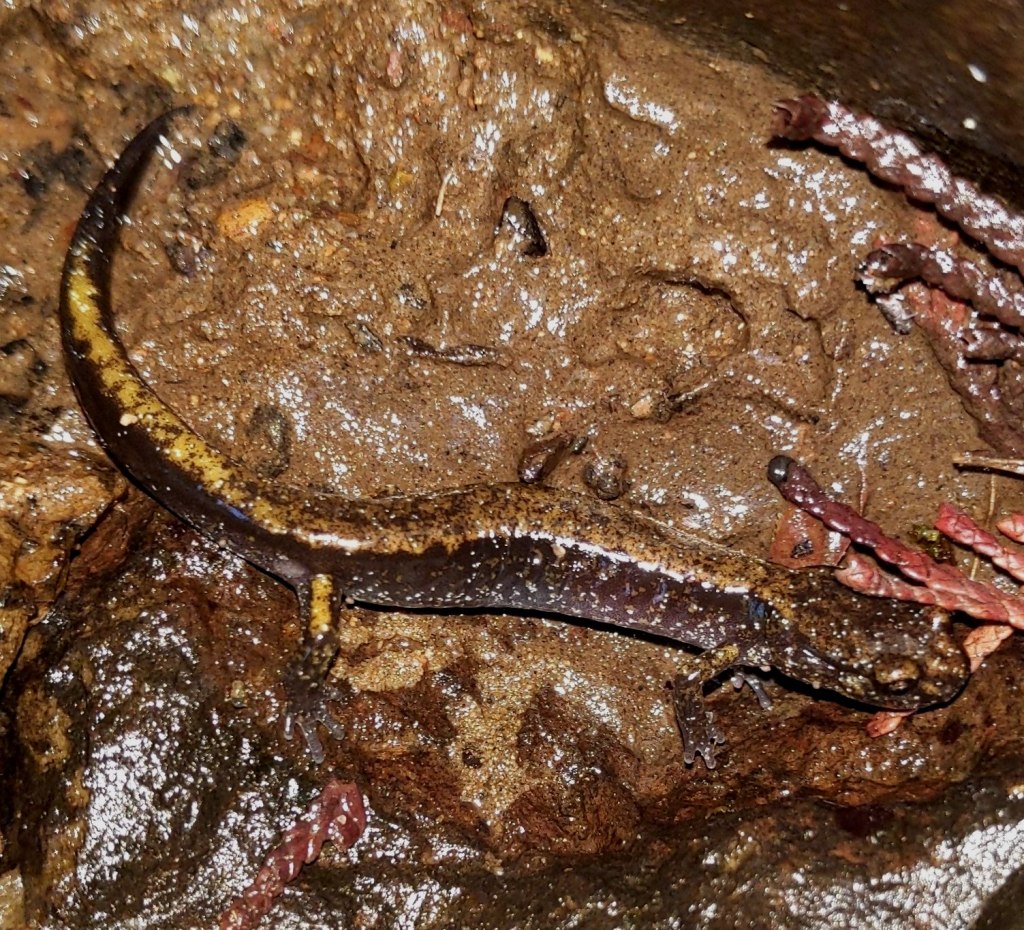
Western Red-backed Salamanders (which can have red, orange, yellow, brown, or even unstriped backs) were the most common salamander species in our surveys, though residents rarely see them as they spend most of their life under rocks, logs, and leaf litter. We totaled 455 records.
Dunn’s Salamanders, a similar species which is more limited to wet rocky areas, totaled 300 sightings. You can distinguish them by their consistent olive-green color and the fact that their tail tips are always black, without the color reaching the end.
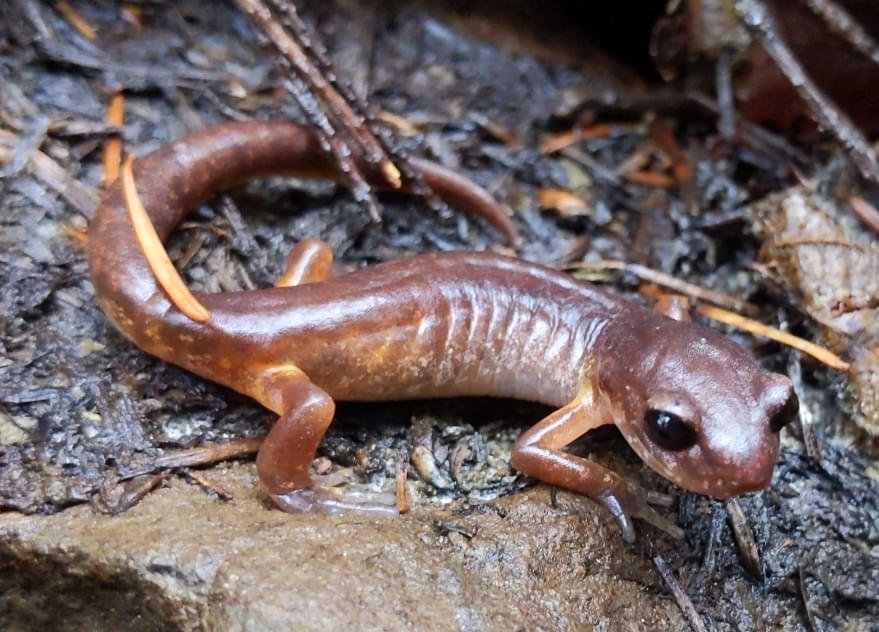
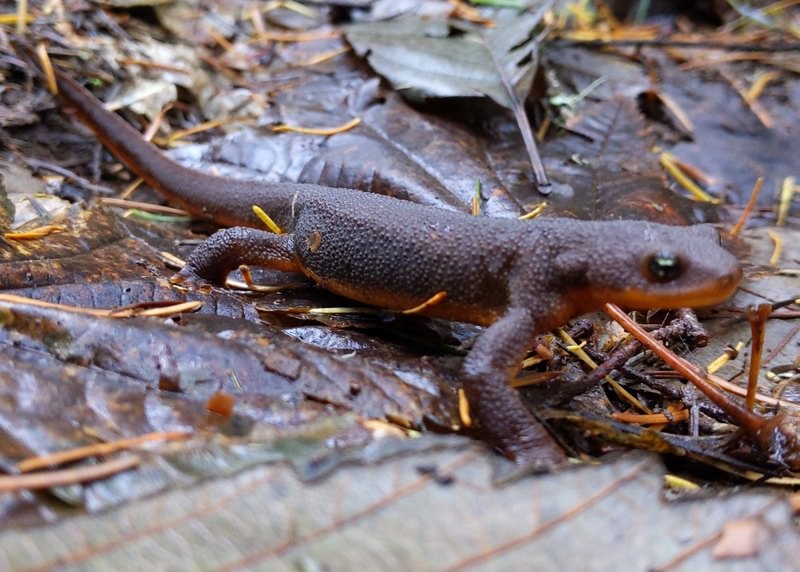
Here are two of the salamanders most commonly seen by casual naturalists. The Oregon Ensatina is identified by the large eyes, orange color near the base of its legs, and the constriction at the base of its tail. We had 296 records.
Rough-skinned Newts are a familiar sight on rainy days and while fishing lakes and ponds. We put together 445 records.
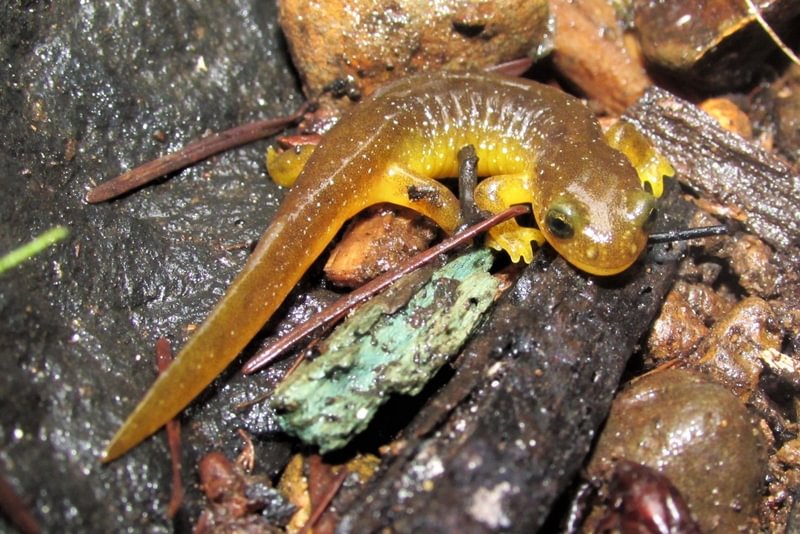
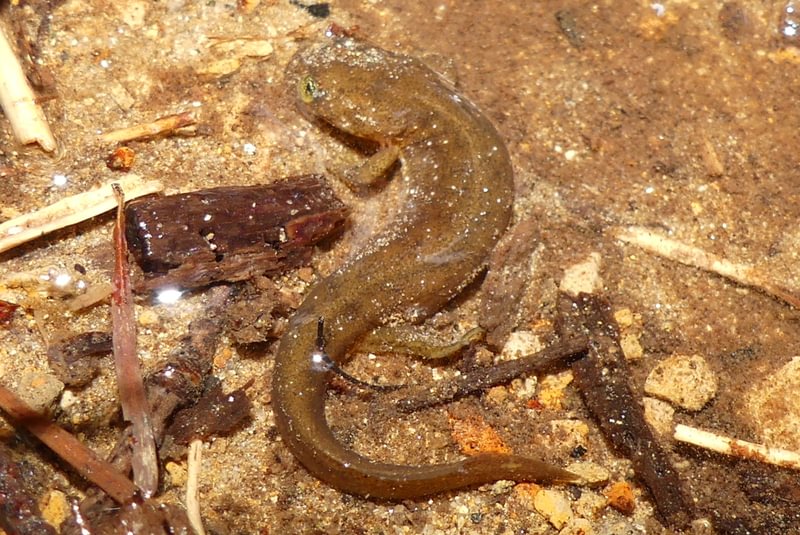
The Columbia Torrent Salamander is an Oregon Conservation Strategy and Sensitive Species restricted to extreme northwest Oregon and nearby Washington. Its presence in Columbia County hadn’t been published before our surveys, though Chris Rombough had seen them in a number of locations. We had 70 sightings.
One salamander we failed to find in our surveys was the Clouded Salamander, an arboreal species that specializes in old growth trees. They once lived in the county, and we hold out hope that they are still out there to find somewhere.
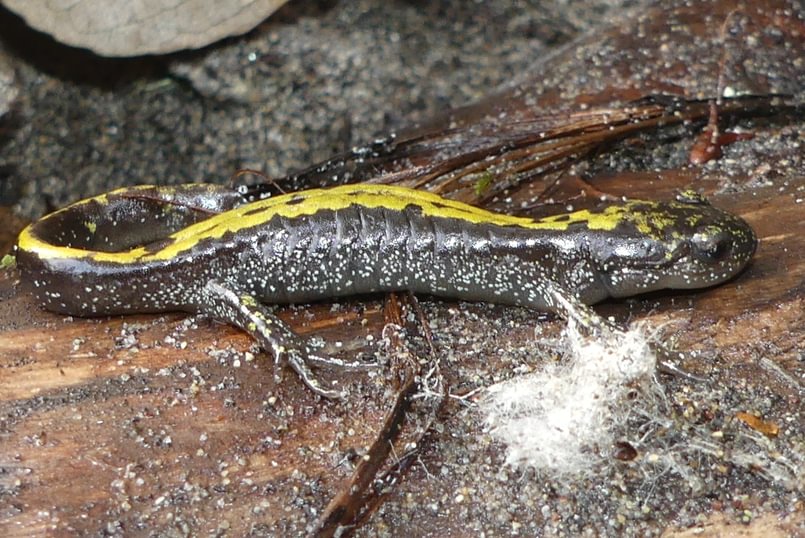
Western Long-toed Salamanders are a common find around homes and farms in the populated lowland areas, but were surprisingly rare elsewhere in the county. We managed 161 records. You can distinguish them from the other striped salamanders by their larger head, brighter tint to the stripe, and long fourth toe on the hind foot.
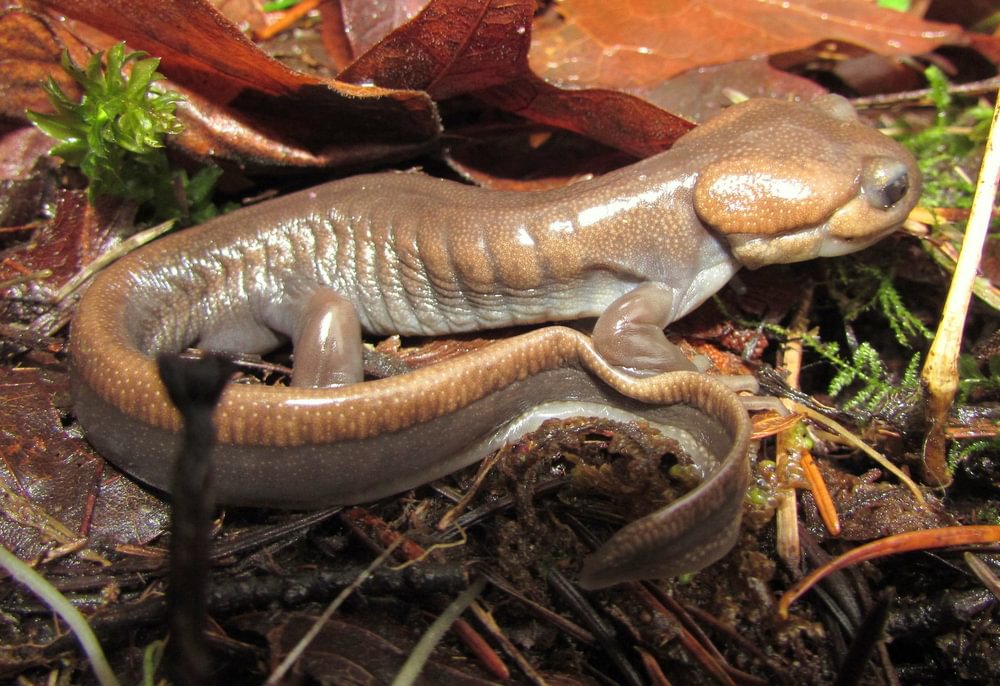
Those big Northwestern Salamanders were a bit harder to find in the lowlands but absolutely abundant in all forest areas. We recorded 386 finds, mostly by spotting them crossing roads on rainy nights or sighting their egg masses in beaver ponds.
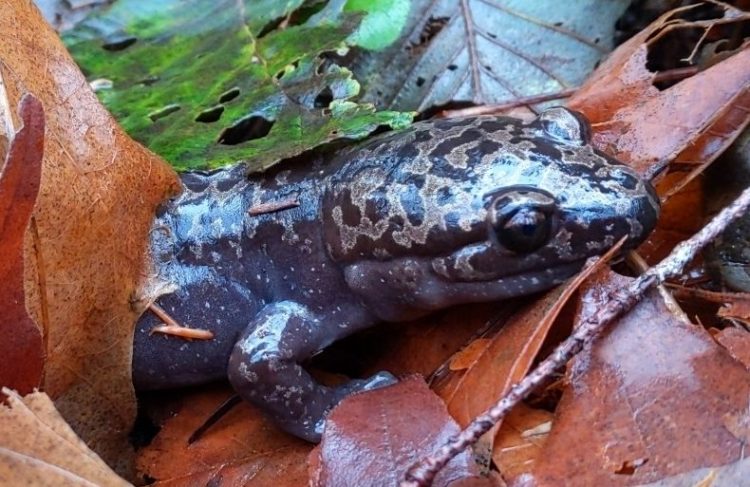
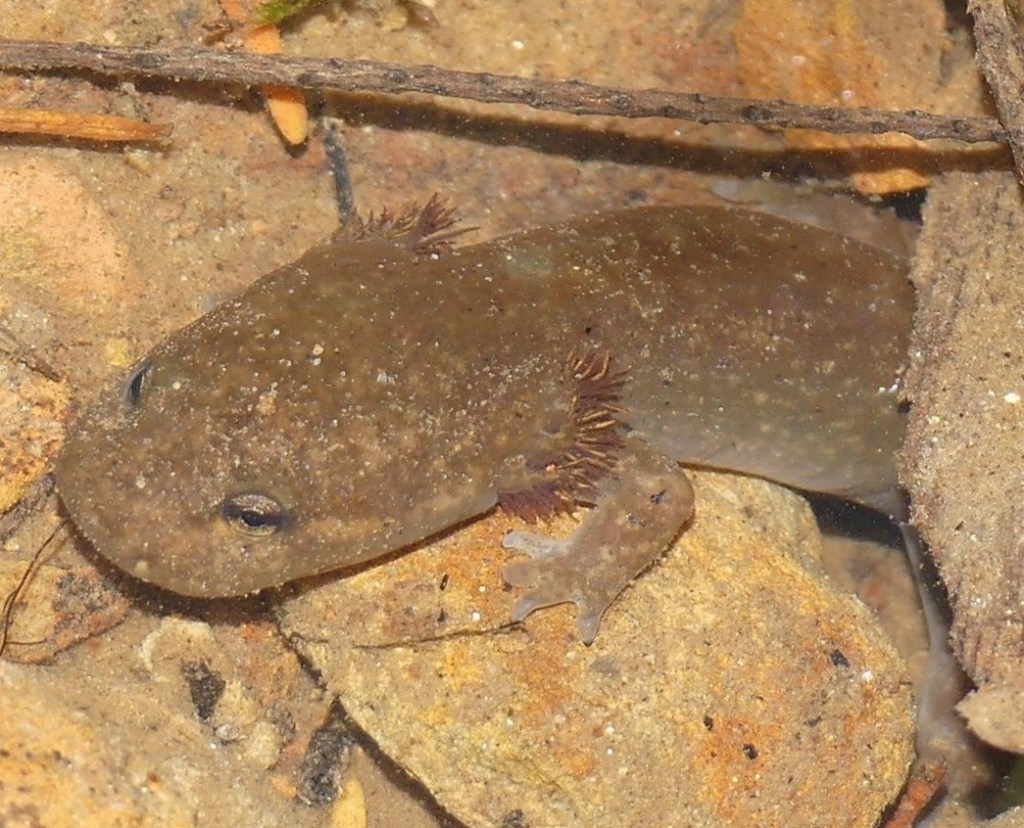
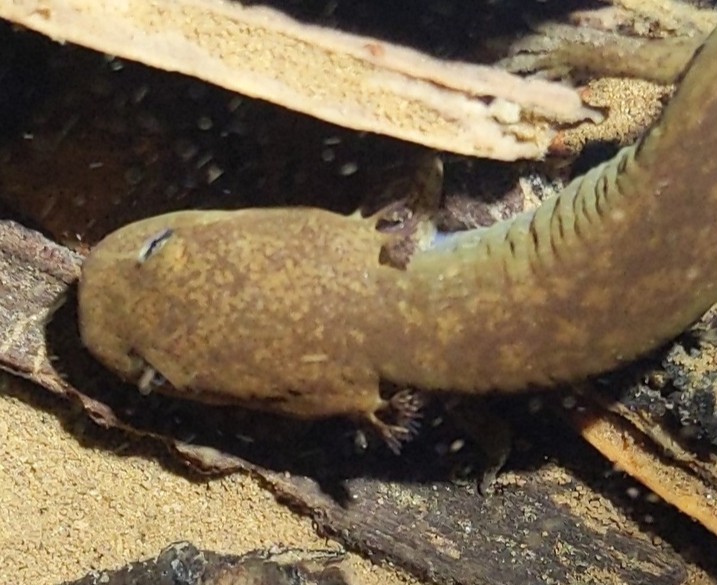
Coastal Giant Salamanders are one of our absolute favorites. We had 57 records, though only a handful were the big terrestrial adults found on land. Most of our records were aquatic larva or neotenic (permanently aquatic) adults in fast clean streams.
The Cope’s Giant Salamander was our most impressive amphibian find. This rare salamander (another Oregon Conservation Strategy and Sensitive Species) looks very similar to a neotenic Coastal Giant, but is smaller, has a more squared-off head, gill stalks that are stalked up rather than bushy, a more slender body with relatively shorter limbs, dotted rather than streaked coloration, a narrower tail fin with a rounded end, and slight color differences on the tail and belly. We were the first people to ever record the species in Columbia County. We had 3 sightings all in one spot.
Turtles
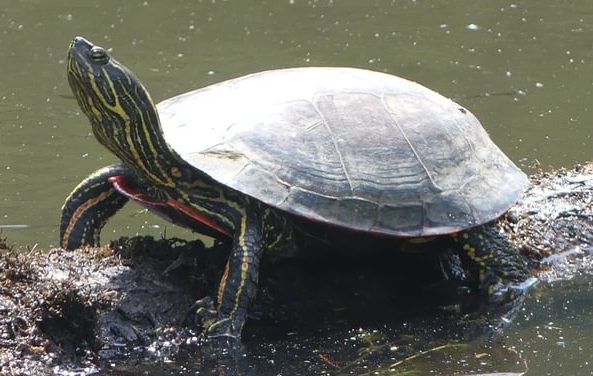
Western Painted Turtle is our most prevalent native species, with 300 sightings documented. They are not only an Oregon Conservation Strategy Species but also a Sensitive-Critical Species, the most alarming designation short of Endangered Species status. They have yellow head-stripes without the red ear spot, and often a red bottom shell.
Sadly, we could not verify any existing Western Pond Turtle populations in the county, though there are several well-documented historic records. This species was once present throughout western Oregon, but now is in even more trouble than the Painted Turtle. We have a number of leads and hold out hope they’ll still be found in a pond, river, or slough somewhere. They can be identified by their drab coloration, lacking stripes.
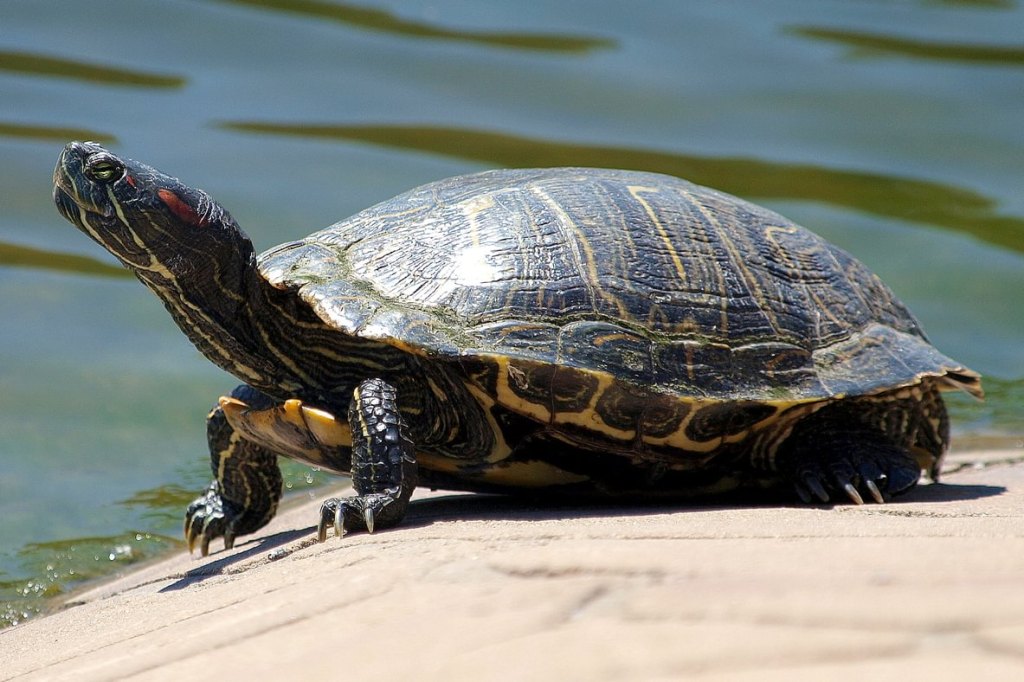
Red-Eared Sliders are our most common invasive turtle species. Native to the eastern USA, discarded pets are often released here. We had 46 sightings. Their red “ear” dot sticks out, though Matt did spot one Yellow-bellied Slider, the subspecies which lacks the red ear.
1 or 2 Common Snapping Turtles resided in the county for over a decade, though they appear to no longer be around. These invasive eastern turtles have formed breeding populations in the Portland metro area, and could do so as well here if multiple turtles are released or escape in a single area.
Lizards
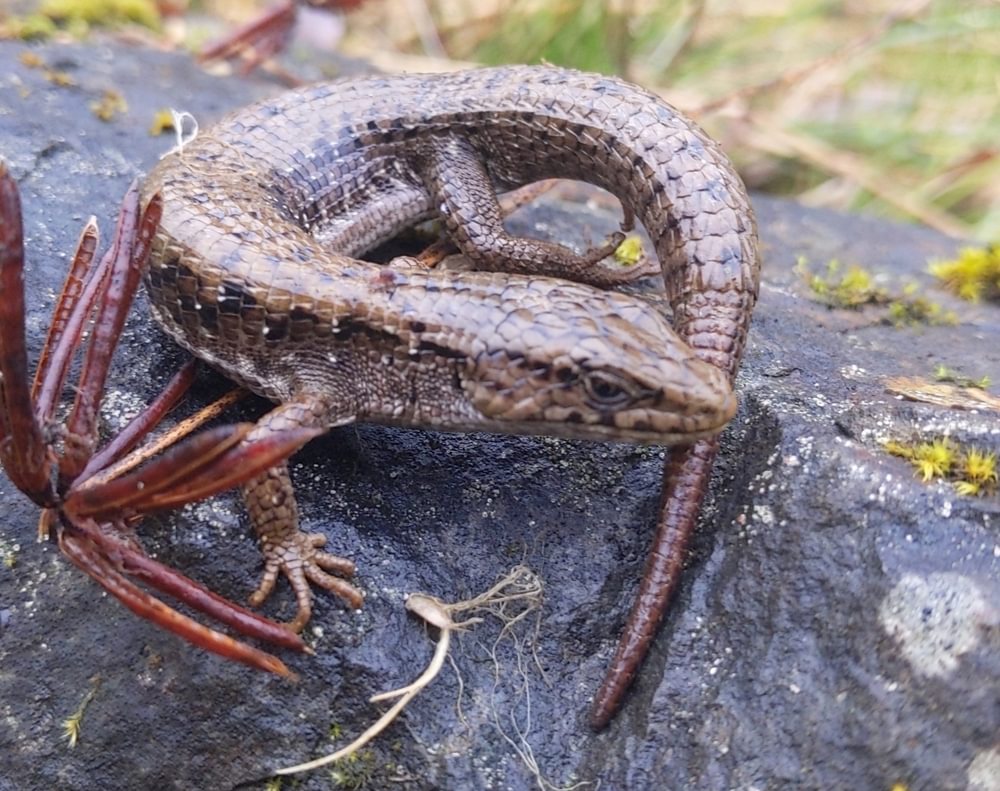
Northern Alligator Lizards are our common lizard species throughout the county, with 185 records.
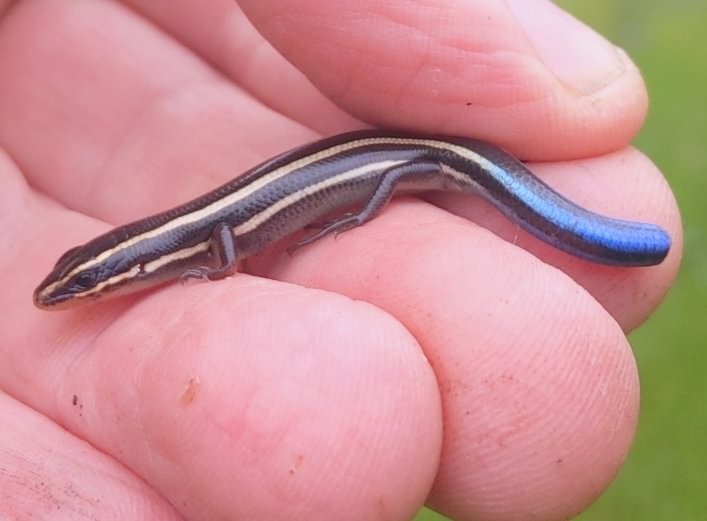
Western Skinks are far rarer, with just 16 records, and had been poorly documented in the county before our work.
We believe that Western Fence Lizards may be found in a clearcut here or there in the county, perhaps in the future if not right now. There are several records very close to the border in Washington and Multnomah counties.
Snakes
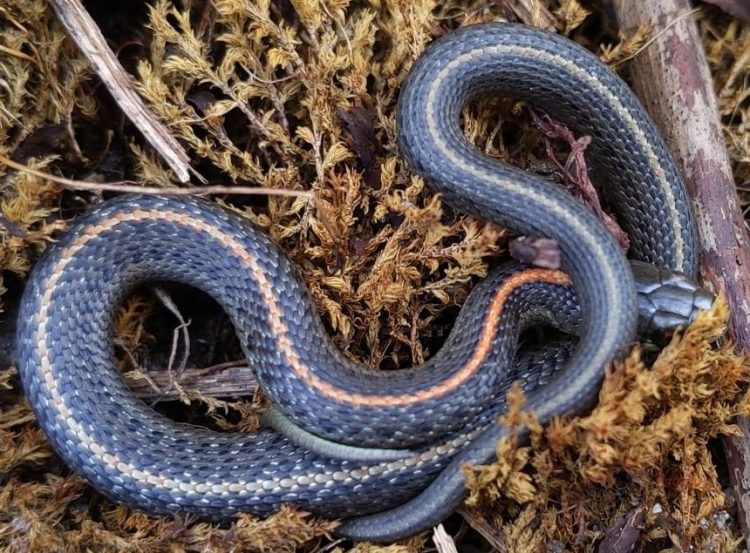
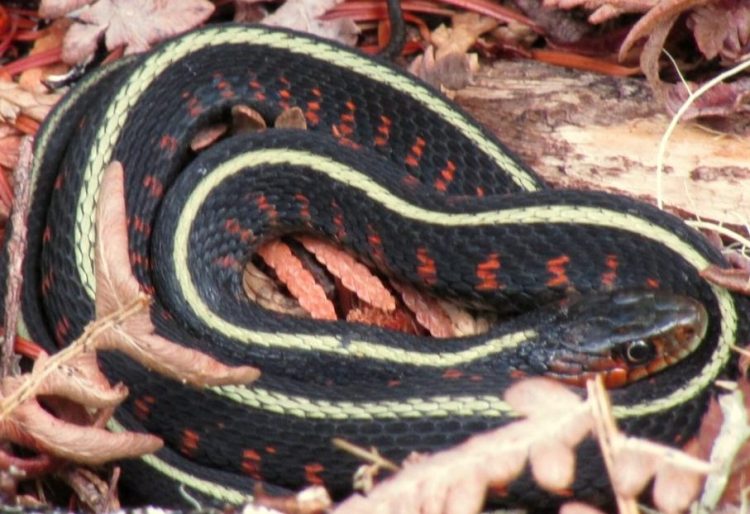
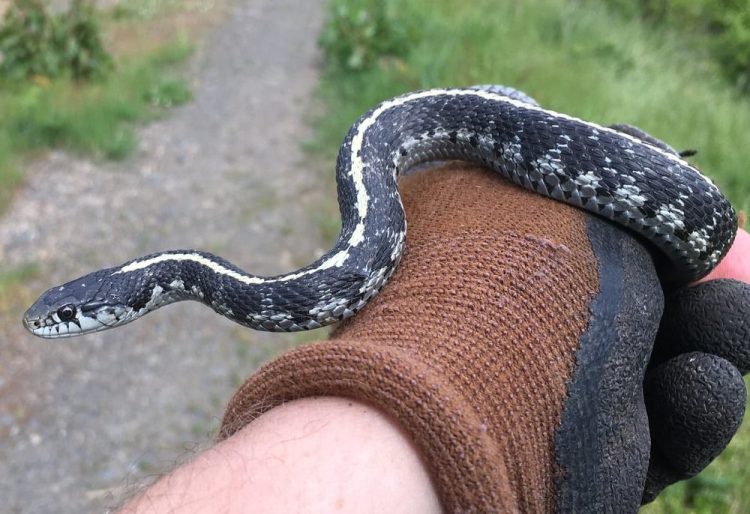
Northwestern Garter Snakes and Common Garter Snakes are the two common snake species in the county, with 472 records and 446 records respectively. The Northwestern Garters are always striped (red, orange, yellow, green, or blue, usually with one stripe though sometimes with three) while the Common Garters have a light yellowish, greenish, or whitish stripe on top and red spots on the sides.
Western Terrestrial Garter Snakes are far rarer, and in fact were represented by very few records in the county before our surveys. They have a white or yellowish-white stripe that has indented or broken sides (as opposed to straight sides on the stripes in the other two species), and their side markings are the same color as the stripe. We had just 19 sightings of this species.
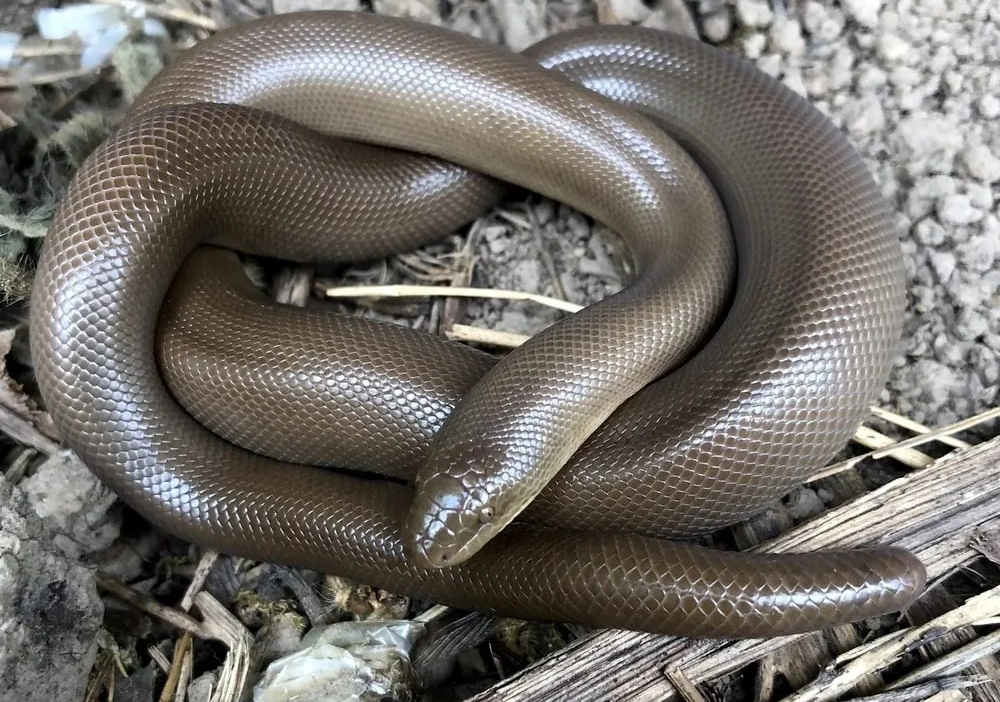
Northern Rubber Boas are an awesome and unique species, another one of our favorites. We managed 171 records, in part because Matt has a robust population on his own property but also because residents just loved sending us their pictures.
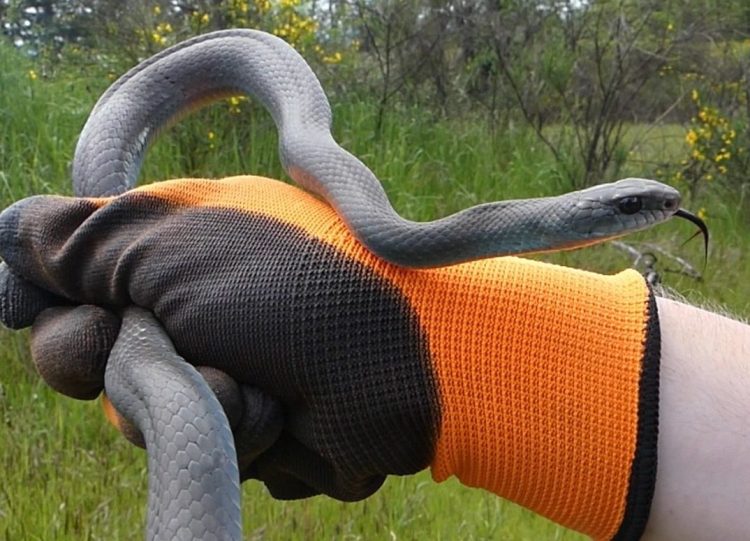
Western Yellow-bellied Racers live in similar places as the rubber boas, but are much more particular in their habitat. We had 49 sightings recorded.
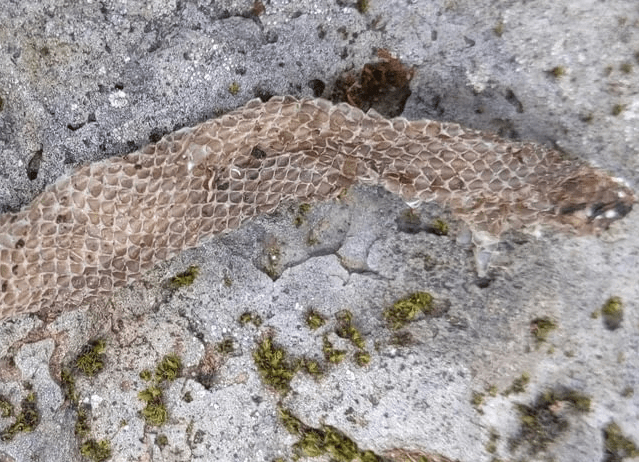
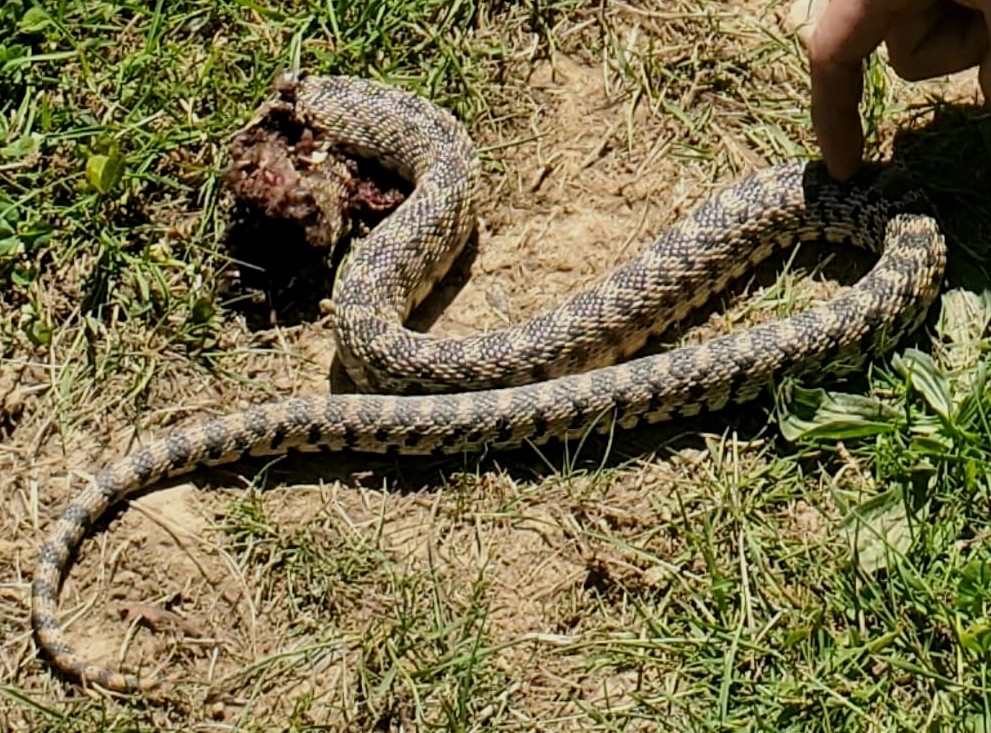
I was aware of rumors and rare sightings of Pacific Gopher Snakes in our county, but they were never photographed or officially documented until now. I found a confirmed shed skin of a Gopher Snake in one location (after 4 sightings from two different people there), and was provided with a photograph from a homeowner in a separate location, where that one was unfortunately killed.
Chris Rombough has reported finding Ringneck Snakes in the county, and we believe they are still here, but we were not able to sufficiently search the locality where they were seen.
Conclusions
27 species was approximately as many as we had hoped to find, though there were some surprises. The Coastal Tailed Frogs, Western Toads, Gopher Snakes, and especially the Cope’s Giant Salamander were exciting finds, and the Green Frogs were a total shock. But striking out on Clouded Salamanders, Western Fence Lizards, Ringneck Snakes, and most of all Western Pond Turtles was disappointing. We hold out hope that they are still holding out somewhere in Columbia County.
In future posts, I’ll break down what we discovered regarding the range of reptiles and amphibians within Columbia County. Where are they found, and where are they not found anymore? How have their distributions changed over time? Then I’m going to take a close-up look at the most unique habitats we discovered in the county and talk about what we can do to preserve them for the future.
If you’d like to read the paper in its entirely, you can get a copy of the latest issue of Northwestern Naturalist, (technically dated as the Winter 2024 issue, though it wasn’t published until September 2025), or you can purchase the article independently from BioOne at the following link:
If you aren’t able to pay, I’ve also uploaded the paper onto my own ResearchGate account and you can read it there for free:
p.s. – you may be wondering who that third name is on the authors list! Dr. Aleta Quinn is a long-time herper friend of ours with a background in biology who now works as a philosopher of science at the University of Idaho, focusing on biodiversity. During our surveys she came out to view the work we were doing and ended up joining in surveys herself several times.
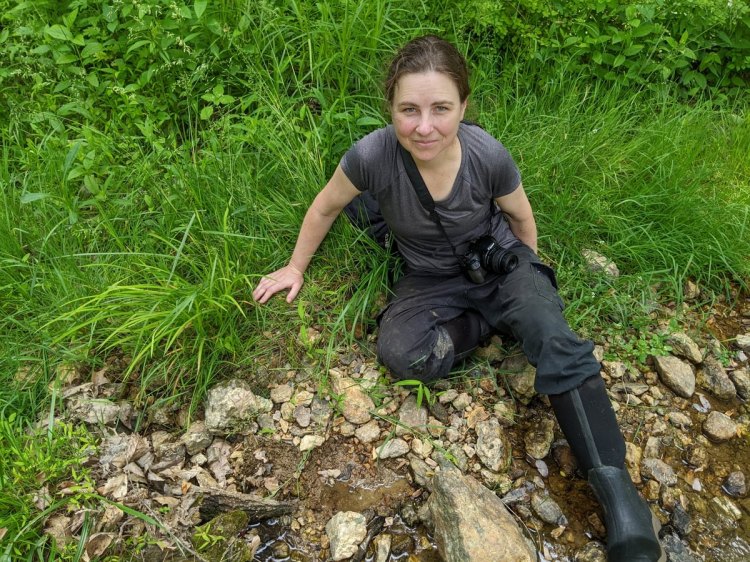
When Matt and I were trying to juggle demanding day jobs at the same time the scope of the paper became particularly onerous (nearly 15,000 words and 60+ figures in one draft!), Dr. Quinn stepped in to help. She gave a heroic lift in refining our theories, tracking down references, reworking figures, fixing tables, giving strategic input to our data presentation, and editing the entire thing top to bottom more than once. She then stepped in several times as the review process dragged and helped shepherd the project to completion. We were blessed to have her with us, and I believe the paper could have been another year late in coming and decidedly inferior in presentation if she hadn’t joined the project.
 Wild Columbia County
Acknowledgements are in the actual paper, of course, but I wanted to include them here as well.
We would like to thank Lucas Green, an ecology student at Portland Community College, for his extensive assistance in the field. We also thank Larissa Huson and Kathleen Woodley for their survey assistance. We are grateful to the over 300 community members who provided data for the project and wish especially to highlight Kyle Snider, Tom Myers, Jessica Hird, Lauren Daehnke, Taylor Andexler, and Lona Pierce for their extensive or unique contributions. Thanks to those who participated in our turtle survey workshops, especially Cailin Warner and Katie Zerzan. We want to thank Geoff Schwartz of Vernonia High School and Katie Carpenter of Scappoose Academy for the time spent with their students, and we thank the students of their classes for their help. We similarly are grateful to Patrick Birkle of Columbia City Elementary, Rosalie Sumsion of McBride Elementary, and Shari Dummer of Columbia County Christian School for the opportunities to speak to their students. Chris Rombough, Laura Guderyahn, Alan St. John, Mark Leppin, Bruce Bury, Deanna Olson, Kelly Christiansen, Richard Hoyer, and Jane Hartline were all helpful in providing data and understanding of known herp distributions in the region. We also thank the Scappoose Bay Watershed Council for providing past survey data and helping to organize additional surveys in the field. We thank participants of the 2022 Virtual Annual Meeting of the Southwestern PARC and Northwestern PARC (Partners in Amphibian and Reptile Conservation), hosted by the Turtle Survival Alliance (TSA), for feedback. Thanks to Susan Barnes and the staff at ODFW for permits and input. Thanks to the Columbia County Historical Society, Friends of Nob Hill, Friends of Dalton Lake, Friends of Liberty Hill, and Friends of Fox Creek for getting the word out about the project. We appreciate Chip Bubl at the OSU Extension Office for the time he gave us and the vital connections he made. Finally, we want to thank the many landowners who allowed us to spend time recording herps on their property, particularly Allen Marshall, Ken Bernet, Howard Larson, Karin Hunt, Linda Zahl, Paul Hird, Austin Tomlinson with the Columbia Land Trust, Erin and Ron Forrester, Cynde Ede, and Charles Peterson. This study was only possible because you let us take a look at the amazing wildlife that makes its home on your land, and we deeply appreciate the time you gave to share that with us.
LikeLike
This is so awesome!!! We’ve followed along as you guys spent 5+ years traipsing around the county. We 3 have done an exceptional job putting it together. Thanks for all your hard work.
LikeLiked by 1 person
Thank you Fonda!
LikeLike
THANK YOU. Love it. This is a shockingly academically professional document. Totally unexpected site. Don’t know how I found it. I’m retired biologist
LikeLiked by 1 person
Thank you for that praise, though I didn’t think it had to be shocking! I’ve been authoring studies like this for 10+ years now, and have an obsessive commitment to “doing it right”. Dr. Quinn is just as driven about doing professional and ethical research as I am (perhaps even more so), and has an even longer and better publication history. Matt primarily communicates in owl calls and subvocal grunts, but he’s an excellent surveyor.
LikeLike
Thank you Futuristic! If you’re in the region, perhaps we’ll cross paths at the Joint Annual Meeting https://thesnvb.org/annual-meeting/ of the journal’s host society.
LikeLike
s
LikeLike
I was at dahlgrens building supply the other day and a woman drove up and opened the trunk of her car to reveal a 12 inch diameter snapping turtle! She said she found it near scappoose waste water treatment facility walking across the road. She knew it was a snapping turtle and was worried that children living nearby might get snapped up. (A fellow in the lumber yard i.d.’ed it on his phone.) She didn’t know what to do with it, and i couldn’t remember the name of your organization. She was going to call animal control but i told her i thought the county sheriff had eliminated the animal control position and that Roger had retired. She was going to try the Humane Society. What should one do in circumstances such as this?
LikeLiked by 1 person
Thank you for that report! It is important to know that there have been additional snapping turtle releases here. I had not heard about it, but it does not surprise me at all.
In those cases, the best thing to do is contact the Oregon Department of Fish and Wildlife. They will instruct you on how to turn the turtle over to them. I’ve heard positive reports from other people who caught invasive turtles in the past.
LikeLike