Dragonflies and Damselflies are of the Order Odonata . Dragonflies tend to be larger and thicker with wings that are held straight out, whereas damselflies are small and slender with wings held along the body.
Dragonflies (suborder Anisoptera )Skimmers (family Libellulidae )
Our most common dragonflies, they have the greatest visual diversity. Many are small or medium in size.
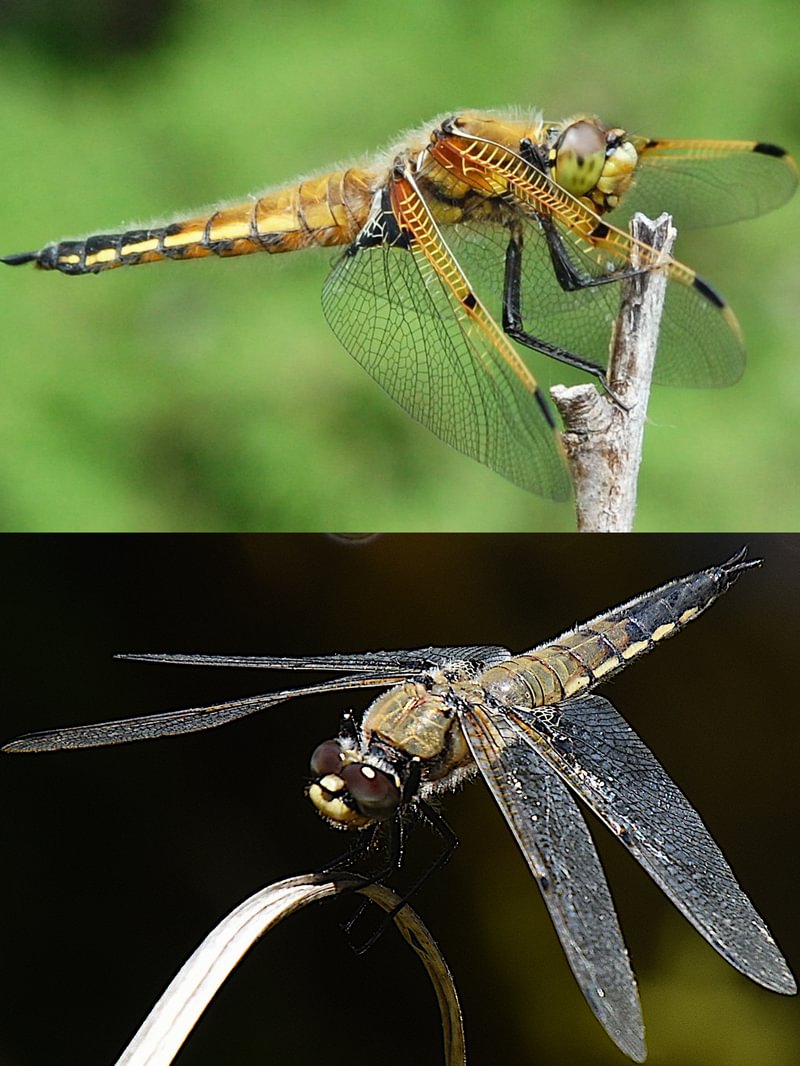
Dot-tailed Whiteface (Leucorrhinia intacta ) – Mostly black with a white face. Females have yellow splotches on the abdomen, males have a single dot. (photos © Gordon Johnston and Ken Allison )
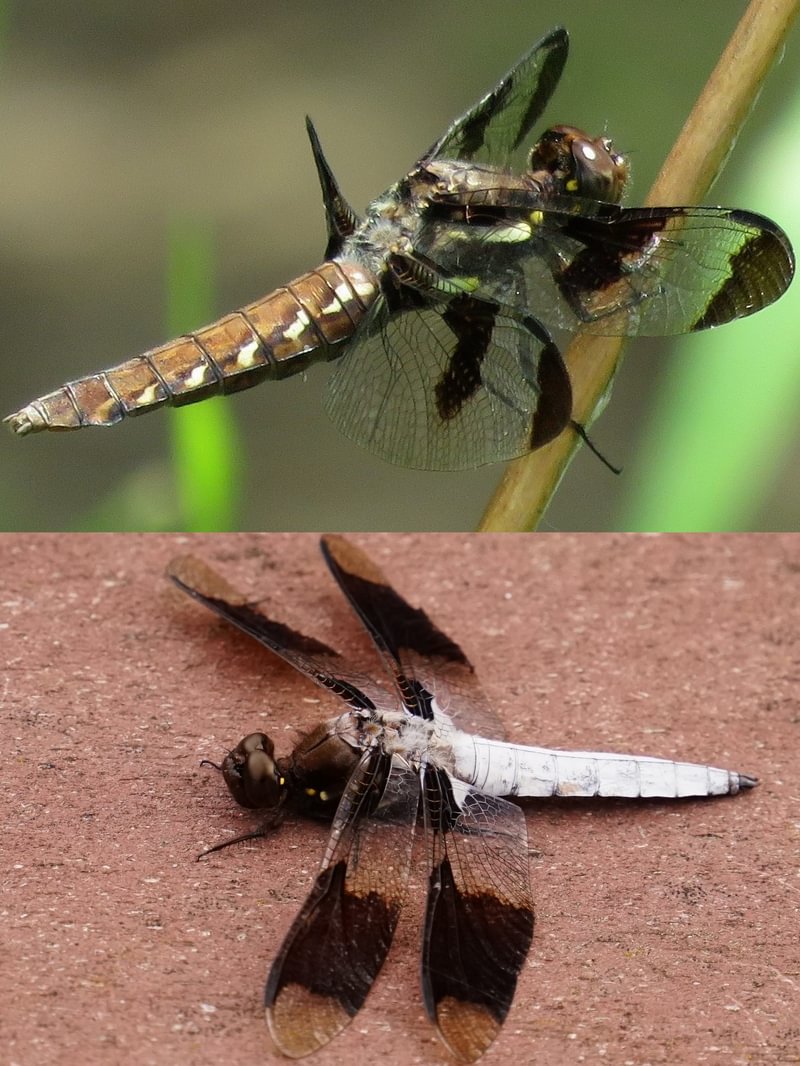
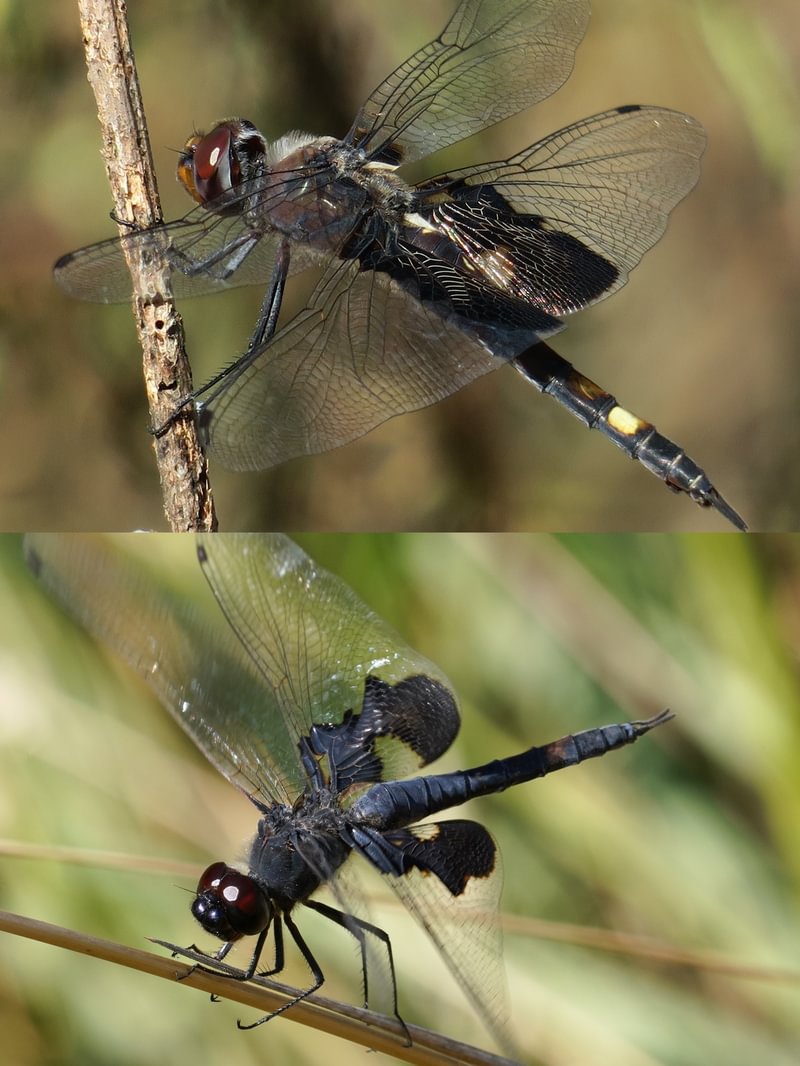
Black Saddlebags (Tramea lacerata ) – Black body, light spot on top of abdomen. Large black “saddlebag” blotches on base of hind wings. (photos © Robert Simons and Cameron Eckert )
Darners (family Aeshnidae )
These are large, fast-flying dragonflies that you’ll usually see in the air. Eyes are noticeably large.
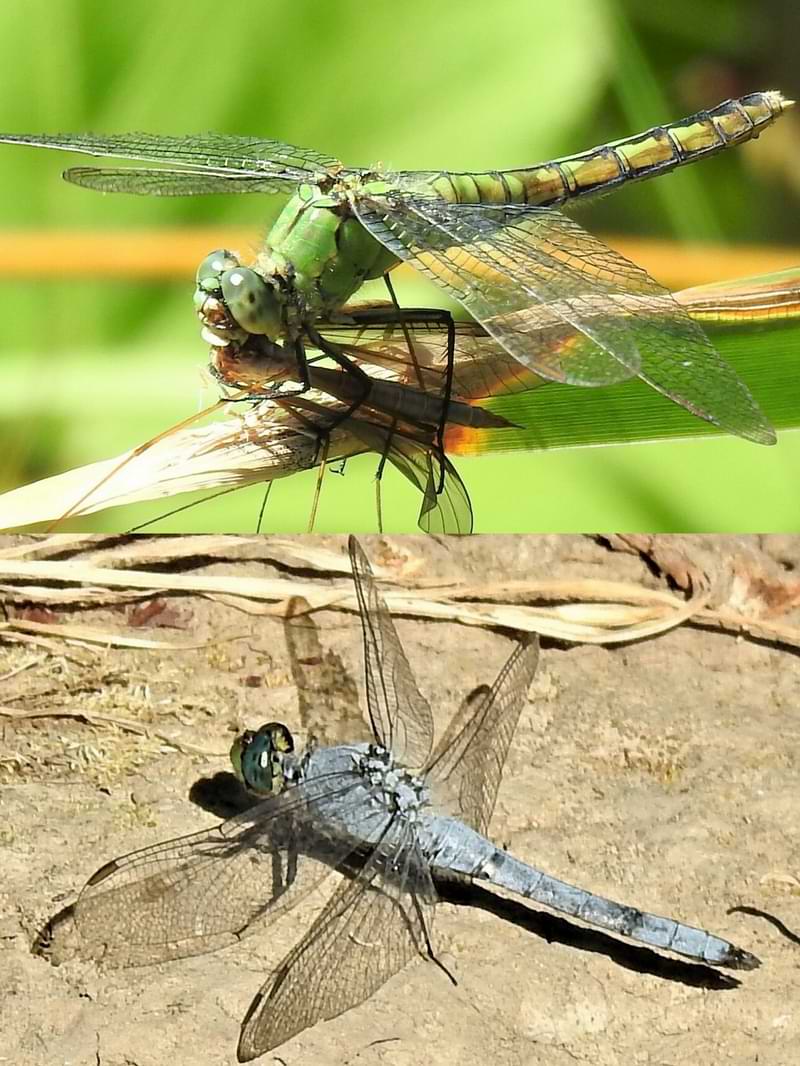
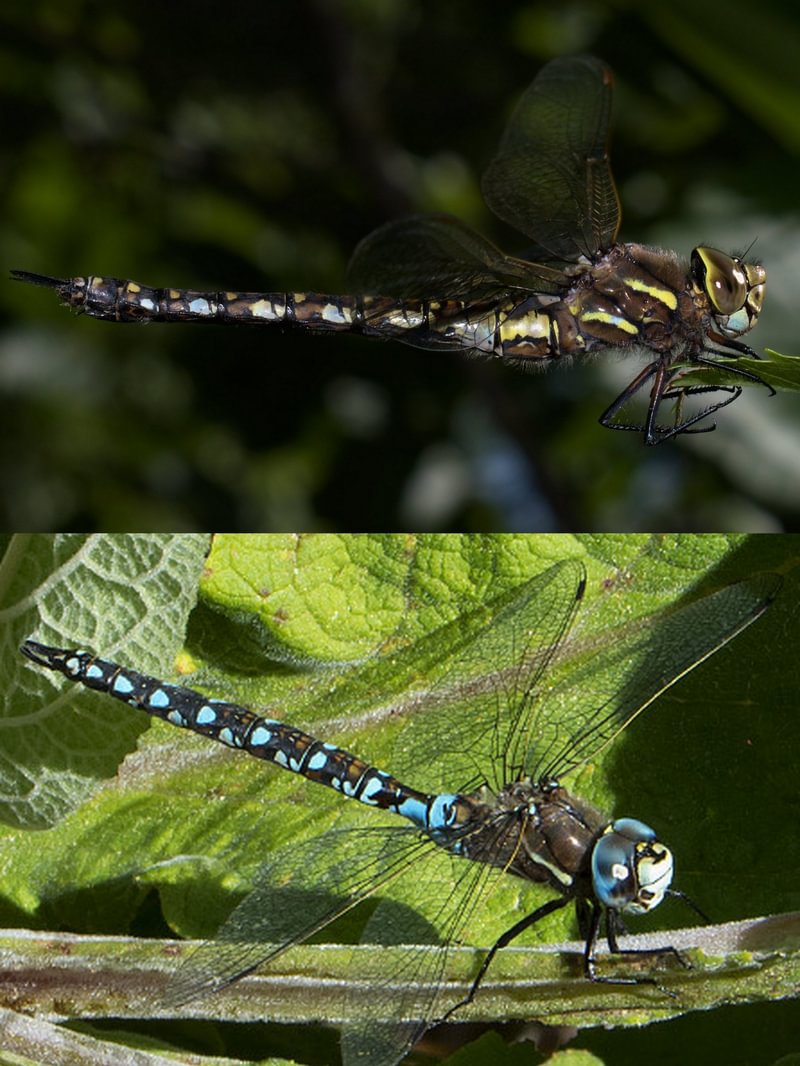
California Darner (Rhionaeschna californica ) – A smallish species. Blue eyes and spots, females can be more yellowish. More distinct black line across face than in Blue-eyed Darner. Upper appendages simple. (photos © Zach Kemp and Jim Johnson )
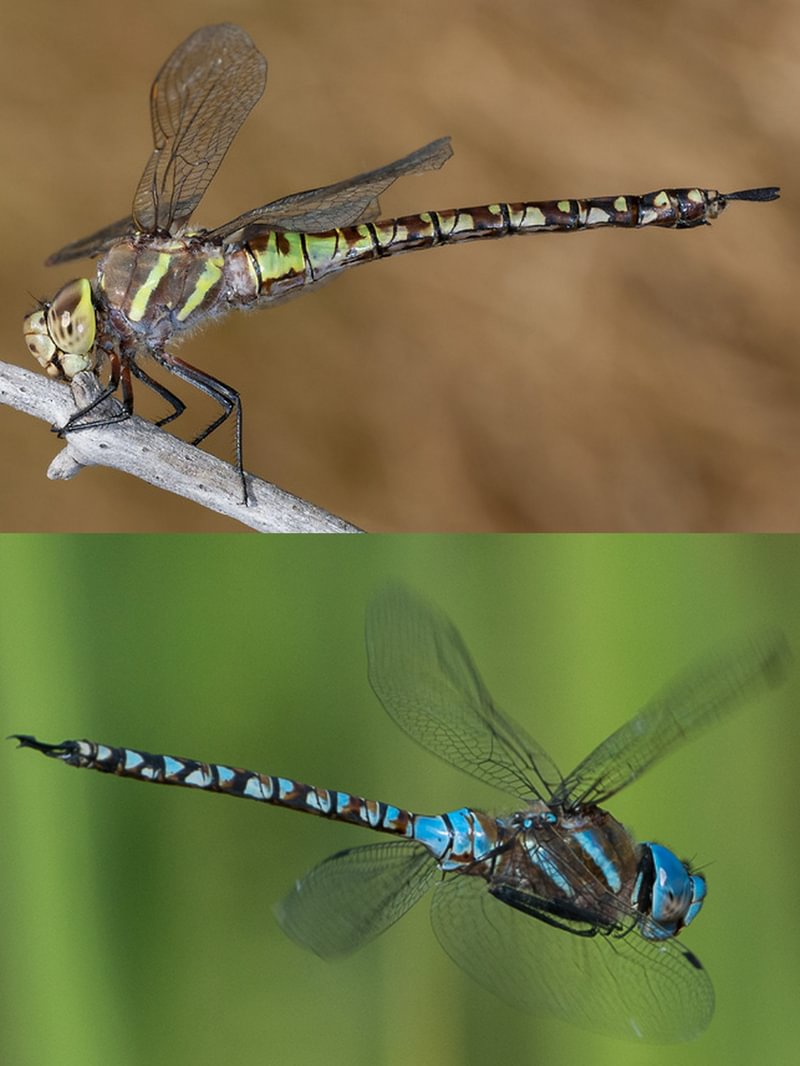
Blue-eyed Darner (Rhionaeschna multicolor ) -Sky-blue face and markings, though females sometimes greenish-yellow. Pale brown facial line. Upper appendages strongly forked. (photos © Jim Johnson and Juan Miguel Artigas Azast )
Emeralds (family Corduliidae )
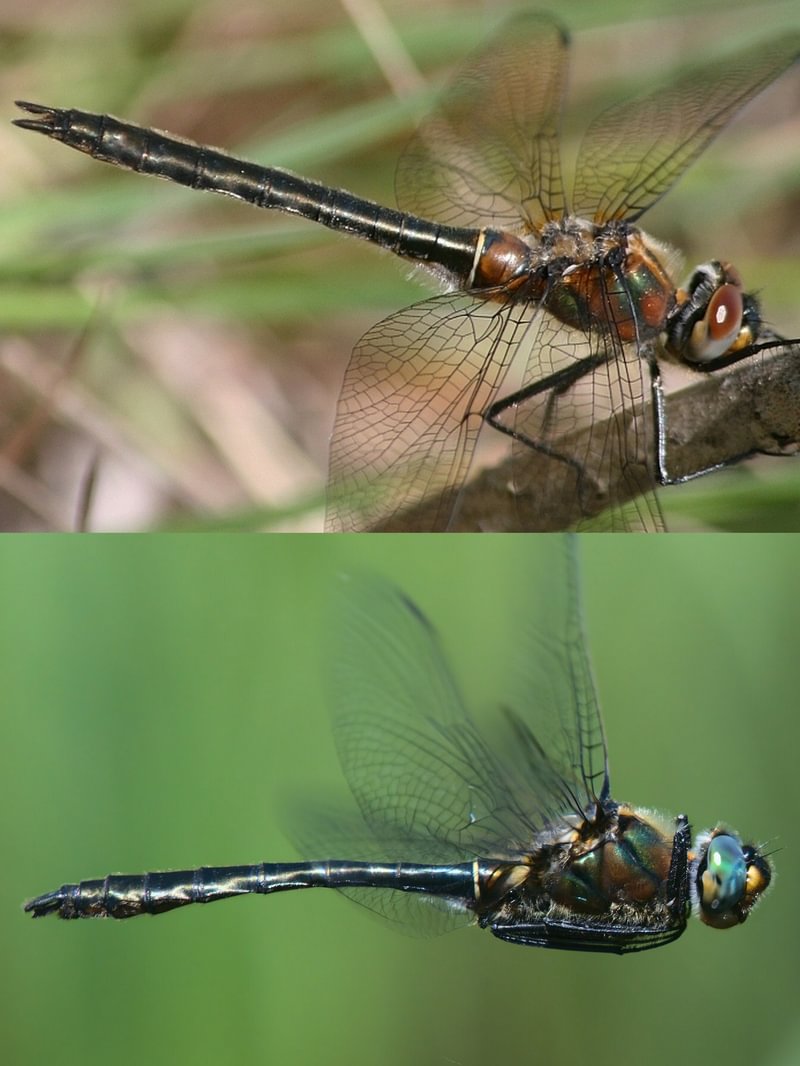
Named for their green eyes or metallic green thoraxes. Tend to be found in marshes, lake edges, or cool ponds.
Clubtails (family Gomphidae )
Have a widened end of the abdomen, especially visible in males. Unlike other dragonflies (but like damselflies), their eyes are often separated. Prefer clean, clear, fast-moving streams, thus development or logging near waterways is a problem.
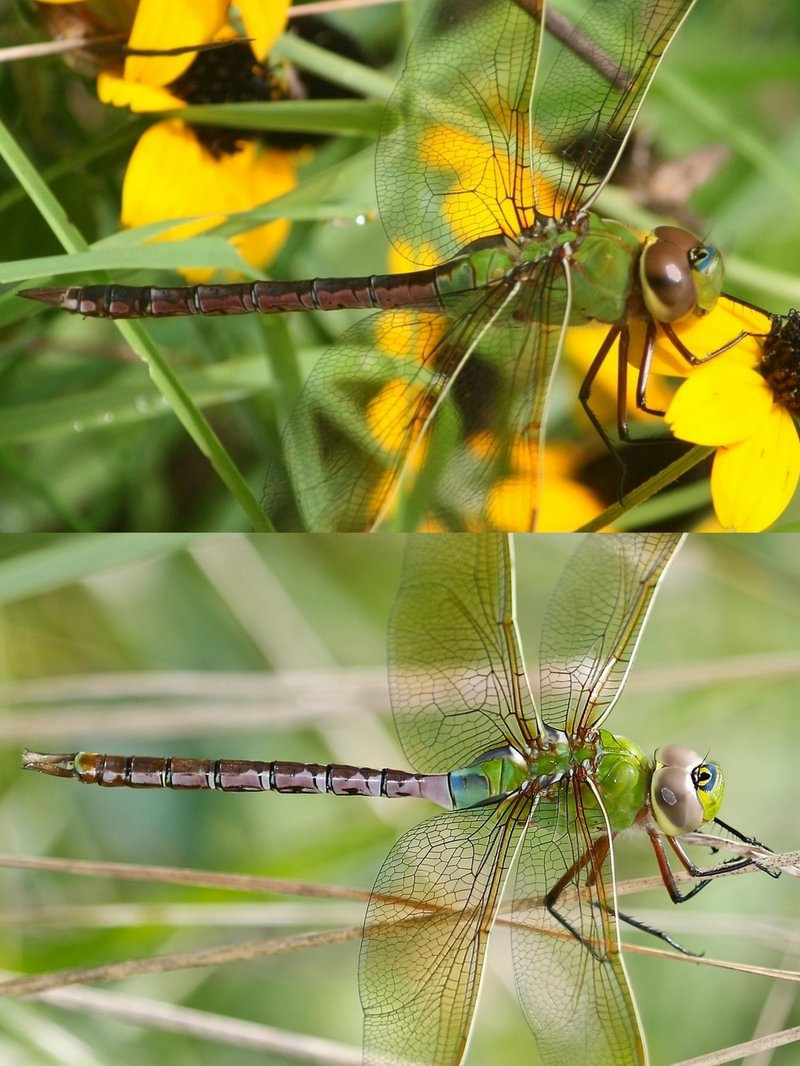
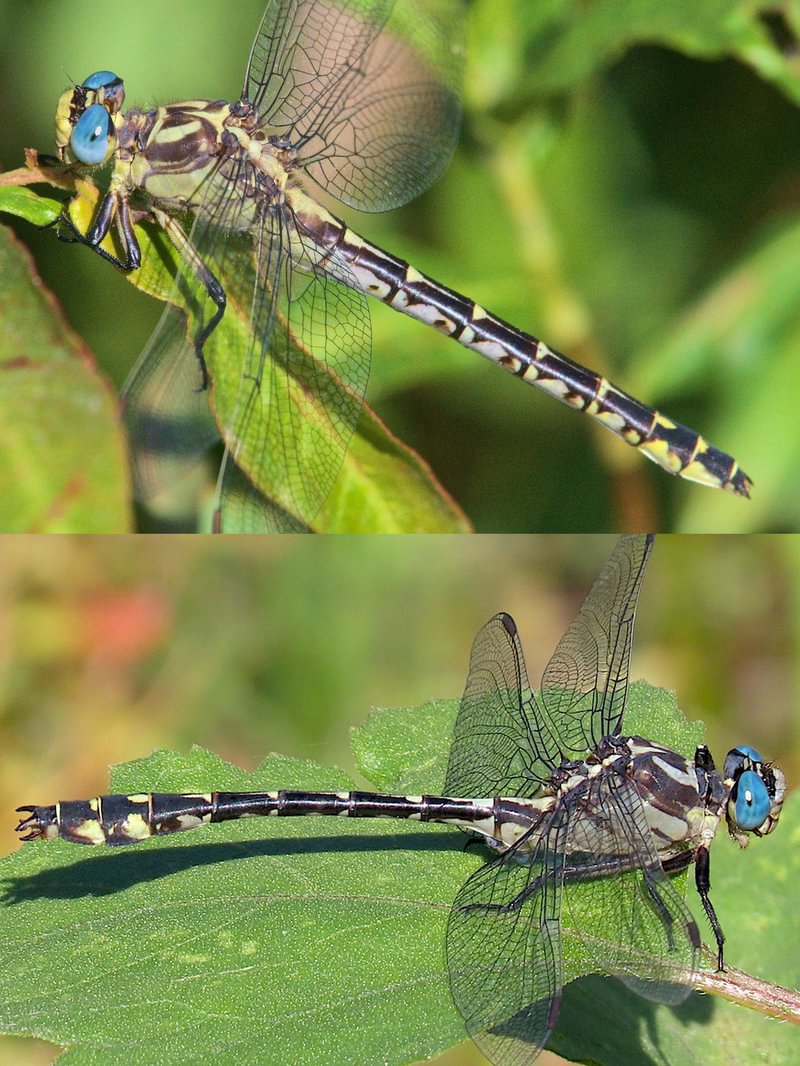
Olive Clubtail (Stylurus olivaceus ) – Black abdomen, grayish-green thorax, and large blue eyes. Lacks diagonal black stripes on thorax, unlike Pacific Clubtail. (photos © Zach Kemp and Jim Johnson )
Grappletail (Octogomphus specularis ) – Abdomen black with fine yellow stripe above. Eyes dark greenish-gray on yellow face. Thorax yellow with black swath. (photos © Jim Johnson and Jim Johnson )
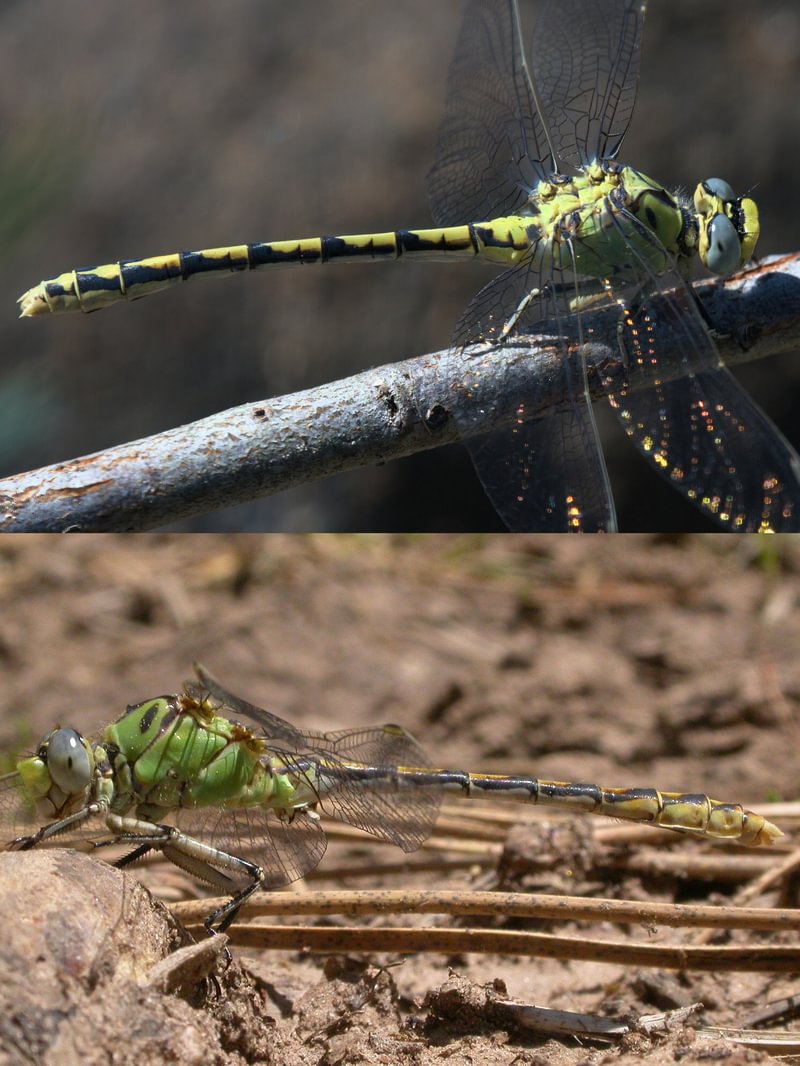
Pale Snaketail (Ophiogomphus severus ) – Black and pale abdomen with narrow yellow triangles above. Thorax is green with small darker spots above. (photos © Zach Kemp and Nick Block )
Spiketails (family Cordulegastridae )
Named due to females, which have spiked ovipositor which they use to deposit eggs perpendicular to stream margins while flying vertically.
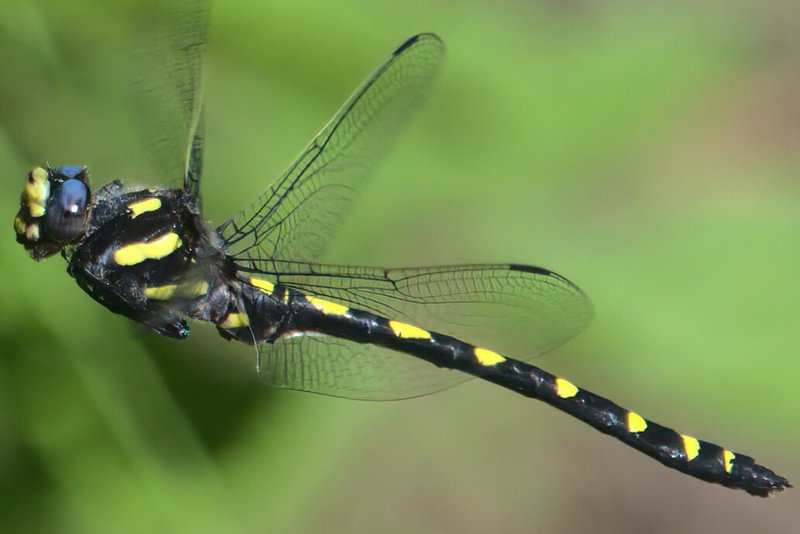
Pacific Spiketail male (Cordulegaster dorsalis ) – Very large. Black with vivid yellow spots on abdomen and diagonal lines on thorax. Small eyes are blue. (photos © dkaralun and Zach Kemp )
Pacific Spiketail female (Cordulegaster dorsalis ) – Females use their spike to lay eggs in clear shady forest streams, thus they are vulnerable to logging. (photo © dkaralun )
Petaltails (family Petaluridae )
These are the most ancient of all living dragonfly families. There is an Australian species that reaches 5 inches long, making it the largest living dragonfly.
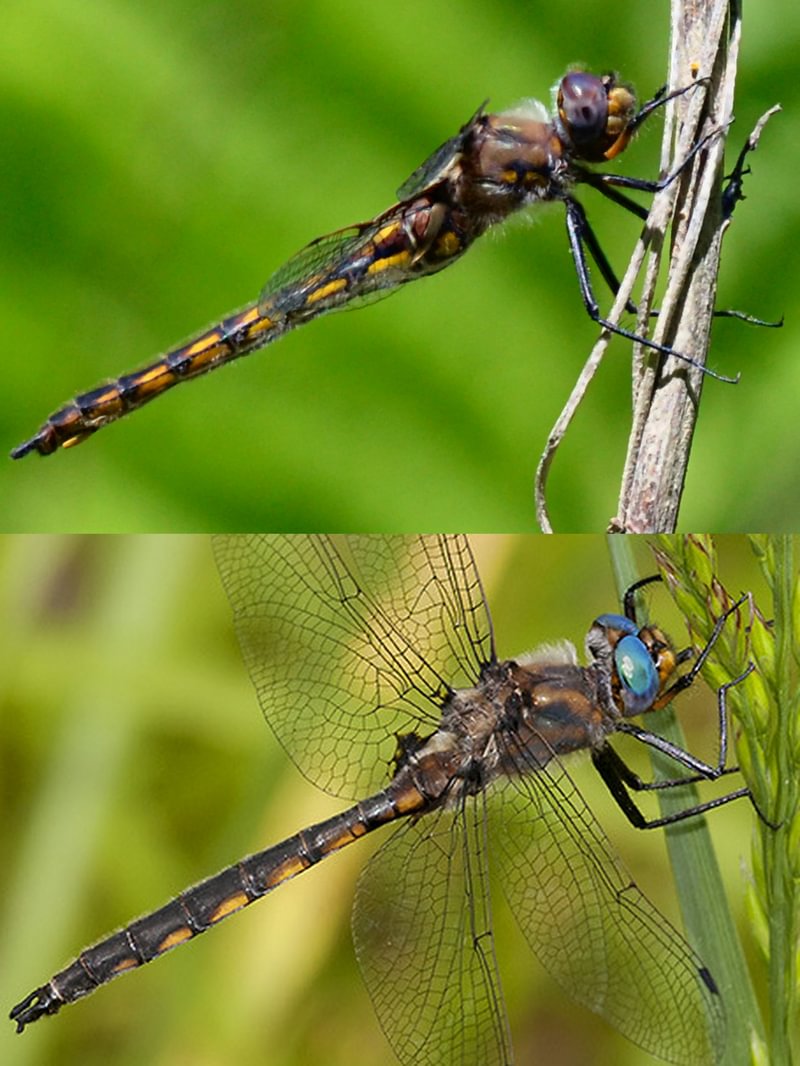
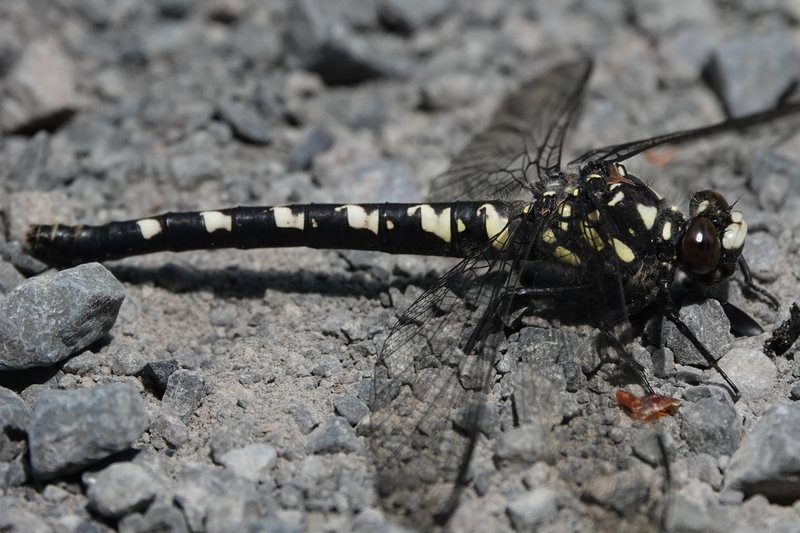
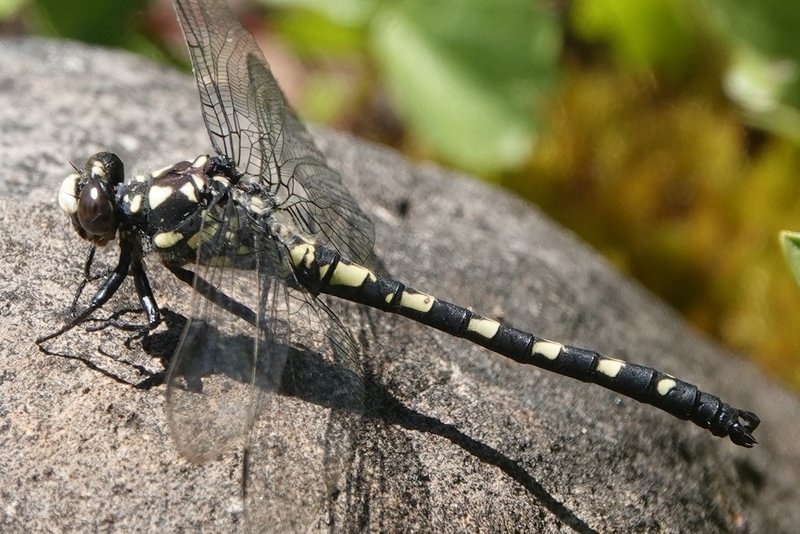
Black Petaltail female (Tanypteryx hageni ) – Black with distinct pale yellow marks. Dark eyes don’t touch. Oregon Conservation Strategy Species, in forested streams at moderate-to-high elevation. (photos © Matt Hunter )
Black Petaltail male (Tanypteryx hageni ) – Larva live in burrows on streambanks, making it the only local dragonfly species that is not fully aquatic in the larval stage. (photos © Matt Hunter )
Damselflies (suborder Zygoptera )
Pond Damsels (family Coenagrionidae )
Our most commonly encountered damselfly family. Many are relatively small. Their larvae tend to require natural, non-polluted water bodies.
Pacific Forktail (Ischnura cervula ) – Mature females frosted blue thorax with black lines. Male thorax bluish-green on sides, black on top with tiny blue spots. Both have black abdomen with blue tip. (photo © Zach Kemp and dickwood )
Western Forktail (Ischnura perparva ) – Mature females frosted blue throughout. Males have green or blue-green thorax with black stripes and greenish dots on head. Both have black abdomen with blue end (photo © Zach Kemp and Jim Johnson )
Swift Forktail (Ischnura erratica ) – Mature females black thorax with greenish-blue to green stripes. Males black with blue stripes. Head black with green facial stripe and blue spots on top. Both have black abdomen, sometimes with blue at end. (photo © Jim Johnson and Jim Johnson )
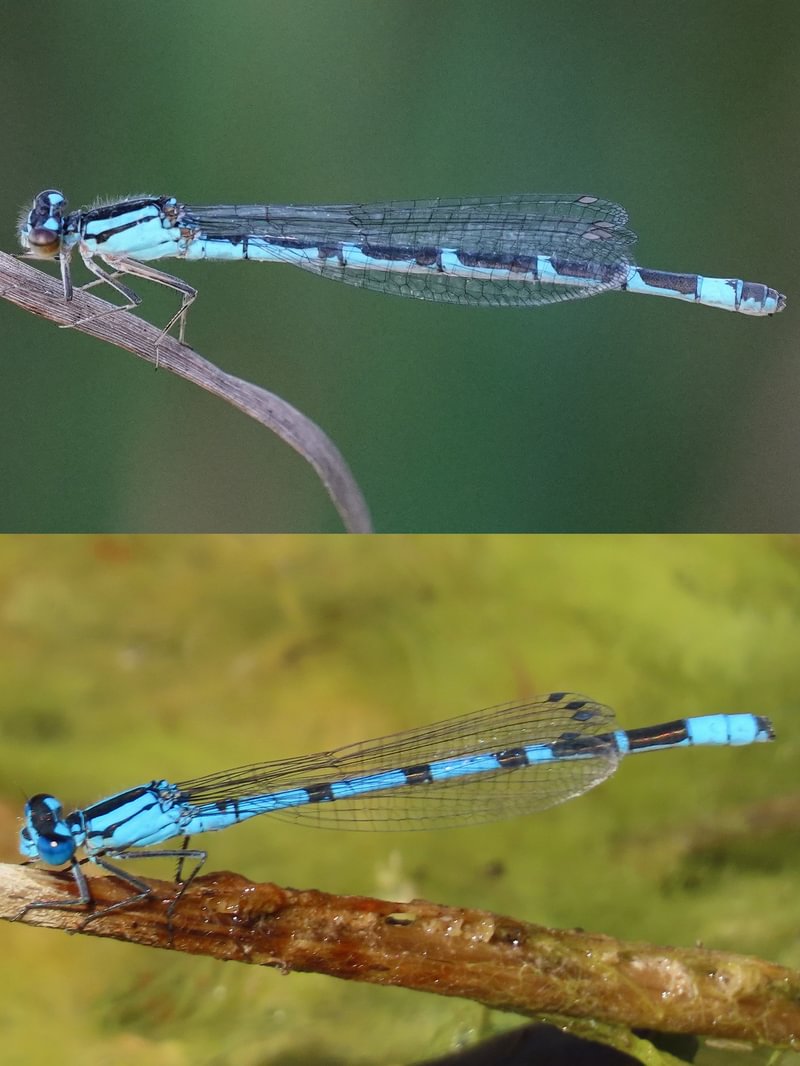
Tule Bluet (Enallagma carunculatum – Females have blue/tan abdomen markings, lack blue tail. Male abdomen blue and black, on segments 3-7 black sections longer than blue. Thorax both blue with broad black stripe above, narrow stripe on sides. (photo © Jim Johnson and Don Henise )
Northern Bluet (Enallagma annexum ) – Segments 3-7 in males are more blue than black. Females only have blue rings on each segment. Lateral black stripe on thorax has small jag near the front. (photo © Cameron Eckert and Cameron Eckert )
Boreal Bluet (Enallagma boreale ) – Identical in appearance to Northern Bluet. Can only be identified by examining the male appendages under a microscope. (photo © Jim Johnson and Cameron Eckert )
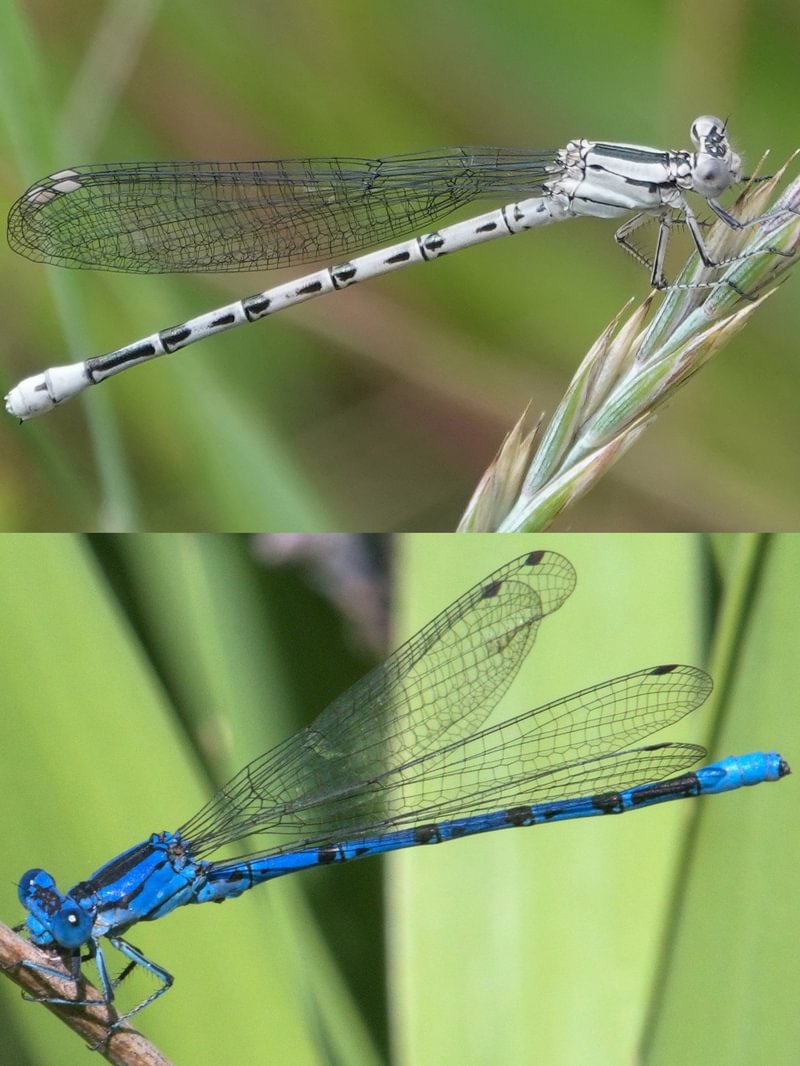
Vivid Dancer (Argia vivida ) – Female gray with black marks including triangles. Male bright blue with similar black mark. Can be purple when cool. Wide urn-shaped top stripe on thorax and thin pinched side stripe. (photo © Cameron Eckert and Zach Kemp )
Emma’s Dancer (Argia emma ) – Female yellowish-tan with black marks, no triangles. Male lavender, rarely blue, with same black marks and blue tail. Straight narrow top stripe on thorax. (photo © Jim Johnson and Zach Kemp )
Western Red Damsel (Amphiagrion abbreviatum ) – Our only red damselfly. Females have tawny head/thorax, while in males it is black. (photo © Scott King and Zach Kemp )
Spread-winged Damselflies (family Lestidae )
Spreadwings are long and slender, unique in that they hold their wings at an angle rather than straight along the body like other damselfies.
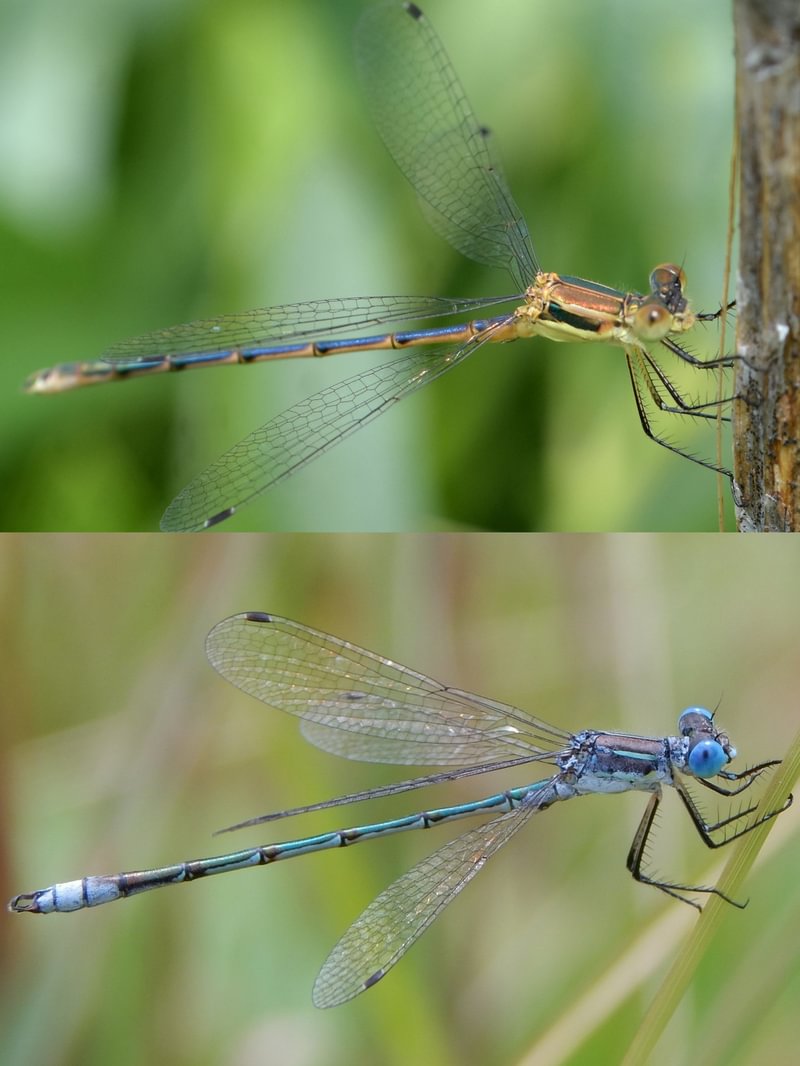
Northern Spreadwing (Lestes disjunctus ) – Female light brown, dark above. Thorax has thin light lights, yellowish below. Male dark green abdomen with cloudy end. Thorax with thin blue lines, cloudy blue below. Straight appendages. (photo © Susan Blayney and Joanne Redwood )
Lyre-tipped Spreadwing (Lestes unguiculatus ) – Male and female are both similar to Northern Spreadwing, but appendages on end of abdomen are a “lyre” shape. (photo © Mark Kluge and Chantel )
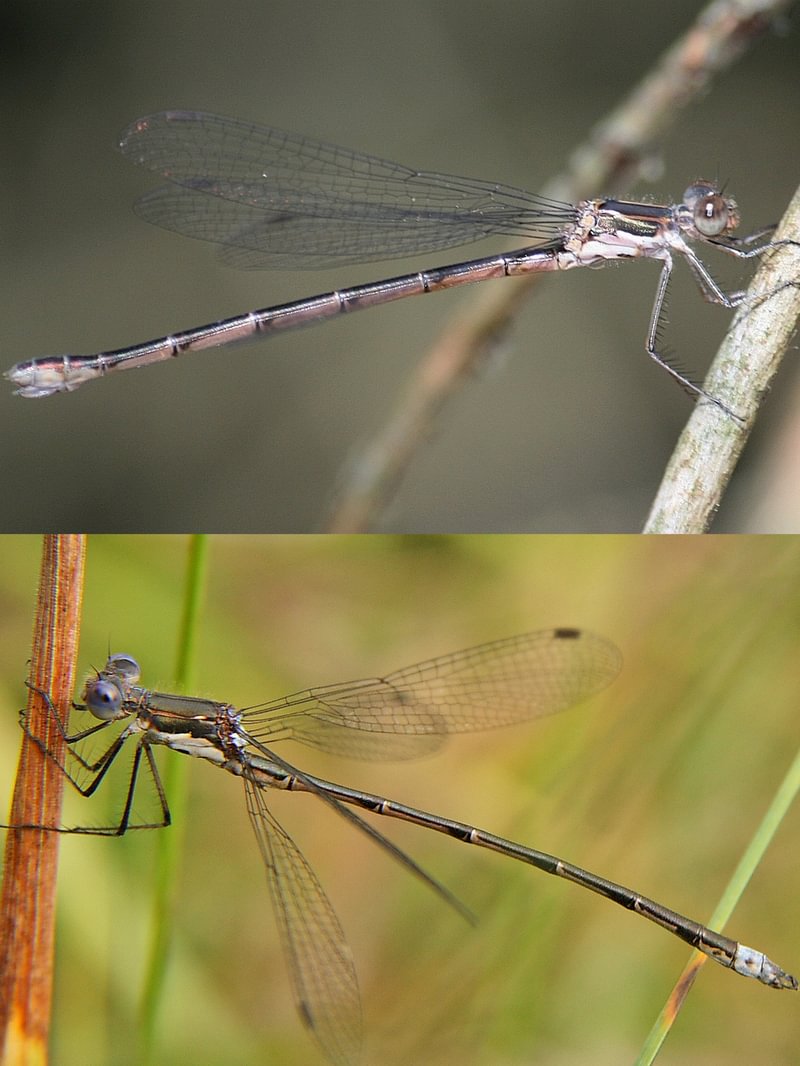
Spotted Spreadwing (Lestes congener ) – Both sexes brown with darker markings. Thin light brown stripe on thorax, light below with 4 dark marks underneath. Males have blue eyes and cloudy end of abdomen. (photo © Joe Bartok and Alain Maire )
California Spreadwing (Archilestes californicus ) – Females drab brown. Males brown with blue eyes and cloudy blue abdomen tip. Thorax has white stripes on sides. (photo © Jim Johnson and Jim Johnson )
Broad-winged Damselflies (family Calopterygidae )
Large, broad-winged damselflies, often metallic in color. Found in streams and rivers.
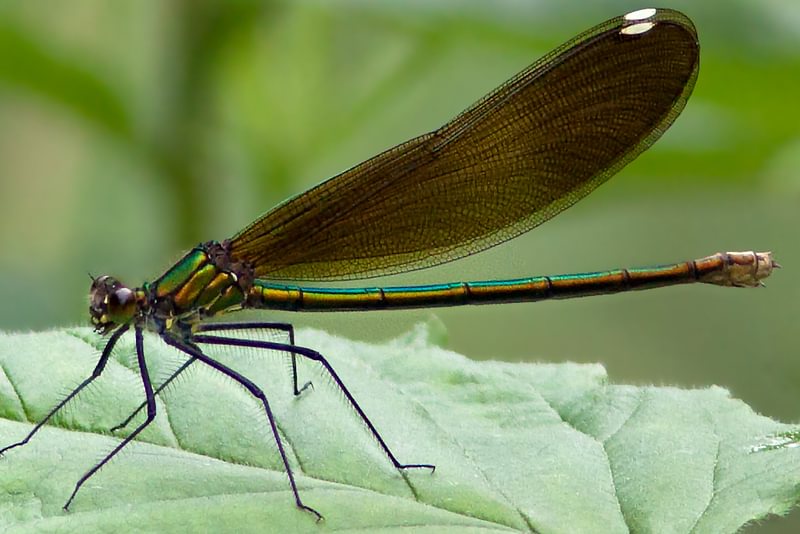
River Jewelwing female (Calopteryx aequabilis ) – Female dark green with smoky wings and a white tip. Larva live in root masses in swift portions of forest streams. (photo © Suzanne Labbé )
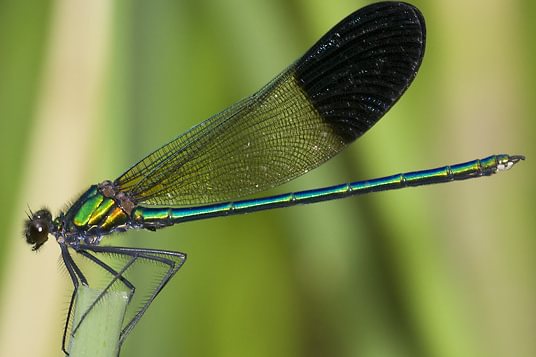
River Jewelwing male (Calopteryx aequabilis ) – Male metallic green with the outer 1/3 of the wings black. Flutters and swoops around female in courtship flight. (photo © Jim Johnson )
Return to Insects guide



















 Wild Columbia County
Thanks for the excellent website. I wish all counties had one like it. I live in Washington County. My search for Oregon dragonflies and damselflies brought me to it. I just watched David Attenborough’s excellent documentary “Dragons and Damsels’. It streams on Sling TV’s free stream. His series “Life in the Undergrowth” is also excellent.
LikeLike
Thanks! We’d love it if other places did copy what we did here, a big part of why we did all this was to inspire others.
LikeLike
I appreciate the photos and classification information. I really wish there was something like this for all the aquatic macro-invertebrates in Oregon. Well Done!
LikeLike
Ha, I started a mayflies/stoneflies/caddisflies/lacewings page and it was WAY too much work. I was only 3 mayfly families in when I had to give up because there were too many other projects on my plate.
LikeLike