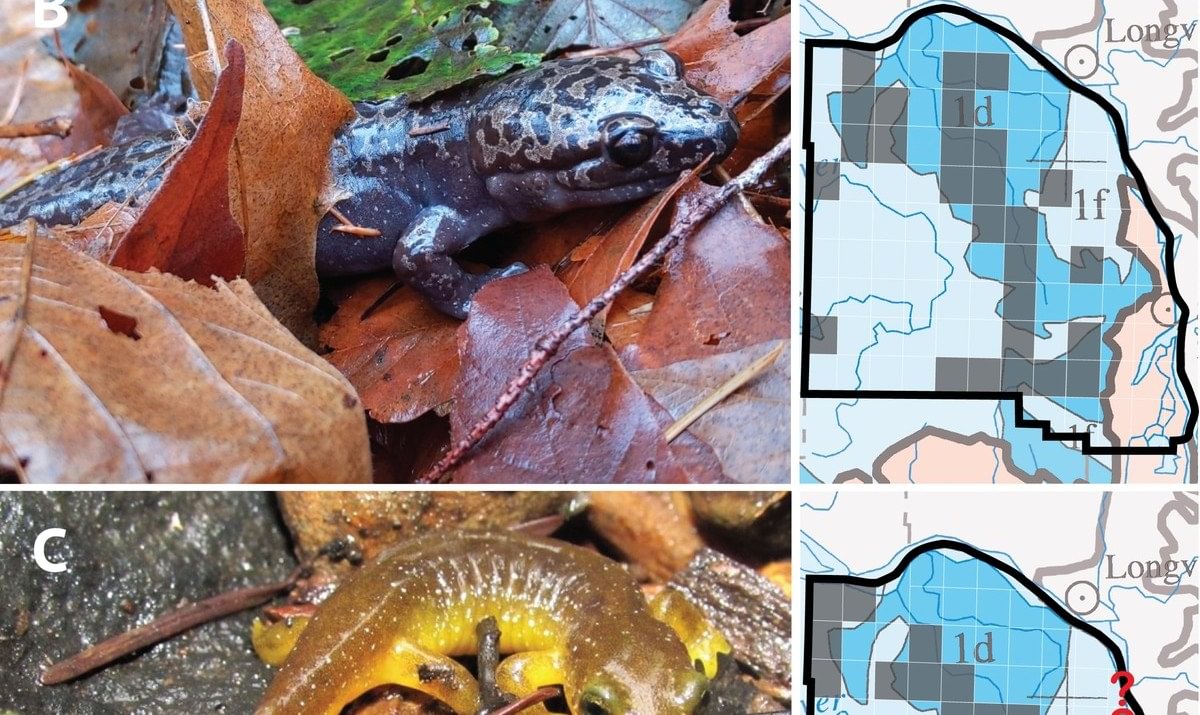
One of our goals was to determine where each species was found. We ended up with much more interesting data than we had expected. The reptiles and amphibians of Columbia County fall into four major distribution patterns, all of which are closely tied to the geographic features of the county.
The shaded squares in the maps below show where we recorded each species. For example, we found Pacific Chorus Frogs in 98 out of 100 sectors. A species absence in a sector doesn’t always mean they’re not there – we weren’t able to survey every sector as much as we would like (though we spent at least 5 hours of surveying in every sector spread out over at least 3 different trips). With over 1,200 hours of survey time covering all 100 mapped sectors of the county, these maps give a decent picture of each herp’s range.
The Hardy Generalists
First, we have the herps that were distributed across the entire county.
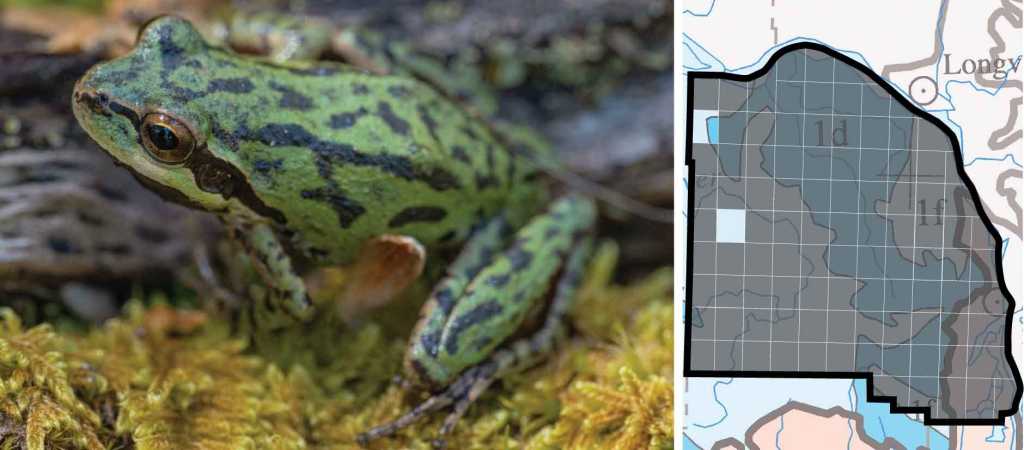
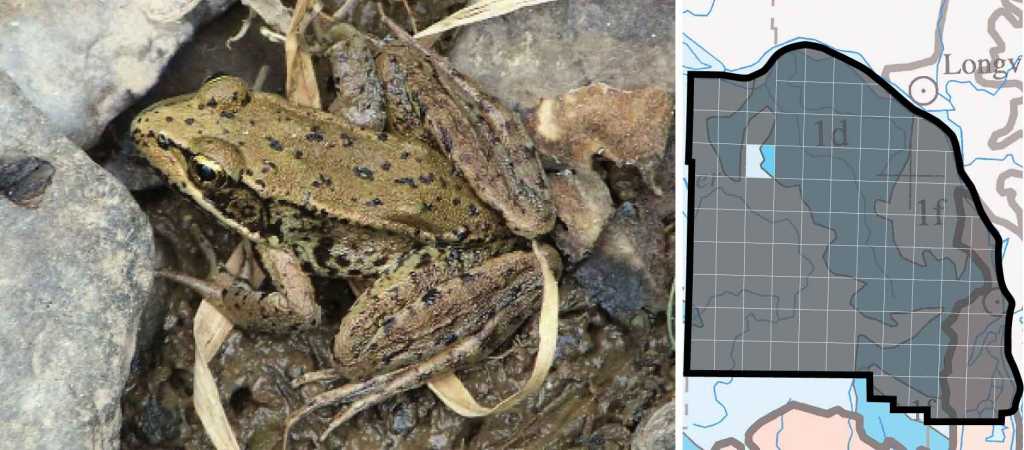
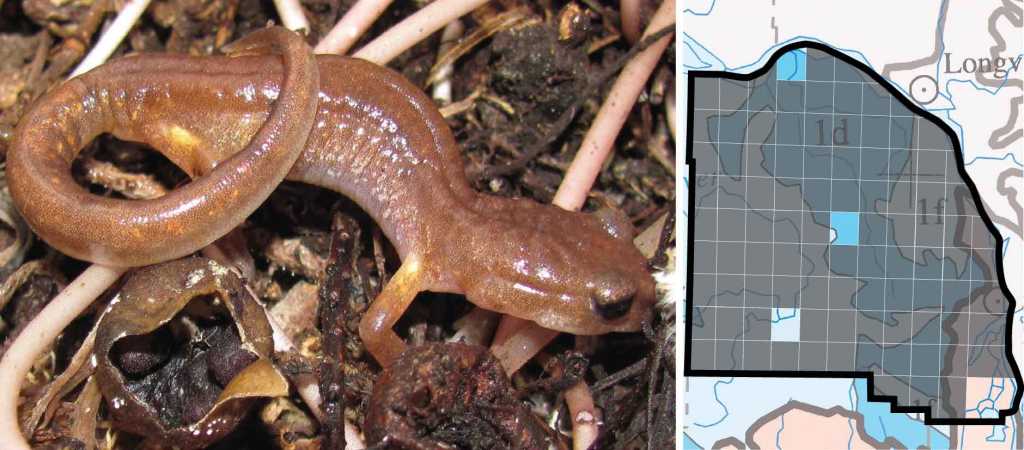
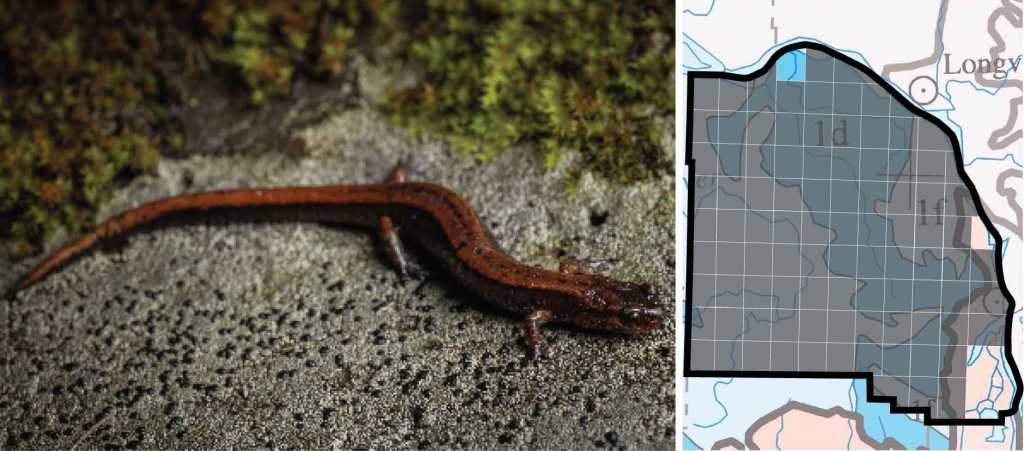
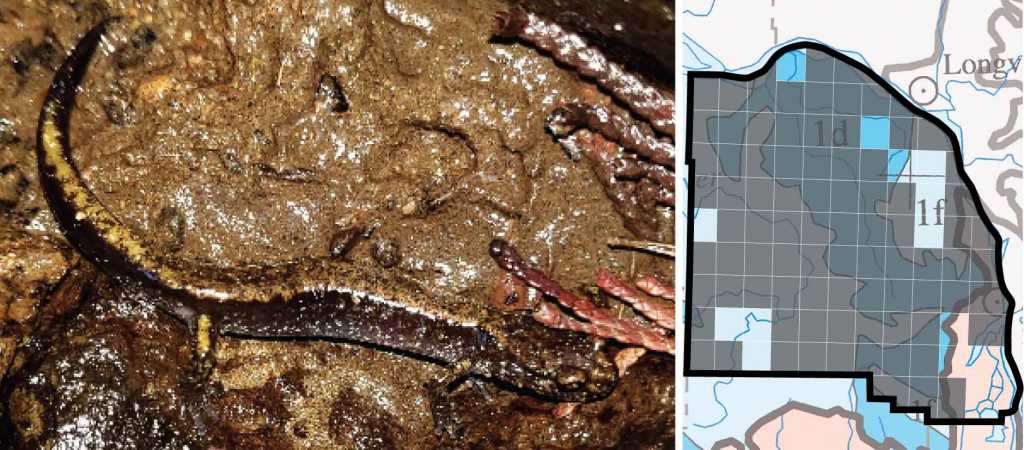
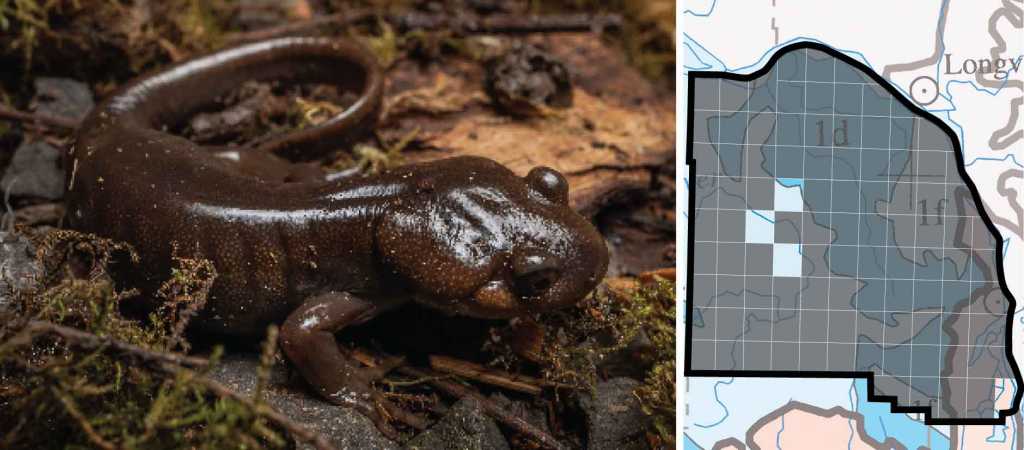
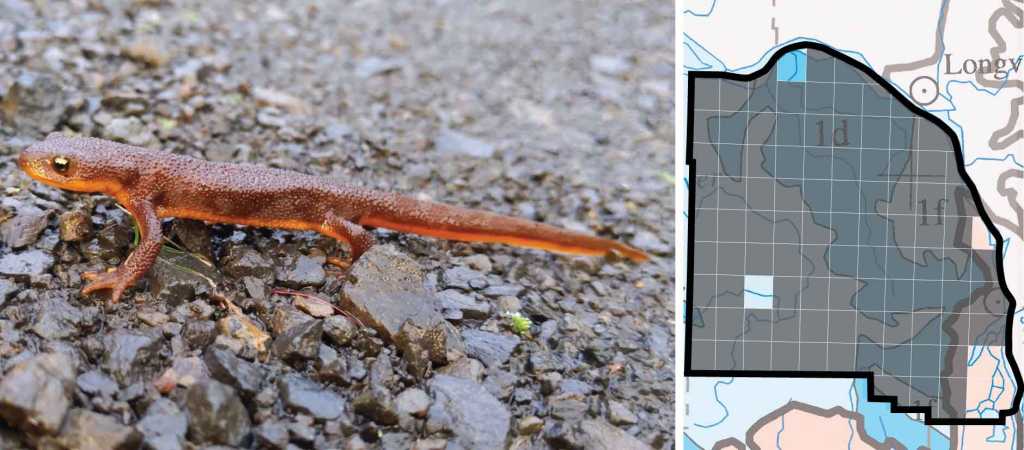
These seven amphibians are primarily associated with forests, with three (Western Red-backed, Dunn’s, and Ensatina) laying eggs on land, and the other four (Northwestern, Newt, Red-legged, and Pacific Chorus) laying their eggs in slow-moving or still waters. For some species there is a noticeable gap around Sauvie Island and the Scappoose Bottomlands, likely due to their historic position within the river floodplain.
Our literature research found that all forest amphibians can be negatively impacted by logging, and it’s possible that the more intensive logging patterns of recent decades threaten existing populations. However, we don’t have enough historic data to tell for certain whether their numbers have been going up or down over the years. At the least, we can say that these seven species persist across the county.
Three reptiles were also generally distributed across the county:
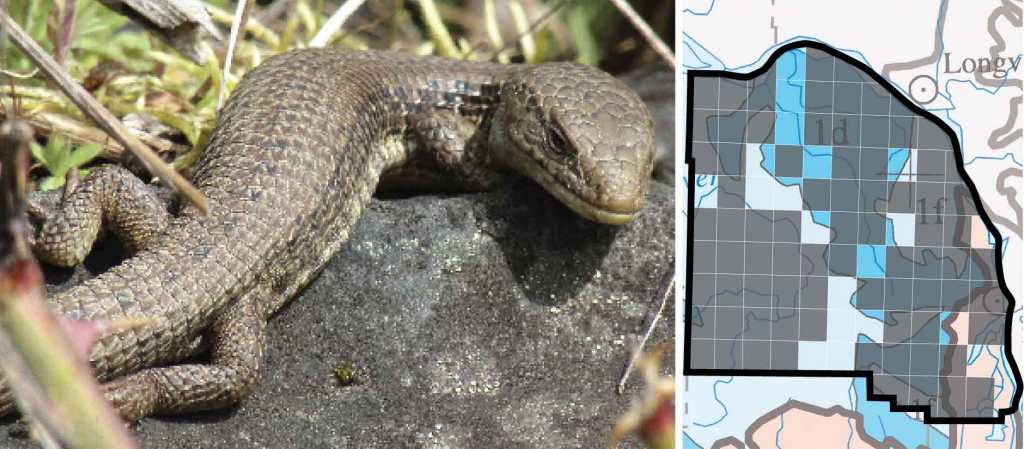
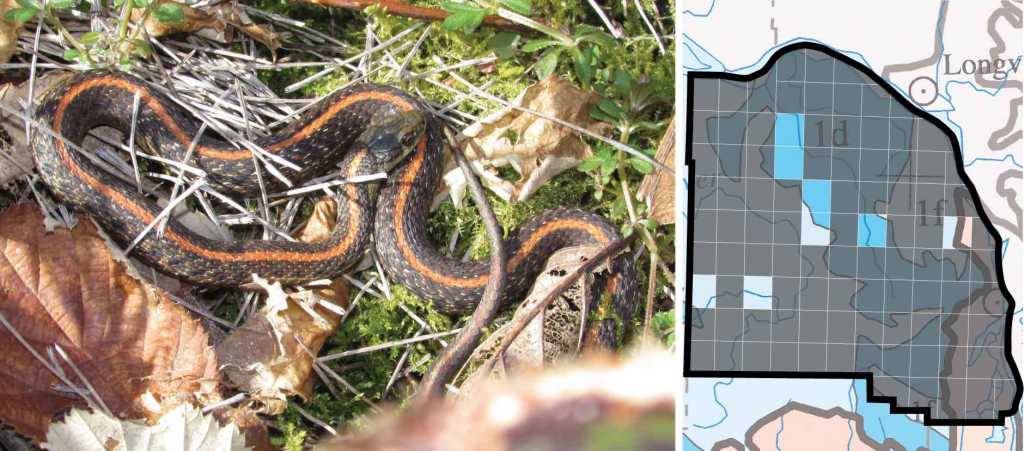
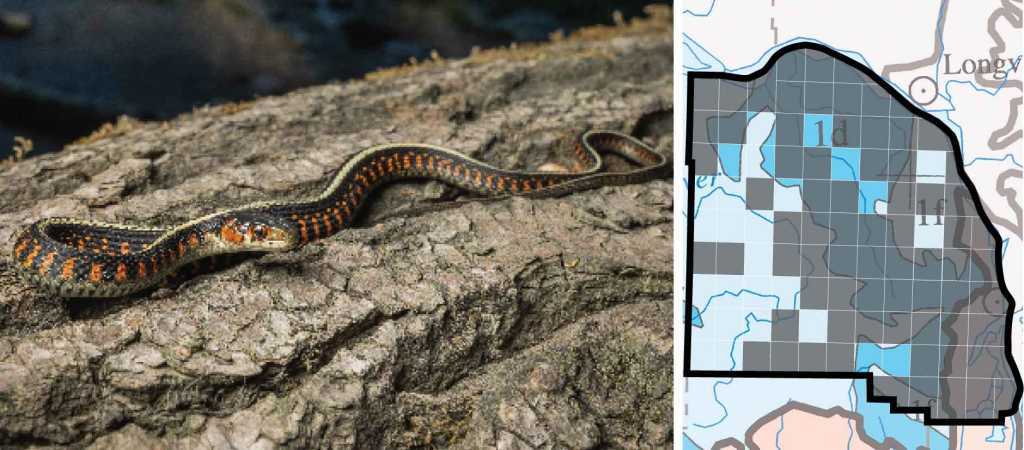
These three are associated with a broad range of habitats, including both forest and open regions. They show some gaps in the higher-elevation central sectors of the county and (for the Common Garter) in the inland portions of west county. As reptiles can have short activity periods which make them harder to detect in cooler areas, we believe they’re probably still present even in those sectors, just in lower numbers.
The Vulnerable Stream Breeders
You might be wondering what the funny background is on our maps. The colors you’re seeing code for ecoregions based on geological history. The dark blue portion is the basalt-based Volcanics subregion of the Coast Range, while light blue is the sedimentary-based Willapa Hills subregion, and pink shows the Willamette Valley.
We found four species of amphibian that were restricted to the basalt landscape that cuts diagonally across the center of the county (with one tiny bit of basalt creeping into the southwest corner).
[note that a shaded square shows that a herp was found somewhere inside that square, not everywhere inside it. So when a shaded square only barely intersects with a dark blue ecoregion, the herp was usually found in that dark blue corner.]
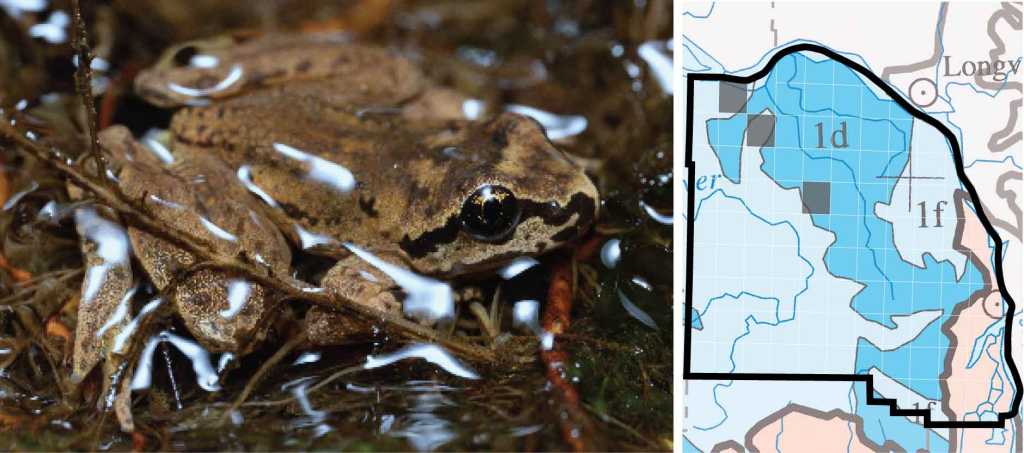
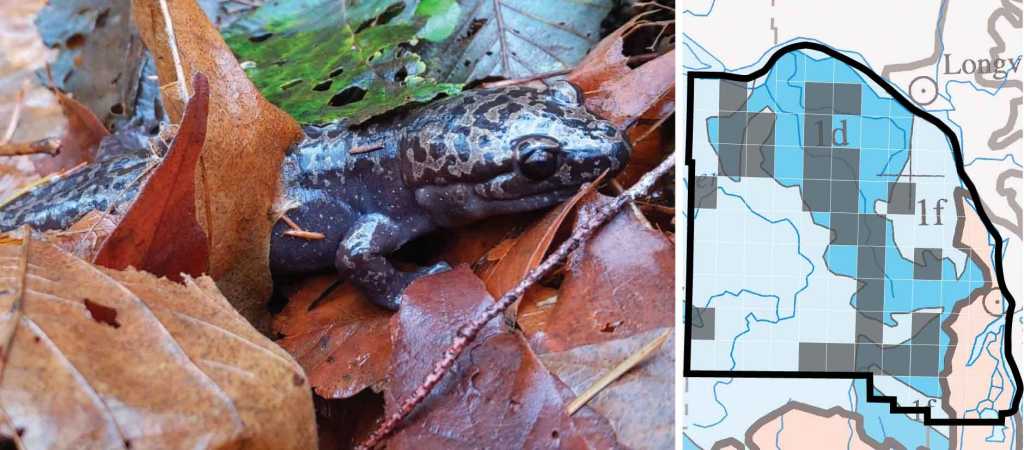
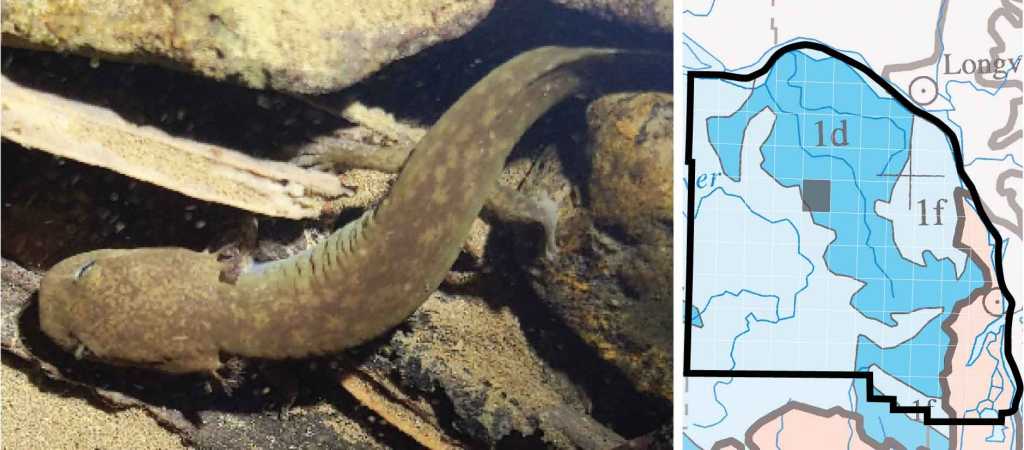
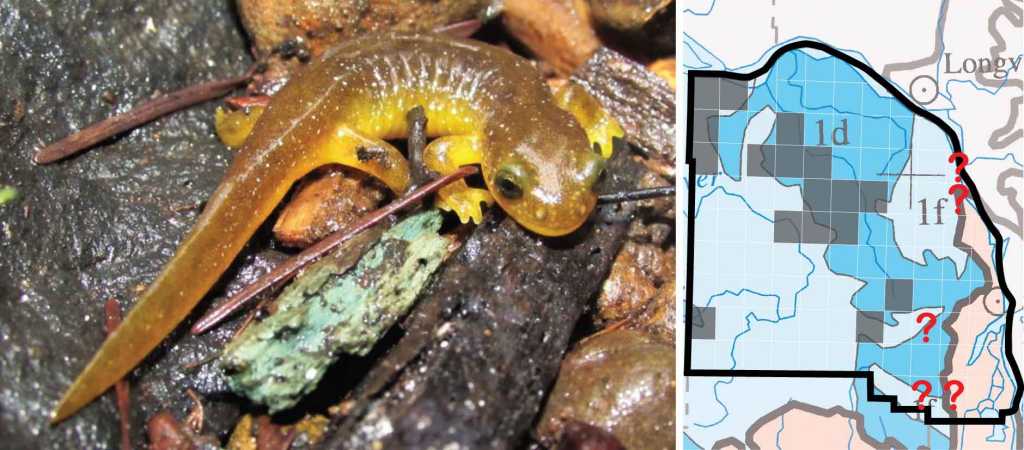
All four of these salamanders breed in clear, cool, fast-moving streams, which means they require more pristine conditions than those first 10 species. However, the literature we read showed that all four can be found in both basalt and sedimentary rock streams, and in both mid and low elevations. We think it’s likely that they were once lived throughout our county, including in the lower regions, but have disappeared due to habitat disturbance.
Confirming that suspicion, herpetologist Chris Rombough told us he saw Columbia Torrent Salamanders in the mid-2000s in several eastern locations (marked with red question marks on the map), some of which were well outside the Volcanics region. We were unable to replicate his finds, despite having up to five persons surveying those areas with repeat efforts.
Those large range gaps and newly missing localities are concerning, and suggest that the range of stream-dwelling amphibians is shrinking in Columbia County. We are especially concerned for Coastal Tailed Frogs and Cope’s Giant Salamanders, which conceivably could disappear from the county altogether.
Warmth-loving Lowland Aquatics
On the opposite end of the spectrum are species with live only in the open lowlands – more specifically, the river bottomlands of the Columbia River floodplain and the Nehalem River floodplain.
River basins don’t show up as a particular color on our maps, but you can see the path of the Columbia River along the eastern and northern border of the county and the Nehalem River coming through the southwest corner. Seven species tended to be found in these two river basins but not the hilled areas between them.
First, the introduced species:
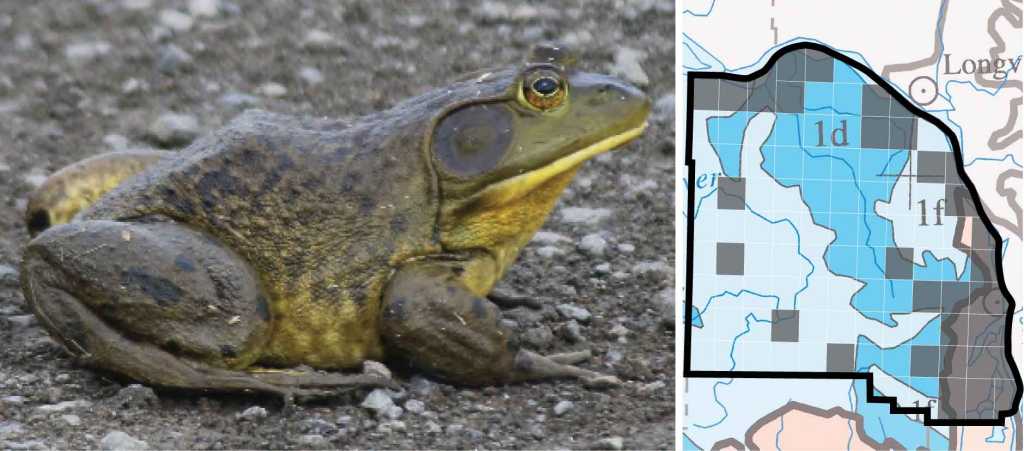
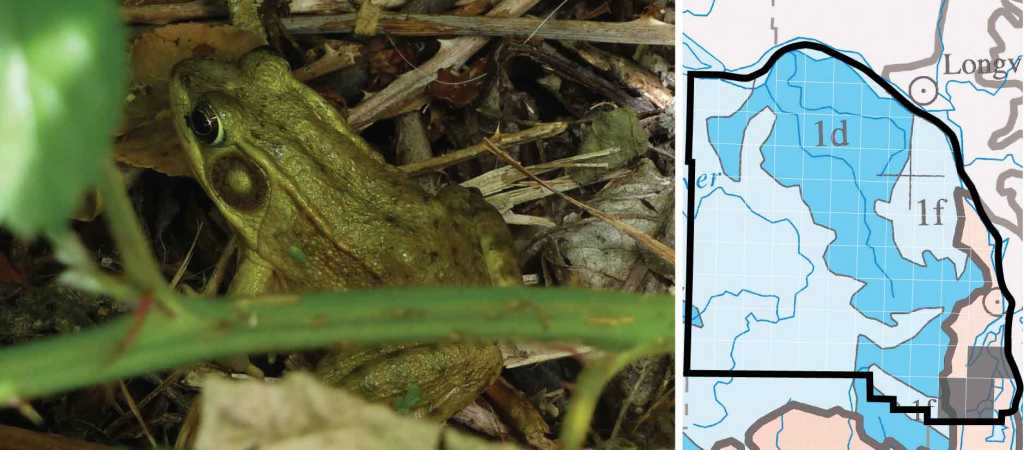
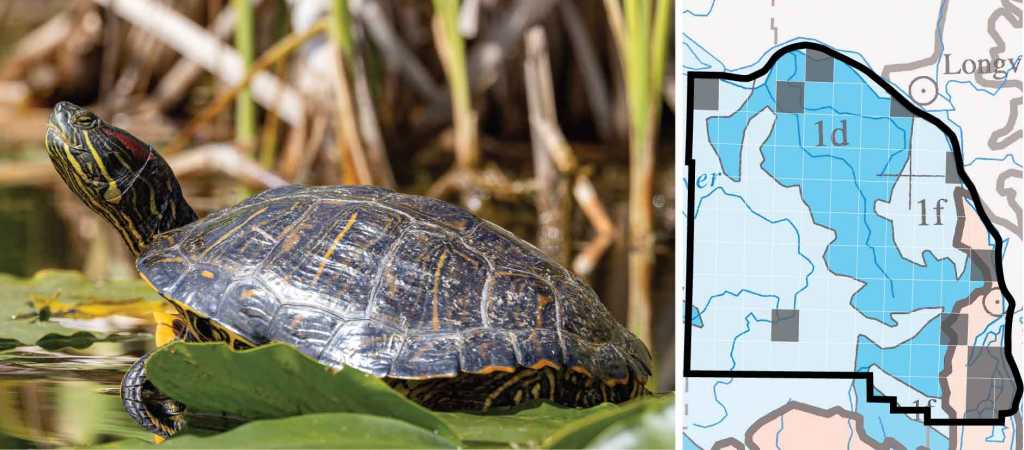
Those four species are non-native, introduced from warmer climates, so it makes sense they would mostly restrict themselves to the lowlands. Out of the four, bullfrogs have been the first to encroach on a few open areas in the higher elevation center of the county.
Now the native turtles:
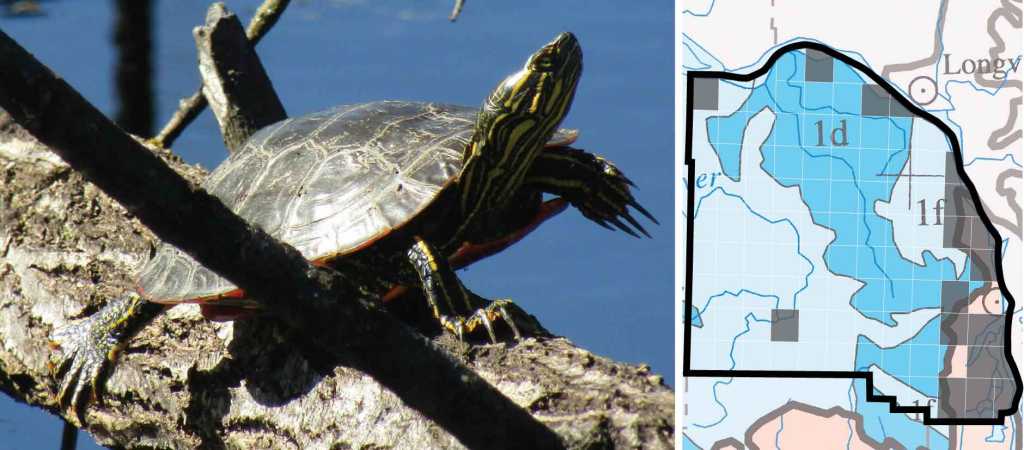
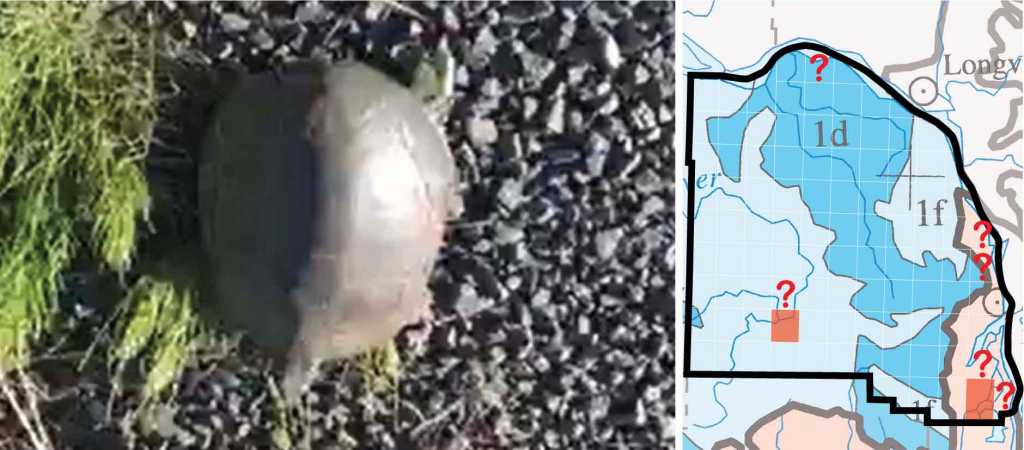
We do not know if our turtles were always restricted to the river basins. We found one record of a Western Painted Turtle about four miles from the river in Milton Creek, so it is possible that they use inland stream habitat and maybe some of the inland ponds, but we have no clear evidence of real populations there.
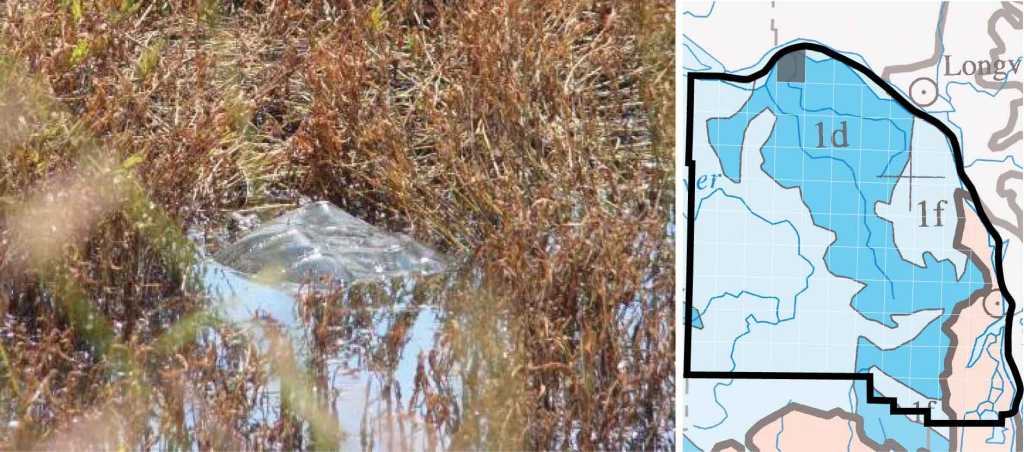
Unfortunately, we did not find any definitive records of Western Pond Turtles since 2009 [edit: since publishing the paper and making this post, I’ve been able to track down a 2014 record of a Western Pond Turtle from the Vernonia area, which is now our most recent confirmed sighting]. There are 1990s records confirmed from the Scappoose Bottomlands and Vernonia Lake (the red squares on the map), and late 2000s records from Chris Rombough around Deer Island, the Scappoose Bottomlands, and Sauvie Island (the four easternmost question marks).
We have had recent reports of possible sightings of pond turtles in Mayger (in a slough), Scappoose (near a ditch), and Vernonia (near both Rock Creek and the Nehalem River). The photo above shows one such sighting, but it was too blurry to ID. A few Western Pond Turtles may be hanging on somewhere, especially in the areas with private land that we weren’t able to survey. But even if there are here, they are reduced to a small population and in danger of immediate extirpation.
Just one native amphibian showed a river basin distribution:
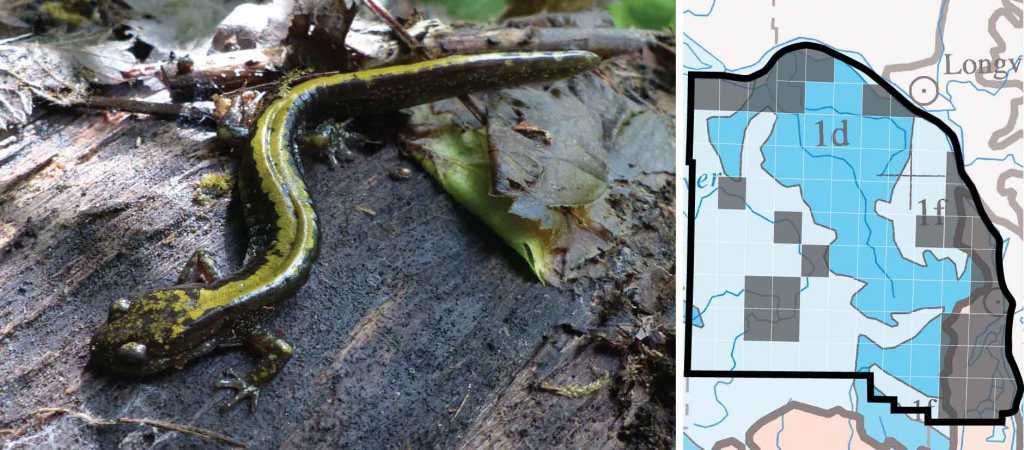
The limited range of the Long-toed Salamander was a big surprise. I’ve seen Long-toed Salamanders in forested hills in British Columbia and Idaho, so why would they be restricted to the floodplains here? We don’t have any good hypothesis. Perhaps there’s something about Coast Range climate that keeps them out of the hills, perhaps they’re being outcompeted by Northwestern Salamanders in that habitat, perhaps land use/logging patterns here don’t work for them. We haven’t formed any serious hypothesis to explain this yet.
Willamette Valley Sunbathers
The ecoregion that we haven’t talked about yet is that pink corner in the southeast – the north tip of the Willamette Valley. This has our camas meadows, our oak woodlands, our most extensive rock outcroppings, and is where our reptile diversity hangs out.
Four species were almost exclusively found in this southeast corner:
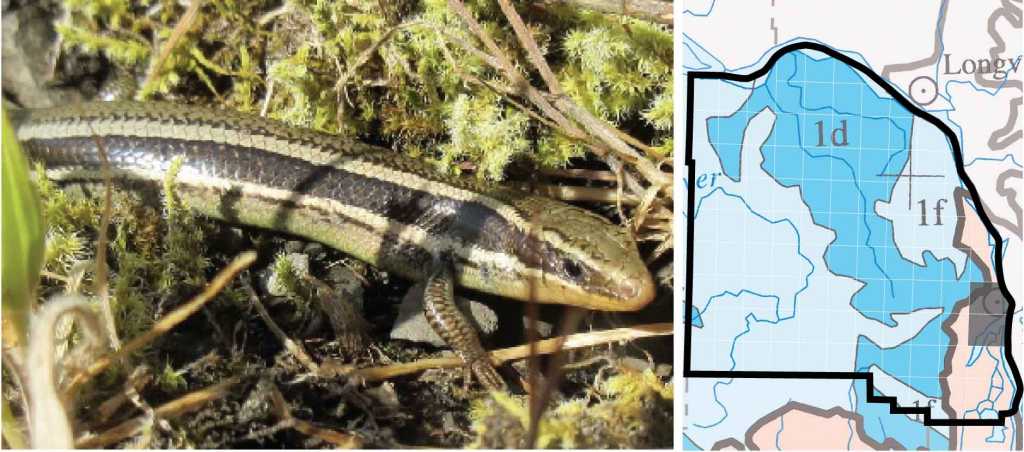
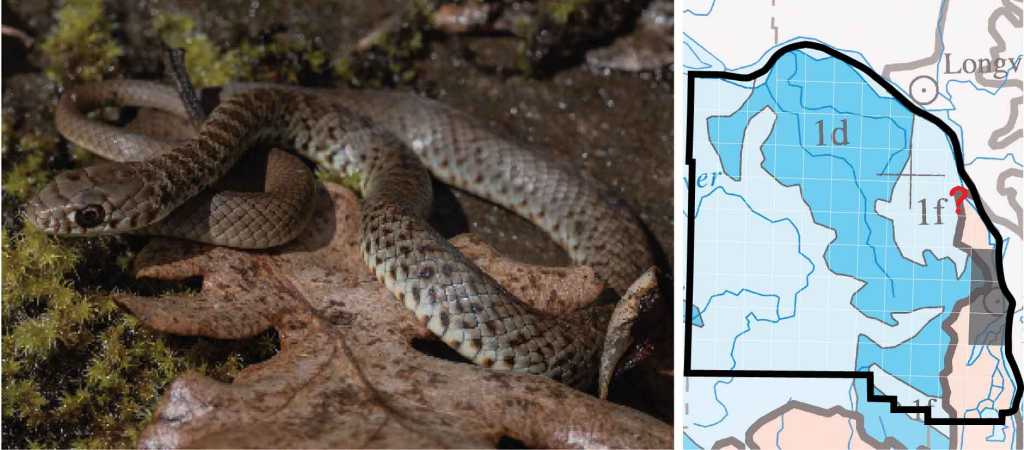
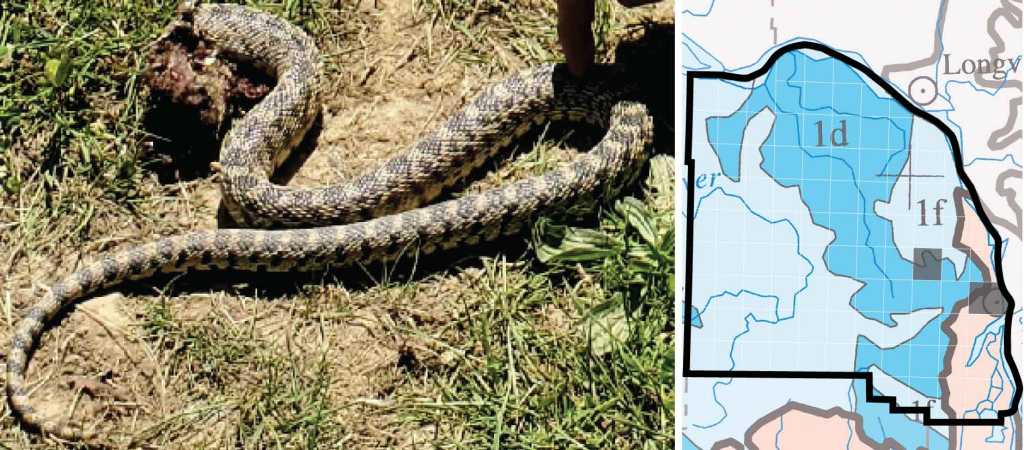
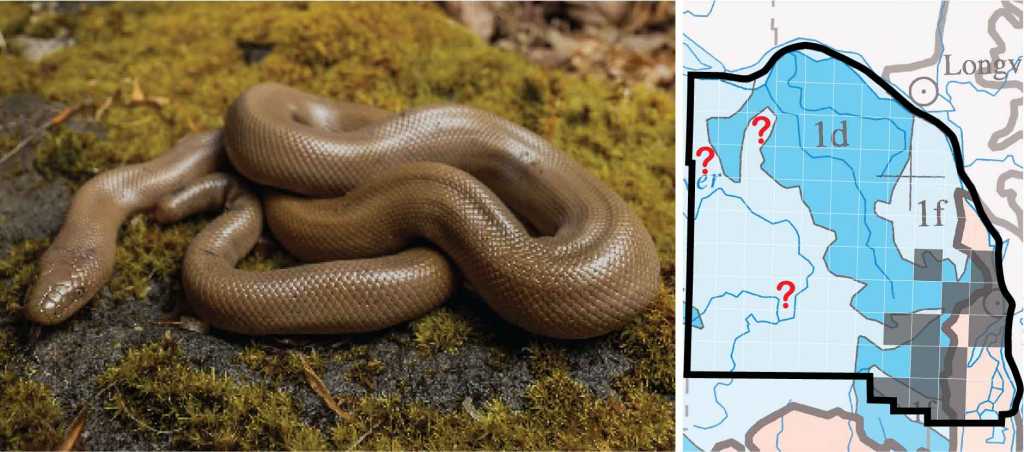
These four reptiles reach their Oregon range boundary right here around St. Helens, which has much better natural rocky meadows than Sauvie Island or Scappoose.
The Northern Rubber Boa is the most adventurous, spreading out from the Willamette Valley ecoregion into forest clearings in Dutch Canyon, Chapman, Warren, Yankton, and Deer Island. We even got reports from Chris Rombough of sightings in Vernonia and Fishhawk Lake, and a blurry photo from a resident of what might be a Rubber Boa in the Clatskanie Hills. So it is likely that the Rubber Boa is spottily distributed in “just right” habitat across the county. However, we spoke to hundreds of residents of Vernonia, Mist, Clatskanie, and Rainier who had never heard of a single Rubber Boa sighting in those parts. So thought the species is found outside of the southeast corner, it’s likely to be in rather limited numbers.
The other three reptiles were far more restricted. Western Skinks (3 localities) and Gopher Snakes (just 2 localities) are particularly vulnerable. Suitable habitat in these areas is limited and under threat from development, so it is possible they could become extirpated from the county in the near future.
The Misfits
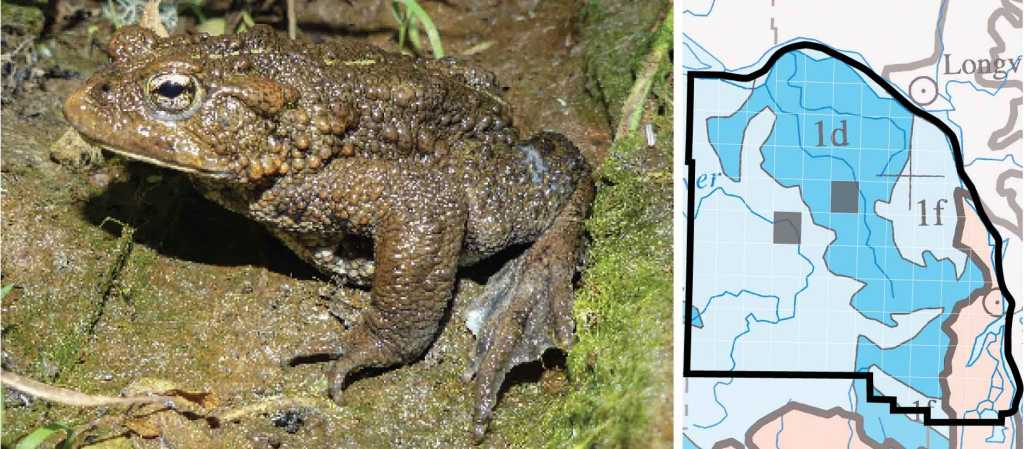
Old-timers told us stories of Western Toads in St. Helens and Yankton, and I saw one myself near Jewell back in the 1990s. There is also a report of a population just outside the county in Wildwood Golf Course. We believe that, before development, toads lived throughout Columbia County.
However, the only current breeding population we were able to locate in Columbia County was on the Nehalem River. We did hear stories of toads breeding elsewhere on the Nehalem, and a single record in the new Cedar Creek Preserve suggests they may be breeding in Cedar Creek or Carcus Creek as well.
Unfortunately, Western Toad populations have crashed throughout much of their range. The exact cause of these crashes is heavily debated, and may be due to multiple factors. In our area, we hypothesize that road-building and road use along with tree removal could have introduced sedimentation into the water that buried eggs and thus wiped out populations inhabiting ponds and streams. The only populations that survived were those in canyons large enough to keep soil runoff out of the immediate vicinity of the water.
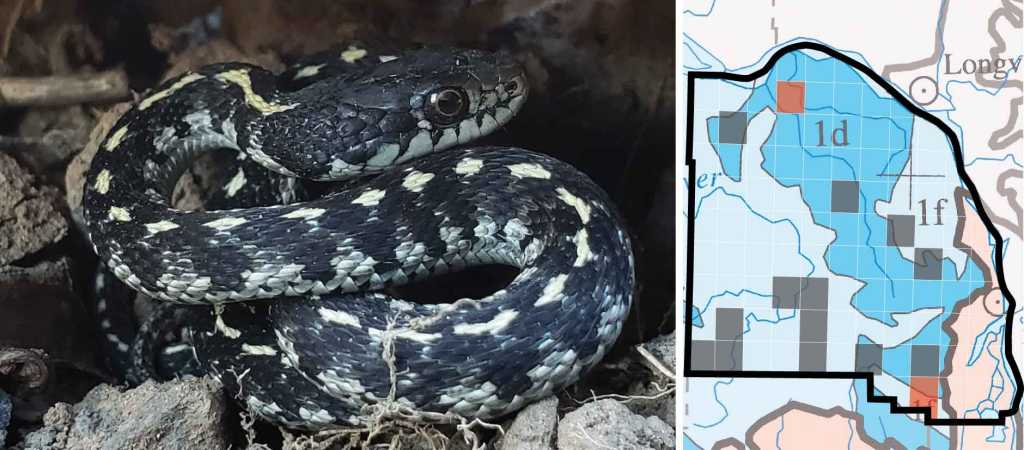
Western Terrestrial Garter Snakes are notoriously difficult to find in northwest Oregon, and there were very few records in our area before this study. We were blessed to find 19 of them spread across 15 different sectors.
The map of their sightings is difficult to interpret. We found them in both lowlands and in hills, across nearly all corners of the county. They were always in open meadows, including both clearcuts and natural meadows, and nearly always very close to streams.
One intriguing observation is that we never once found a Western Terrestrial Garter Snake within a mile of any neighborhood or developed area (one contributor did find one near her farmhouse, which is the most “developed” record we know of). On the map, you can see two red squares, representing museum records from the 1930s, that were labeled “Scappoose” and “Clatskanie”. So the species once lived close enough to towns to get those labels, but not any more.
What keeps Western Terrestrial Garter Snakes at such low population densities, and why aren’t they found near developed regions like the other local garter snakes? We have no idea. But it is a good topic for future research.
Conclusions
To summarize, we found
- ten common species are distributed throughout the county
- four stream amphibians have become restricted to the basalt “Volcanics” ecoregion in the middle of the county, with two of those species found in extremely few streams.
- two native turtles, one native salamander, and four introduced frogs/turtles are restricted to the river basins. One of those native turtles may be extirpated.
- four snakes and lizards are primarily restricted to the Willamette Valley ecoregion, with two of those species in extremely few localities.
- Western Toads have few remaining breeding populations
- Western Terrestrial Garter Snakes are limited to scattered localities away from development
In the full paper, we go deeper into the literature background that helps us understand these habitat associations, especially when it comes to the impact of logging and road building on stream amphibians.
If you’d like to read the paper in its entirely, you can get a copy of the latest issue of Northwestern Naturalist, (technically dated as the Winter 2024 issue, though it wasn’t published until September 2025), or you can purchase the article independently from BioOne at the following link:
If you aren’t able to pay, I’ve also uploaded the paper onto my own ResearchGate account and you can read it there for free:
In our next posts, we’re going to look at the top 5 locations for reptiles and amphibians that we found in Columbia County.
 Wild Columbia County
Western Pond Turtles inhabit Scappoose Bay. You may want to contact the Bird Alliance of Oregon (formerly known as Audubon). Their Wildlife Care Center has rehabilitated many injured species, including the Western Pond Turtles.
LikeLike
That’s a contact I hadn’t made before (no one told me the bird place dealt with turtles). I would believe it possible that a few pond turtles are still surviving in Scappoose Bay, though we’ve had a lot of people through there getting pictures and they’re always Painted. I do have some “relatively” recent sightings in Jackson Ditch and Sauvie Island, so you’d think they might be in-between too. I’ll ask them what they’ve gotten.
LikeLike
Thank you again for your comment! By following up on your suggestion, we were able to find that the Bird Alliance of Oregon has a single record of a Western Pond Turtle from Vernonia in 2014. We knew they were there in the past, but didn’t have any confirmation since the 1990s, so this does move up our confirmed date though it isn’t recent enough to tell us much more. I’ve heard 3 other possible reports of turtles crossing roads in the Vernonia area that “might” have been pond turtles, but once again we don’t have any proof.
LikeLike
Hello! I’ve really enjoyed reading your research. I wanted to let you know what we found a rubber boa at our house in Clatskanie. The kids picked it up and it freaked me out because it wasn’t a garter snake, so we looked it up in our guide books. It was this past summer, but I didn’t get a picture unfortunately. My husband thinks this is the right picture that he took, but we aren’t sure.
Maggie Eason
LikeLike
That’s great! It makes sense that they’d be somewhere around there after what Chris told us, but it does seem like people rarely ever see them. We have heard of one other possible sighting up there, but the picture was just too blurry to be certain. What was the habitat like? Was there much opening in the canopy? Are there rocks near the surface? Elevation near the river or higher up?
LikeLike
We are higher up on a hill. We have a seasonal stream/mud puddle on one side of the yard, and open field on the other, and lots of trees and blackberries behind. The pool was up, so there was a hiding spot between it and the deck that we saw it escape to. The pool is down now, but I drew it on the picture. We found the snake about at the red spot.
LikeLike
I’m not seeing the picture, but write to me via the Contact form on our site and we’ll be able to email. Your area sounds similar to the person who told me they saw one in Clatskanie Hills.
LikeLike